Building Blocks
This section contains fundamental products for the synthesis of organic and biological compounds. Building blocks are the essential starting materials used to construct complex molecules through various chemical reactions. They play a critical role in drug discovery, material science, and chemical research. At CymitQuimica, we offer a diverse range of high-quality building blocks to support your innovative research and industrial projects, ensuring you have the essential components for successful synthesis.
Subcategories of "Building Blocks"
- Boronic Acids & Boronic Acid Derivatives(5,756 products)
- Chiral Building Blocks(1,242 products)
- Hydrocarbon Building Blocks(6,095 products)
- Organic Building Blocks(61,038 products)
Found 196817 products of "Building Blocks"
Sort by
Purity (%)
0
100
|
0
|
50
|
90
|
95
|
100
4-Oxo-1,4-dihydrocinnoline-3-carboxylic acid
CAS:<p>4-Oxo-1,4-dihydrocinnoline-3-carboxylic acid is a synthetic chemical that is used as an agrochemical. It is a white solid that has a melting point of about 110°C, and it has a molecular weight of 218.5 g/mol. 4-Oxo-1,4-dihydrocinnoline-3-carboxylic acid can be used to produce phenylhydrazones and benzodiazines by catalytic reduction. It also reacts with chlorine at high temperatures to produce aluminium chloride. This chemical can hydrolyse amides and chlorides to produce hydrogen chloride gas or hydrochloric acid (HCl) respectively. The chloride ion (Cl-) can react with phosphorus pentachloride (PCl) to form phosphorus oxychloride (POCl). 4-Oxo-1,4-dihydrocinnoline-3-carboxylic acid</p>Formula:C9H6N2O3Purity:Min. 95%Molecular weight:190.16 g/mol1-Methoxynaphthalen-2-ol
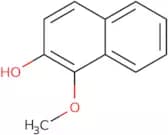
CAS:<p>1-Methoxynaphthalen-2-ol is a chiral molecule that can be prepared by the oxidation of naphthalene to yield 1-methoxynaphthalene. The oxidation of 1-methoxynaphthalene with oxone in acetonitrile yields 1-methoxynaphthalen-2-ol and 2,4,6-trimethylbenzoyl peroxide. The oxidised product is then reduced with hydroxyl group to form an alcohol. This reaction can be carried out in high yield and with a good degree of stereoselectivity.</p>Formula:C11H10O2Purity:Min. 95%Molecular weight:174.2 g/mol2,2-Dimethyl-3-[(4-methylbenzenesulfonyl)oxy]propanal
CAS:<p>Versatile small molecule scaffold</p>Formula:C12H16O4SPurity:Min. 95%Molecular weight:256.32 g/molEthyl 2-(Methylamino)-2-oxoacetate
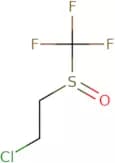
CAS:<p>Ethyl 2-(methylamino)-2-oxoacetate (EMAA) is a phenyl compound that is used as an active substance in pharmaceuticals. It is a colorless liquid with a boiling point of 200 degrees Celsius and a melting point of -10 degrees Celsius. EMAA has been used to treat bacterial infections and influenza. It also has antioxidant properties that help to prevent damage from free radicals.</p>Formula:C5H9NO3Purity:Min. 95%Molecular weight:131.13 g/mol1-Chloro-2-trifluoromethanesulfinylethane
CAS:<p>Versatile small molecule scaffold</p>Formula:C3H4ClF3OSPurity:Min. 95%Molecular weight:180.58 g/mol2-[(4-Bromophenyl)sulfanyl]-2-methylpropanoic acid
CAS:<p>Versatile small molecule scaffold</p>Formula:C10H11BrO2SPurity:Min. 95%Molecular weight:275.16 g/mol5-{[(4-Chlorophenyl)sulfanyl]methyl}-1H-1,2,3,4-tetrazole
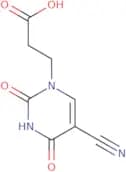
CAS:<p>Versatile small molecule scaffold</p>Formula:C8H7ClN4SPurity:Min. 95%Molecular weight:226.69 g/mol3-(5-Cyano-2,4-dioxo-1,2,3,4-tetrahydropyrimidin-1-yl)propanoic acid
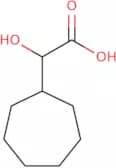
CAS:<p>Versatile small molecule scaffold</p>Formula:C8H7N3O4Purity:Min. 95%Molecular weight:209.16 g/mol2-Cycloheptyl-2-hydroxyacetic acid
CAS:<p>Versatile small molecule scaffold</p>Formula:C9H16O3Purity:Min. 95%Molecular weight:172.22 g/molSpiro[1,3-dioxolane-2,1'-[1H]inden]-3'(2'H)-one
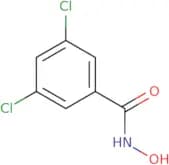
CAS:<p>Versatile small molecule scaffold</p>Formula:C11H10O3Purity:Min. 95%Molecular weight:190.19 g/mol3,5-Dichloro-N-hydroxybenzamide
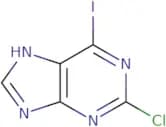
CAS:<p>3,5-Dichloro-N-hydroxybenzamide is a drug that belongs to the group of diuretics and has been used as an ophthalmic and pharmacological agent. It has been shown to be effective in the treatment of infantile spasms and as an adjuvant therapy for chronic glaucoma. 3,5-Dichloro-N-hydroxybenzamide is also used in various formulations with other drugs such as trichlormethiazide, which acts by potentiating the effect of 3,5-dichloro-N-hydroxybenzamide on potassium excretion. The physicochemical properties of this drug are studied using gel formulations, which have a greater affinity for proteins than water. This drug may also be able to bind to plasma proteins and thus have a longer half life. 3,5-Dichloro-N-hydroxybenzamide is metabolized through methylation reactions</p>Formula:C7H5Cl2NO2Purity:Min. 95%Molecular weight:206.02 g/mol2-Chloro-6-iodo-9H-purine
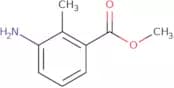
CAS:<p>2-Chloro-6-iodo-9H-purine is an antiviral agent that inhibits the activity of a viral enzyme, thymidine kinase. This drug binds to the active site of this enzyme, preventing it from phosphorylating and thereby inactivating dTTP (a nucleotide precursor) to dTMP (a nucleotide product). 2-Chloro-6-iodo-9H-purine is not used clinically because it has toxic side effects such as hepatotoxicity and myelosuppression. However, this drug has been used in the past for research purposes and in animal studies.</p>Formula:C5H2ClIN4Purity:Min. 95%Molecular weight:280.45 g/molMethyl 3-amino-2-methylbenzoate
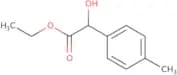
CAS:<p>Methyl 3-amino-2-methylbenzoate is a chloroformate that can participate in coordination reactions. It has shown potent antitumor activity and is an efficient method for the synthesis of pyridinecarboxylic acids. This compound has been shown to be an inhibitor of tumor cell lines and to have a skeleton with potential antitumor activity. It also has potent antibacterial activity against gram-positive bacteria and methoxy groups that are known to be important for DNA binding. Methyl 3-amino-2-methylbenzoate also possesses a phenyl ring and diterpenes that make it a potential anticancer drug candidate.</p>Formula:C9H11NO2Purity:Min. 95%Molecular weight:165.19 g/molEthyl 2-hydroxy-2-(4-methylphenyl)acetate
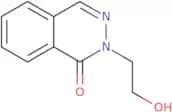
CAS:<p>Versatile small molecule scaffold</p>Formula:C11H14O3Purity:Min. 95%Molecular weight:194.23 g/mol2-(2-Hydroxyethyl)phthalazin-1-one
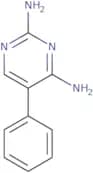
CAS:<p>2-(2-Hydroxyethyl)phthalazin-1-one is a molecule that stabilizes benzene rings in the crystal by forming hydrogen bonds with the hydroxyl groups. The interplanar and intermolecular interactions between molecules are weak, but the coplanar and dihedral interactions are strong. This stabilizing effect leads to an increase in the melting point and boiling point of benzene. 2-(2-Hydroxyethyl)phthalazin-1-one has been shown to have a crystalline structure with a space group of P21/c.</p>Formula:C10H10N2O2Purity:Min. 95%Molecular weight:190.2 g/mol5-Phenylpyrimidine-2,4-diamine
CAS:<p>5-Phenylpyrimidine-2,4-diamine is an antiparasitic agent that belongs to the group of derivs. It has been shown to inhibit coccidian growth in vitro and has antiparasitic activity against bacteria and protozoa. 5-Phenylpyrimidine-2,4-diamine binds to the enzyme acetyl coenzyme A synthetase in the parasite's mitochondria and prevents the synthesis of ATP. This leads to cell death.</p>Formula:C10H10N4Purity:Min. 95%Molecular weight:186.21 g/mol2-(Thiophen-2-yl)quinazoline-4-thiol
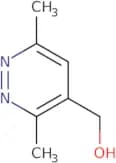
CAS:<p>Versatile small molecule scaffold</p>Formula:C12H8N2S2Purity:Min. 95%Molecular weight:244.3 g/mol(3,6-Dimethylpyridazin-4-yl)methanol
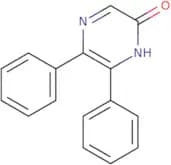
CAS:<p>Versatile small molecule scaffold</p>Formula:C7H10N2OPurity:Min. 95%Molecular weight:138.17 g/mol5,6-Diphenylpyrazinol
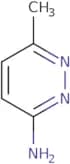
CAS:<p>5,6-Diphenylpyrazinol is a nitrated derivative of pyrazine. It is synthesized by nitrating 5,6-diphenylpyrazine with a mixture of sulfuric and nitric acid. The product is isolated by fractional distillation.</p>Formula:C16H12N2OPurity:Min. 95%Molecular weight:248.28 g/mol3-Amino-6-methylpyridazine
CAS:<p>3-Amino-6-methylpyridazine is a pro-apoptotic molecule that interacts with the kinase domain of the pro-apoptotic protein Bax, inducing programmed cell death. This compound has been shown to be homologous with other compounds that inhibit mycobacterium avium and staphylococcus in vitro. 3-Amino-6-methylpyridazine inhibits the replication of tuberculosis bacteria by inhibiting DNA synthesis. It also has a cytotoxic effect on mycobacterium avium cells, which may be due to its ability to induce apoptosis.<br>3-Amino-6-methylpyridazine has an antiinflammatory effect on macrophages by inhibiting cyclooxygenase and lipoxygenase activity.</p>Purity:Min. 95%


![2,2-Dimethyl-3-[(4-methylbenzenesulfonyl)oxy]propanal](/_next/image/?url=https%3A%2Fstatic.cymitquimica.com%2Fproducts%2F3D%2Fthumb-webp%2FTAA51619.webp&w=3840&q=75)

![2-[(4-Bromophenyl)sulfanyl]-2-methylpropanoic acid](/_next/image/?url=https%3A%2Fstatic.cymitquimica.com%2Fproducts%2F3D%2Fthumb-webp%2FTAA52716.webp&w=3840&q=75)
![5-{[(4-Chlorophenyl)sulfanyl]methyl}-1H-1,2,3,4-tetrazole](/_next/image/?url=https%3A%2Fstatic.cymitquimica.com%2Fproducts%2F3D%2Fthumb-webp%2FTAA52731.webp&w=3840&q=75)
![Spiro[1,3-dioxolane-2,1'-[1H]inden]-3'(2'H)-one](/_next/image/?url=https%3A%2Fstatic.cymitquimica.com%2Fproducts%2F3D%2Fthumb-webp%2FTAA53993.webp&w=3840&q=75)