Building Blocks
This section contains fundamental products for the synthesis of organic and biological compounds. Building blocks are the essential starting materials used to construct complex molecules through various chemical reactions. They play a critical role in drug discovery, material science, and chemical research. At CymitQuimica, we offer a diverse range of high-quality building blocks to support your innovative research and industrial projects, ensuring you have the essential components for successful synthesis.
Subcategories of "Building Blocks"
- Boronic Acids & Boronic Acid Derivatives(5,756 products)
- Chiral Building Blocks(1,242 products)
- Hydrocarbon Building Blocks(6,095 products)
- Organic Building Blocks(61,037 products)
Found 196139 products of "Building Blocks"
Sort by
Purity (%)
0
100
|
0
|
50
|
90
|
95
|
100
[4-(Hexyloxy)phenyl]methanol
CAS:<p>4-(Hexyloxy)phenyl]methanol (4-HPMA) is a liquid crystal and crystalline compound that is synthesized from an aryl group. 4-HPMA has been used in the production of devices such as liquid crystal displays, and is currently being investigated for use in crystalline compounds. Its mesogenic properties have made it useful for the production of crystalline materials with a high melting point, and its aryl ring structure makes it suitable for use in organic crystals.</p>Formula:C13H20O2Purity:Min. 95%Molecular weight:208.3 g/mol[4-(Prop-2-en-1-yloxy)phenyl]methanol
CAS:<p>4-(Prop-2-en-1-yloxy)phenol is a divalent model compound that has been used in the study of fossil fuel and polymerized oils. It is also used for the synthesis of polymers, as well as monomers and compounds with phenyl groups. 4-(Prop-2-en-1-yloxy)phenol has two functional groups: a phenyl group and a propoxy group. This compound has been shown to have excellent thermal stability, which makes it an ideal candidate for use in high temperatures.</p>Formula:C10H12O2Purity:Min. 95%Molecular weight:164.2 g/mol2-Hydroxy-2-[3-(trifluoromethyl)phenyl]propanoic acid
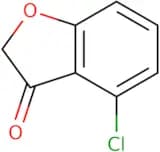
CAS:<p>Versatile small molecule scaffold</p>Formula:C10H9F3O3Purity:Min. 95%Molecular weight:234.17 g/mol4-Chloro-2,3-dihydro-1-benzofuran-3-one
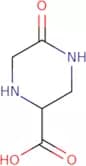
CAS:<p>Versatile small molecule scaffold</p>Formula:C8H5ClO2Purity:Min. 95%Molecular weight:168.57 g/mol5-Oxopiperazine-2-carboxylic acid
CAS:<p>Versatile small molecule scaffold</p>Formula:C5H8N2O3Purity:Min. 95%Molecular weight:144.13 g/mol1-{Bicyclo[4.2.0]octa-1,3,5-trien-7-yl}ethan-1-amine
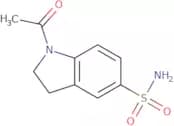
CAS:<p>Versatile small molecule scaffold</p>Formula:C10H13NPurity:Min. 95%Molecular weight:147.22 g/mol1-Acetyl-5-indolinesulfonamide
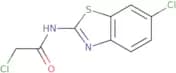
CAS:<p>Versatile small molecule scaffold</p>Formula:C10H12N2O3SPurity:Min. 95%Molecular weight:240.28 g/mol2-Chloro-N-(6-chloro-benzothiazol-2-yl)-acetamide
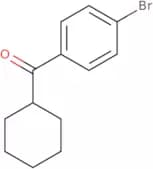
CAS:<p>Versatile small molecule scaffold</p>Formula:C9H6Cl2N2OSPurity:Min. 95%Molecular weight:261.13 g/mol4-Bromophenyl cyclohexyl ketone
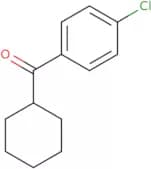
CAS:<p>Versatile small molecule scaffold</p>Formula:C13H15BrOPurity:Min. 95%Molecular weight:267.16 g/mol4-Chlorophenyl cyclohexyl ketone
CAS:<p>Versatile small molecule scaffold</p>Formula:C13H15ClOPurity:Min. 95%Molecular weight:222.71 g/mol1,8,8-Trimethylbicyclo[3.2.1]octane-2,4-dione
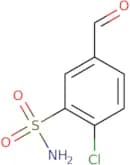
CAS:<p>Versatile small molecule scaffold</p>Formula:C11H16O2Purity:Min. 95%Molecular weight:180.24 g/mol2-Chloro-5-formylbenzene-1-sulfonamide
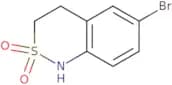
CAS:<p>2-Chloro-5-formylbenzene-1-sulfonamide is a substance that belongs to the group of sulfonamides. It is a white powder that can be synthesized from 2,4,6-trinitrobenzenesulfonic acid and chlorobenzene. The substance has been shown to form an alkaline hydrolysis product when reacted with indapamide in a 1:1 ratio. This reaction was analyzed using LC/MS/MS and the product ions were quantified. The LC/MS/MS method used for this analysis was harmonization of the data collected on two different instruments, which is called synergi. The LC/MS/MS method consisted of three steps: (i) elution with acetonitrile and water, (ii) electrospray ionization, and (iii) quantification by selected reaction monitoring.</p>Formula:C7H6ClNO3SPurity:Min. 95%Molecular weight:219.65 g/mol6-Bromo-3,4-dihydro-1H-2,1-benzothiazine 2,2-dioxide
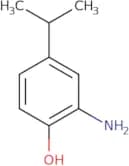
CAS:<p>Versatile small molecule scaffold</p>Formula:C8H8BrNO2SPurity:Min. 95%Molecular weight:262.13 g/mol2-Amino-4-isopropylphenol
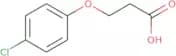
CAS:<p>Versatile small molecule scaffold</p>Formula:C9H13NOPurity:Min. 95%Molecular weight:151.21 g/mol3-(4-Chloro-phenoxy)-propionic acid
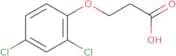
CAS:<p>3-(4-Chloro-phenoxy)-propionic acid is a synthetic tyrosinase inhibitor. It has been shown to be effective in the treatment of hyperpigmentation disorders in humans, including melasma and solar lentigo. 3-(4-Chloro-phenoxy)-propionic acid inhibits tyrosinase activity by binding to its active site. This prevents the production of melanin and leads to lightening of skin pigmentation. The extraction process is efficient and can be scaled up for clinical use. The analyte can be easily quantified using a potent assay with high recovery rates and low detection limits.</p>Formula:C9H9ClO3Purity:Min. 95%Molecular weight:200.62 g/mol3-(2,4-Dichlorophenoxy)propanoic acid
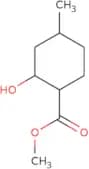
CAS:<p>Versatile small molecule scaffold</p>Formula:C9H8Cl2O3Purity:Min. 95%Molecular weight:235.06 g/molMethyl 2-hydroxy-4-methylcyclohexane-1-carboxylate
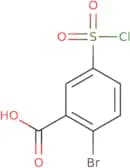
CAS:<p>Versatile small molecule scaffold</p>Formula:C9H16O3Purity:Min. 95%Molecular weight:172.2 g/mol2-Bromo-5-(chlorosulfonyl)benzoic acid
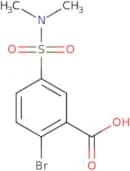
CAS:<p>Versatile small molecule scaffold</p>Formula:C7H4BrClO4SPurity:Min. 95%Molecular weight:299.53 g/mol2-Bromo-5-(dimethylsulfamoyl)benzoic acid
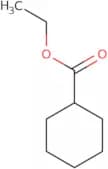
CAS:<p>Versatile small molecule scaffold</p>Formula:C9H10BrNO4SPurity:Min. 95%Molecular weight:308.15 g/molEthyl Cyclohexanecarboxylate
CAS:<p>Ethyl cyclohexanecarboxylate is an anti-inflammatory drug that belongs to the class of hydroxylated glycol ethers. It has been shown to have a significant effect on autoimmune diseases, such as multiple sclerosis and rheumatoid arthritis. The active form of ethyl cyclohexanecarboxylate is metabolized through nitro reduction by cytochrome P450 enzymes, which are present in most mammalian tissues. This drug also has a high phase transition temperature and can be used as a catalyst for organic reactions at low temperatures. Ethyl cyclohexanecarboxylate has been shown to inhibit dpp-iv (dipeptidyl peptidase IV), which is an enzyme that cleaves the dipeptides from the N-terminal ends of proteins, leading to increased levels of fatty acids and other alkanoic acids in the blood.</p>Formula:C9H16O2Purity:Min. 95%Molecular weight:156.22 g/mol
![[4-(Hexyloxy)phenyl]methanol](/_next/image/?url=https%3A%2Fstatic.cymitquimica.com%2Fproducts%2F3D%2Fthumb-webp%2FDAA25638.webp&w=3840&q=75)

![[4-(Prop-2-en-1-yloxy)phenyl]methanol](/_next/image/?url=https%3A%2Fstatic.cymitquimica.com%2Fproducts%2F3D%2Fthumb-webp%2FDAA25645.webp&w=3840&q=75)
![2-Hydroxy-2-[3-(trifluoromethyl)phenyl]propanoic acid](/_next/image/?url=https%3A%2Fstatic.cymitquimica.com%2Fproducts%2F3D%2Fthumb-webp%2FDAA25938.webp&w=3840&q=75)
![1-{Bicyclo[4.2.0]octa-1,3,5-trien-7-yl}ethan-1-amine](/_next/image/?url=https%3A%2Fstatic.cymitquimica.com%2Fproducts%2F3D%2Fthumb-webp%2FDAA26433.webp&w=3840&q=75)
![1,8,8-Trimethylbicyclo[3.2.1]octane-2,4-dione](/_next/image/?url=https%3A%2Fstatic.cymitquimica.com%2Fproducts%2F3D%2Fthumb-webp%2FDAA27894.webp&w=3840&q=75)