Building Blocks
This section contains fundamental products for the synthesis of organic and biological compounds. Building blocks are the essential starting materials used to construct complex molecules through various chemical reactions. They play a critical role in drug discovery, material science, and chemical research. At CymitQuimica, we offer a diverse range of high-quality building blocks to support your innovative research and industrial projects, ensuring you have the essential components for successful synthesis.
Subcategories of "Building Blocks"
- Boronic Acids & Boronic Acid Derivatives(5,756 products)
- Chiral Building Blocks(1,242 products)
- Hydrocarbon Building Blocks(6,095 products)
- Organic Building Blocks(61,038 products)
Found 196817 products of "Building Blocks"
Sort by
Purity (%)
0
100
|
0
|
50
|
90
|
95
|
100
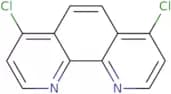
4,7-Dichloro-1,10-phenanthroline
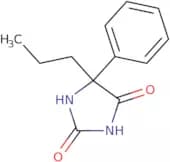
CAS:<p>4,7-Dichloro-1,10-phenanthroline is a bidentate ligand that binds to the chloride anion and has been shown to have anticancer activity against leukemia cells. This compound has also been shown to inhibit the proliferation of cervical cancer cells and chronic myeloid leukemia cells. 4,7-Dichloro-1,10-phenanthroline enhances the fluorescence of human chronic myeloid leukemia cells in a cytometry assay by increasing hydrogen bonding between the cell membrane and fluorophore. This enhancement effect was seen at concentrations of 0.01 μM and higher. 4,7-Dichloro-1,10-phenanthroline also binds to DNA and has been shown to be effective against cancer cells in a luminescent human chronic myeloid leukemia (MRC5) assay.</p>Formula:C12H6Cl2N2Purity:Min. 95%Molecular weight:249.09 g/mol5-Phenyl-5-propylimidazolidine-2,4-dione
CAS:<p>Versatile small molecule scaffold</p>Formula:C12H14N2O2Purity:Min. 95%Molecular weight:218.25 g/mol4-(2,5-Dimethylphenyl)-4-oxobutanoic acid
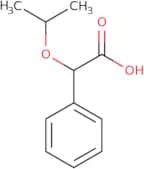
CAS:<p>Versatile small molecule scaffold</p>Formula:C12H14O3Purity:Min. 95%Molecular weight:206.24 g/mol2-Phenyl-2-(propan-2-yloxy)acetic acid
CAS:<p>2-Phenyl-2-(propan-2-yloxy)acetic acid (PPAA) is a serotonin antagonist that inhibits the binding of serotonin to its receptor. PPAA has been shown to have anti-cancer and anti-inflammatory properties. It also has antagonistic properties against azabicyclic compounds, organic acids, and tachykinin peptides. PPAA has also been found to be a prodrug for the treatment of Parkinson's disease, with the active form being 2-(benzyloxy)-2-phenylethanoic acid. The molecular weight of PPAA is 220.21 g/mol and it is soluble in water.<br>PPAA can be synthesized from piperidine and benzyl group with amide as a byproduct. The oxygen atoms in PPAA are c1-c6 alkoxy which are esterified by propan-2-ol.</p>Formula:C11H14O3Purity:Min. 95%Molecular weight:194.23 g/mol2-Bromo-N-propylacetamide
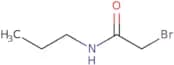
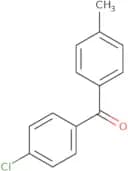
CAS:<p>2-Bromo-N-propylacetamide is a protein target that has been shown to regulate the activity of amines. It has affinity for both anionic and cationic amines. 2-Bromo-N-propylacetamide is used in optimization studies to identify the fluorescent groups that can be used as labels on proteins. This drug also interacts with family members, such as elution and immobilization.</p>Formula:C5H10BrNOPurity:Min. 95%Molecular weight:180.04 g/mol(4-Chlorophenyl)(4-methylphenyl)methanone
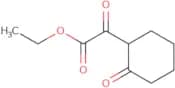
CAS:<p>Versatile small molecule scaffold</p>Formula:C14H11ClOPurity:Min. 95%Color and Shape:PowderMolecular weight:230.69 g/molEthyl oxo(2-oxocyclohexyl)acetate
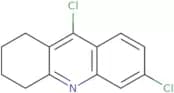
CAS:<p>Ethyl oxo(2-oxocyclohexyl)acetate is a condensation product of glycine and anhydride, which is obtained by heating the two components in the presence of acid. The reaction yields an isomeric mixture of ethyl oxo(2-oxocyclohexyl)acetate and ethyl oxo(3-oxocyclohexyl)acetate. The condensation products are hydrolyzed to their respective amino acids with ammonia or sodium hydroxide. Ethyl oxo(2-oxocyclohexyl)acetate can also be synthesized from glycine ethyl ester and aminomalonic acid in the presence of enamine.</p>Formula:C10H14O4Purity:Min. 95%Molecular weight:198.22 g/mol6,9-Dichloro-1,2,3,4-tetrahydroacridine
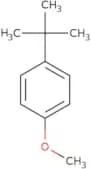
CAS:<p>Versatile small molecule scaffold</p>Formula:C13H11Cl2NPurity:Min. 95%Molecular weight:252.14 g/mol4-tert-Butylanisole
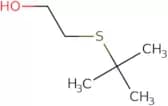
CAS:<p>4-tert-Butylanisole is an amide that has been shown to undergo conformational changes upon irradiation with light. The photochemical cleavage of the amide bond occurs with a quantum yield of 0.4 and produces a diphenyl ether and an acetonitrile derivative. This reaction mechanism has been proposed in order to explain the formation of a nitro group in the molecule, which is responsible for its labile nature. Labile molecules are those that can easily undergo decomposition or change their structure due to external influences, such as heat or light. 4-tert-Butylanisole also undergoes reductive elimination reactions when treated with ethyl bromoacetate, which leads to the formation of labile products as well.</p>Formula:C11H16OPurity:Min. 95%Molecular weight:164.25 g/mol2-(tert-Butylsulfanyl)ethan-1-ol
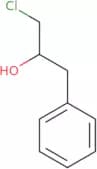
CAS:<p>Versatile small molecule scaffold</p>Formula:C6H14OSPurity:Min. 95%Molecular weight:134.24 g/mol1-Chloro-3-phenylpropan-2-ol
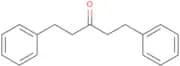
CAS:<p>1-Chloro-3-phenylpropan-2-ol is an alcohol that is detectable and has been shown to have a stereoselective dehydrogenase activity. The kinetic parameters of this enzyme are optimal for the detection of 1-chloro-3-phenylpropan-2-ol in complex mixtures. It has been used in pharmaceuticals as a chiral building block, where it forms a ternary complex with a chiral metal ion and an amino acid. This enzyme is also able to catalyze the conversion of phenylacetone into amphetamine.</p>Formula:C9H11ClOPurity:Min. 95%Molecular weight:170.63 g/mol1,5-Diphenylpentan-3-one
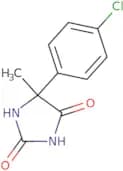
CAS:<p>1,5-Diphenylpentan-3-one is a hydroxylated analog of the anti-inflammatory compound 1,5-diphenylpentan-2-one. It can be used as a reactive intermediate in the synthesis of ester compounds, hydrogen bond inhibitors, and insulin resistance inhibitors. This compound also has the ability to inhibit HDAC activity and radiation.</p>Formula:C17H18OPurity:Min. 95%Molecular weight:238.32 g/mol5-(4-Chlorophenyl)-5-methylimidazolidine-2,4-dione
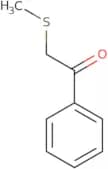
CAS:<p>Versatile small molecule scaffold</p>Formula:C10H9ClN2O2Purity:Min. 95%Molecular weight:224.64 g/mol2-(Methylsulfanyl)-1-phenylethan-1-one
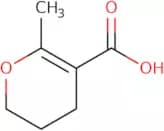
CAS:<p>2-(Methylsulfanyl)-1-phenylethan-1-one is a sulfoxide that was synthesized by the photoelectron transfer of methylsulfane. It is an electron acceptor, which can be reduced to the corresponding sulfide or sulfone. It has been shown to react with carbonyl groups and thioacetals, forming triazole derivatives. The molecule has been found to have affinity for aluminium surfaces and has a strong interaction with the carbonyl group.</p>Formula:C9H10OSPurity:Min. 95%Molecular weight:166.24 g/mol6-Methyl-3,4-dihydro-2H-pyran-5-carboxylic acid
CAS:<p>6-Methyl-3,4-dihydro-2H-pyran-5-carboxylic acid is an organic compound that is used as a solvent. It is preferentially soluble in solvents with low boiling points and high dielectric constants. The solvation of 6-methylpyran-5-carboxylic acid can be accomplished by photooxygenation or hydroperoxide formation.</p>Formula:C7H10O3Purity:Min. 95%Molecular weight:142.15 g/mol4-Sulfobenzoic acid potassium
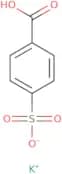
CAS:<p>4-Sulfobenzoic acid potassium salt is a quasicrystalline compound with a flow rate of 0.1 cm/s. It is a molecule with an approximate diameter of 2 nm and functional groups that include sulfonic acid, carboxylic acid, hydroxyl, and OH. 4-Sulfobenzoic acid potassium salt has a high solubility in water and can be found in the form of potassium ions or as a covalent bond to other molecules. The analytical methods for this compound include IR (infrared) spectroscopy, Raman spectroscopy, X-ray diffraction analysis, and electron microscopy. A synthetic method for 4-sulfobenzoic acid potassium salt is via reaction of benzoic acid with potassium hydroxide followed by recrystallization from ethanol. This compound can be found in the form of nanosheets or polymerized into polybenzoxazole films</p>Formula:C7H6O5S•KPurity:Min. 95%Molecular weight:241.28 g/mol7-Chloro-3-methyl-1H-pyrazolo[4,3-d]pyrimidine
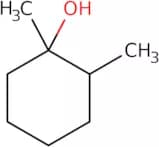
CAS:<p>Formycin is a form of potassium glycolate (KG), which belongs to the class of chlorinated alkyl ethers. Formycin has been used as an antiseptic, but is no longer in use due to its toxicity. It is also a potent inhibitor of bacterial growth and was used in the past for treating tuberculosis. The methylation of KG produces formaldehyde, which can react with ethylene glycol to produce ethylene glycol monomethyl ether (EGME). EGME is highly toxic and can cause lung damage.</p>Formula:C6H5ClN4Purity:Min. 95%Molecular weight:168.58 g/mol1,2-Dimethylcyclohexan-1-ol
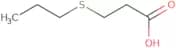
CAS:<p>1,2-Dimethylcyclohexan-1-ol is a hydroxylated phenolic compound that has been shown to inhibit the production of inflammatory cytokines. It also inhibits the activity of carboxylesterases and aminopeptidases in vitro, which may be due to its acidic nature. This drug is used to treat autoimmune diseases such as rheumatoid arthritis, psoriasis, and multiple sclerosis. 1,2-Dimethylcyclohexan-1-ol can be synthesized from hydroxybenzene and formaldehyde with hydrochloric acid as a reaction intermediate. It reacts with trifluoroacetic acid to produce an intermediate that is soluble in water. This compound is also susceptible to oxidation by air or light.</p>Formula:C8H16OPurity:Min. 95%Molecular weight:128.21 g/mol3-(Propylsulfanyl)propanoic acid
CAS:<p>Versatile small molecule scaffold</p>Formula:C6H12O2SPurity:Min. 95%Molecular weight:148.23 g/mol2,5-Dichlorobenzenesulfonyl Chloride
CAS:<p>2,5-Dichlorobenzenesulfonyl Chloride is a chemical compound that binds to the G protein-coupled receptor. It has been shown to stabilize the receptor and inhibit angiogenic process. 2,5-Dichlorobenzenesulfonyl Chloride has been shown to have anticancer activity against human glioma cells in vitro and in vivo. It also inhibits hydrogen bonding interactions with the receptor which may be important for cancer treatment.<br>2,5-Dichlorobenzenesulfonyl Chloride is soluble in chloroform and acetone but not water or ethanol. The solubility of this compound can be improved by adding a solvent such as benzene or dichloromethane.</p>Formula:C6H3Cl3O2SPurity:Min. 95%Molecular weight:245.51 g/mol

![7-Chloro-3-methyl-1H-pyrazolo[4,3-d]pyrimidine](/_next/image/?url=https%3A%2Fstatic.cymitquimica.com%2Fproducts%2F3D%2Fthumb-webp%2FFAA39995.webp&w=3840&q=75)