


Building Blocks
This section contains fundamental products for the synthesis of organic and biological compounds. Building blocks are the essential starting materials used to construct complex molecules through various chemical reactions. They play a critical role in drug discovery, material science, and chemical research. At CymitQuimica, we offer a diverse range of high-quality building blocks to support your innovative research and industrial projects, ensuring you have the essential components for successful synthesis.
Subcategories of "Building Blocks"
- Boronic Acids & Boronic Acid Derivatives(5,783 products)
- Chiral Building Blocks(1,242 products)
- Hydrocarbon Building Blocks(6,105 products)
- Organic Building Blocks(61,055 products)
Found 205383 products of "Building Blocks"
Sort by
Purity (%)
0
100
|
0
|
50
|
90
|
95
|
100
tert-Butyl 2,7-diazaspiro[4.6]undecane-2-carboxylate
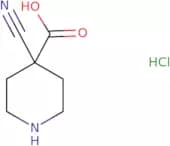
CAS:Versatile small molecule scaffoldFormula:C14H26N2O2Purity:Min. 95%Molecular weight:254.37 g/mol4-Cyanopiperidine-4-carboxylic acid hydrochloride
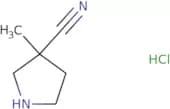
CAS:Versatile small molecule scaffoldFormula:C7H11ClN2O2Purity:Min. 95%Molecular weight:190.63 g/mol3-methylpyrrolidine-3-carbonitrile hydrochloride
CAS:Versatile small molecule scaffoldFormula:C6H11ClN2Purity:Min. 95%Molecular weight:146.62 g/molMethyl 2-methylmorpholine-2-carboxylate hydrochloride
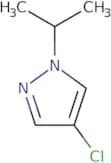
CAS:Versatile small molecule scaffoldFormula:C7H14ClNO3Purity:Min. 95%Molecular weight:195.64 g/mol4-Chloro-1-isopropyl-1H-pyrazole
CAS:4-Chloro-1-isopropyl-1H-pyrazole is a hydrochloric acid derivative that can be obtained through the hydrolysis of 4-chloro-1,2,3,4-tetrahydroisoquinoline. It has been shown to be efficient in the cleavage of bonds with a C=C bond and a C=N bond. This compound is reactive and can react with aziridines to produce N-substituted aziridines in high yield. 4-Chloro-1-isopropylpyrazole reacts efficiently with acetonitrile and tetrahydrofuran.Formula:C6H9ClN2Purity:Min. 95%Molecular weight:144.6 g/molN-Benzylpyrrolidine-3-carboxamide hydrochloride
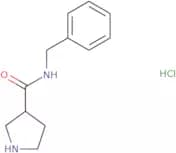
CAS:Versatile small molecule scaffoldFormula:C12H17ClN2OPurity:Min. 95%Molecular weight:240.73 g/mol6-Amino-N-(3-ethoxyphenyl)pyridine-2-carboxamide hydrochloride
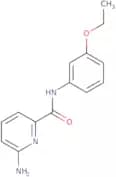
CAS:Versatile small molecule scaffoldFormula:C14H15N3O2Purity:Min. 95%Molecular weight:257.29 g/molZofenoprilat-d5
CAS:Controlled ProductPlease enquire for more information about Zofenoprilat-d5 including the price, delivery time and more detailed product information at the technical inquiry form on this pageFormula:C15H14D5NO3S2Purity:Min. 95%Molecular weight:330.48 g/molTrans-ethyl 2-(4-methoxyphenyl)cyclopropanecarboxylate
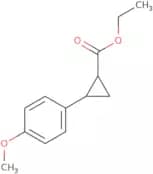
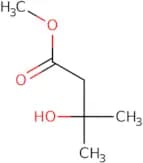
CAS:Versatile small molecule scaffoldFormula:C13H16O3Purity:Min. 95%Molecular weight:220.26 g/molMethyl 3-hydroxy-3-methylbutanoate
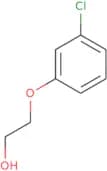
CAS:Methyl 3-hydroxy-3-methylbutanoate is a reactive compound that can be used as a building block in organic synthesis. It is used to synthesize a variety of compounds, including pharmaceuticals and agrochemicals. Methyl 3-hydroxy-3-methylbutanoate has been shown to react with methoxy groups to form methyl hydroxy groups. This reaction is catalyzed by the protonation of the oxygen atom on the reactant's oxygen atom, which leads to a cyclic transition state. Kinetic studies have been performed and show that the rate of this reaction increases with an increase in temperature. The kinetic parameters for this reaction are not currently known, but it has been shown that the nucleophilic attack on the carbon atom adjacent to the leaving group occurs from primary alcohols and alkyl halides.Formula:C6H12O3Purity:Min. 95%Molecular weight:132.16 g/mol2-(3-Chlorophenoxy)ethan-1-ol
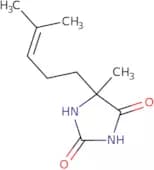
CAS:Versatile small molecule scaffoldFormula:C8H9ClO2Purity:Min. 95%Molecular weight:172.61 g/mol5-Methyl-5-(4-methylpent-3-en-1-yl)imidazolidine-2,4-dione
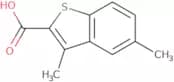
CAS:Versatile small molecule scaffoldFormula:C10H16N2O2Purity:Min. 95%Molecular weight:196.25 g/mol3,5-Dimethyl-1-benzothiophene-2-carboxylic acid
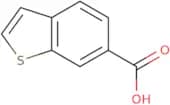
CAS:3,5-Dimethyl-1-benzothiophene-2-carboxylic acid is a fatty acid that is found in the blood of human beings and other animals. It has been shown to be an acidic molecule that is soluble in water. 3,5-Dimethyl-1-benzothiophene-2-carboxylic acid is also a component of hippuric acid and diazaborine, which are used as chromatographic methods for the analysis of biological specimens. The molecular weight of 3,5-dimethyl-1-benzothiophene 2 carboxylic acid is 216.3 g/mol. This compound can be used as a viscosity indicator, with high concentrations resulting in increased viscosity. 3,5 - Dimethyl benzothiophene 2 carboxylic acid can be found in butyric acid and malic acid as sulfonic acids. It can also be found in peFormula:C11H10O2SPurity:Min. 95%Molecular weight:206.26 g/mol1-Benzothiophene-6-carboxylic acid
CAS:1-Benzothiophene-6-carboxylic acid is a nicotinic acetylcholine receptor agonist that has been shown to have high oral bioavailability and efficacy in vivo. It binds to the α7 nicotinic acetylcholine receptor and activates the receptor, leading to increased neurotransmitter release. 1-Benzothiophene-6-carboxylic acid has been shown to be effective in vivo in models of neuropathic pain and Parkinson's disease. This drug also has a low affinity for other receptors, such as muscarinic acetylcholine receptors, which reduces the chance of adverse effects.
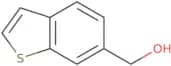
Formula:C9H6O2SPurity:Min. 95%Molecular weight:178.21 g/mol1-Benzothiophen-6-ylmethanol
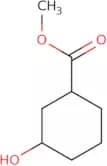
CAS:Versatile small molecule scaffoldFormula:C9H8OSPurity:Min. 95%Molecular weight:164.22 g/molMethyl cis-3-hydroxycyclohexane-1-carboxylate
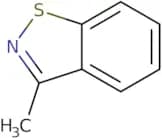
CAS:Versatile small molecule scaffoldFormula:C8H14O3Purity:Min. 95%Molecular weight:158.19 g/mol3-Methyl-1,2-benzothiazole
CAS:3-Methyl-1,2-benzothiazole is an oxime, a chemical that can reverse the effects of nerve gas. It is used as a stabilizer in polyphosphoric acid and cyanic acid. 3-Methyl-1,2-benzothiazole is also used to make other chemicals, such as cyclopentadienyl manganese tricarbonyl (CpMn(CO)3).Formula:C8H7NSPurity:Min. 95%Molecular weight:149.21 g/mol3,3-Diethoxy-propionic acid
CAS:3,3-Diethoxy-propionic acid is a synthetic compound that has been shown to inhibit the activity of dipeptidyl peptidase-4 (DPP-4). This enzyme plays an important role in the regulation of blood sugar levels. 3,3-Diethoxy-propionic acid is orally active and has potent inhibition of DPP-4. It is also an inhibitor of ethyl esters and asymmetric synthesis. 3,3-Diethoxy-propionic acid can be used as a potential drug for diabetes mellitus type II.Formula:C7H14O4Purity:Min. 95%Molecular weight:162.19 g/molImidazo[1,2-a]pyridine-3-carbonitrile
CAS:Versatile small molecule scaffoldFormula:C8H5N3Purity:Min. 95%Molecular weight:143.15 g/molEthyl 2-[(cyclopropylmethyl)amino]acetate
CAS:Versatile small molecule scaffoldFormula:C8H15NO2Purity:Min. 95%Molecular weight:157.21 g/mol
![tert-Butyl 2,7-diazaspiro[4.6]undecane-2-carboxylate](/_next/image/?url=https%3A%2Fstatic.cymitquimica.com%2Fproducts%2F3D%2Fthumb-webp%2FFYB75033.webp&w=3840&q=75)


![Imidazo[1,2-a]pyridine-3-carbonitrile](/_next/image/?url=https%3A%2Fstatic.cymitquimica.com%2Fproducts%2F3D%2Fthumb-webp%2FGAA20059.webp&w=3840&q=75)
![Ethyl 2-[(cyclopropylmethyl)amino]acetate](/_next/image/?url=https%3A%2Fstatic.cymitquimica.com%2Fproducts%2F3D%2Fthumb-webp%2FGAA20101.webp&w=3840&q=75)