Building Blocks
This section contains fundamental products for the synthesis of organic and biological compounds. Building blocks are the essential starting materials used to construct complex molecules through various chemical reactions. They play a critical role in drug discovery, material science, and chemical research. At CymitQuimica, we offer a diverse range of high-quality building blocks to support your innovative research and industrial projects, ensuring you have the essential components for successful synthesis.
Subcategories of "Building Blocks"
- Boronic Acids & Boronic Acid Derivatives(5,756 products)
- Chiral Building Blocks(1,242 products)
- Hydrocarbon Building Blocks(6,095 products)
- Organic Building Blocks(61,055 products)
Found 199650 products of "Building Blocks"
Sort by
Purity (%)
0
100
|
0
|
50
|
90
|
95
|
100
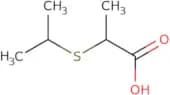
2-(Propan-2-ylsulfanyl)propanoic acid
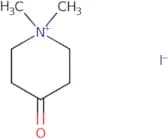
CAS:<p>Versatile small molecule scaffold</p>Formula:C6H12O2SPurity:Min. 95%Molecular weight:148.23 g/mol1,1-Dimethylpiperidin-1-ium-4-one iodide
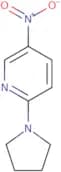
CAS:<p>1,1-Dimethylpiperidin-1-ium-4-one iodide is a high yield and efficient transaminating agent that has been used in the synthesis of acrylates. It reacts with dimethylamine to produce acrylate, which can be used to synthesize polymers. This compound is also used as a catalyst in the production of polyethylene terephthalate (PET).</p>Formula:C7H14NOIPurity:Min. 95%Molecular weight:255.1 g/mol5-Nitro-2-pyrrolidinopyridine
CAS:<p>Versatile small molecule scaffold</p>Formula:C9H11N3O2Purity:Min. 95%Molecular weight:193.21 g/mol5-Nitro-2-(piperidine-1-yl)pyridine
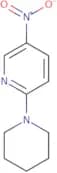
CAS:<p>5-Nitro-2-(piperidine-1-yl)pyridine is a product that is formed by the nucleophilic addition of nitric acid to 1,3-diketones. It has been used in the synthesis of phenyl and isoxazole derivatives. The reaction was rationalized using amines as nucleophiles, which attack the electrophilic carbon atom in the ketone. This product has also been shown to be an effective nucleophile for attacking other molecules, such as azides and nitrates. In the Australian outback, 5-Nitro-2-(piperidine-1-yl)pyridine can be found in soils and plants.</p>Formula:C10H13N3O2Purity:Min. 95%Molecular weight:207.23 g/mol3-Bromo-N-ethylbenzamide
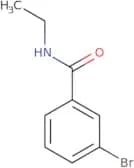
CAS:<p>Versatile small molecule scaffold</p>Formula:C9H10BrNOPurity:Min. 95%Molecular weight:228.09 g/molN-Ethyl-3-methylbenzamide
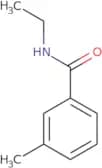
CAS:<p>N-Ethyl-m-toluamide is a chemical enhancer that is used to increase the effectiveness of insecticides and other chemicals. It is used in animal urine samples to test for the presence of drugs, such as amphetamines, cocaine, and cannabinoids. N-Ethyl-m-toluamide is also used in wastewater treatment plants to eliminate bacteria and enhance the removal of organic matter. In addition, it has been shown to be active against human liver cells. The second order rate constant was found to be 6.8 x 10^6 M^(-1) s^(-1) at 25 degrees Celsius.<br>N-Ethyl-m-toluamide can cause skin reactions in people who are exposed to it on a daily basis over an extended period of time. This chemical may also have carcinogenic effects on cells, which may be due to its ability to induce DNA mutations in vitro and promote tumor growth in vivo.</p>Formula:C10H13NOPurity:Min. 95%Molecular weight:163.22 g/mol1-Bromooctan-2-one
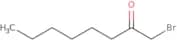
CAS:<p>1-Bromooctan-2-one (BOA) is a lipolytic enzyme inhibitor that blocks the activity of phosphatidylcholine lipase and monoacylglycerol lipase. It also inhibits transport properties and has been shown to inhibit histidine decarboxylase, which converts histidine into histamine. The nitrogen atoms in BOA are substituted with fluorine and can be converted to enantiopure derivatives by chemoenzymatic reactions. These derivatives have been shown to be more potent inhibitors of phosphatidylcholine lipase than BOA itself.</p>Formula:C8H15BrOPurity:Min. 95%Molecular weight:207.11 g/mol1-Bromohexan-2-one
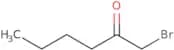
CAS:<p>1-Bromohexan-2-one is a bifunctional monomer that can be used in the synthesis of polystyrene. It has two functional groups, a carboxylic acid and an alcohol. The carboxyl group of the 1-bromohexan-2-one is activated by a strong base such as pyridine to form an ester or an amide. The alcohol group can be converted into a carbonyl group with a strong oxidizing agent such as benzoic acid, which is then reacted with ammonia to form an amine. 1-Bromohexan-2-one is also used in the synthesis of fluorescent compounds. It reacts with various heterocycles to produce fluorescence when irradiated with light at wavelengths of 350 nm or 380 nm.</p>Formula:C6H11BrOPurity:Min. 95%Molecular weight:179.05 g/mol1-Bromohexan-2-ol
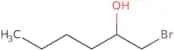
CAS:<p>1-Bromohexan-2-ol is a chiral alcohol that has been used to study the mechanisms of dehydration and stabilization. The molecule is also an epitaxial reagent. It has been shown that 1-bromohexan-2-ol dehydrates in acidic conditions to produce 1,2-dibromohexane. Furthermore, it can be used as an optical resolution agent for chiral molecules and can be used during the synthesis of ionic liquids. 1-Bromohexan-2-ol is a chiral molecule with a high degree of stereospecificity, which can be used in catalysis and bilayered supramolecular assembly.</p>Formula:C6H13BrOPurity:Min. 95%Molecular weight:181.07 g/mol1-Bromopentan-2-ol
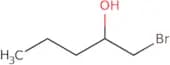
CAS:<p>1-Bromopentan-2-ol is an additive that is used in lubricating preparations, as well as a solvent in spectroscopy. It has been shown to have antimicrobial properties against fungi and bacteria. 1-Bromopentan-2-ol's antimicrobial effects are due to its ability to inhibit the growth of bacteria by binding to amine groups on proteins and preventing the formation of new cell walls. 1-Bromopentan-2-ol also has the ability to react with formaldehyde, generating formaldehyde gas which inhibits microbial growth.</p>Formula:C5H11BrOPurity:Min. 95%Molecular weight:167.04 g/mol2-Amino-N-hydroxy-2-methylpropanamide hydrochloride
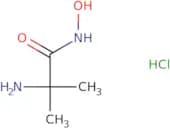
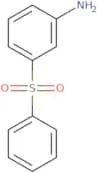
CAS:<p>Versatile small molecule scaffold</p>Formula:C4H11ClN2O2Purity:Min. 95%Molecular weight:154.59 g/mol3-(Benzenesulfonyl)aniline
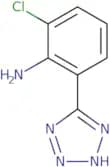
CAS:<p>Versatile small molecule scaffold</p>Formula:C12H11NO2SPurity:Min. 95%Molecular weight:233.29 g/mol2-Chloro-6-(2H-tetrazol-5-yl)aniline
CAS:<p>Versatile small molecule scaffold</p>Formula:C7H6ClN5Purity:Min. 95%Molecular weight:195.61 g/molethyl 3-hydroxybicyclo[3.1.0]hexane-6-carboxylate
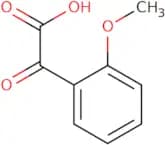
CAS:<p>Versatile small molecule scaffold</p>Formula:C9H14O3Purity:Min. 95%Molecular weight:170.21 g/mol2-(2-Methoxyphenyl)-2-oxoacetic acid
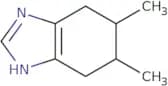
CAS:<p>Versatile small molecule scaffold</p>Formula:C9H8O4Purity:Min. 95%Molecular weight:180.16 g/mol5,6-Dimethyl-4,5,6,7-tetrahydro-1H-1,3-benzodiazole
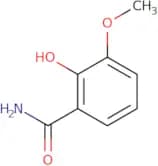
CAS:<p>Versatile small molecule scaffold</p>Formula:C9H14N2Purity:Min. 95%Molecular weight:150.22 g/mol2-Hydroxy-3-methoxybenzamide
CAS:<p>2-Hydroxy-3-methoxybenzamide is an organic molecule that binds to a series of receptors in the central nervous system. It is thought to be an agonist for the D2 receptor, which mediates inhibition of dopamine release from neurons. 2-Hydroxy-3-methoxybenzamide has been synthesized and shown to have high affinity for the D2 receptor, as well as other receptors in the brain. This drug has been shown to have beneficial effects on hyperactivity in rats and could be used for the treatment of Parkinson's disease or schizophrenia.</p>Formula:C8H9NO3Purity:Min. 95%Molecular weight:167.16 g/mol1-(1-Adamantyl)ethanol
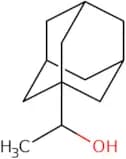
CAS:<p>1-(1-Adamantyl)ethanol is an organic solution with a viscosity of 1.06 cP at 20 °C. It has a hydrochloric acid (HCl) content of less than 0.001%. The chemical compound has been shown to be therapeutically effective in autoimmune diseases, such as multiple sclerosis, lupus erythematosus, and rheumatoid arthritis. 1-(1-Adamantyl)ethanol has been shown to inhibit the production of proinflammatory cytokines and chemokines that are associated with these diseases. This compound also inhibits the activation of T cells and B cells, which are immune cells that play important roles in these inflammatory processes. 1-(1-Adamantyl)ethanol can be taken orally in a pharmaceutical dosage form or intravenously as an infusion therapy.</p>Formula:C12H20OPurity:Min. 95%Molecular weight:180.29 g/mol3-{3,5-Dioxo-4-azatricyclo[5.2.1.0,2,6]dec-8-en-4-yl}propanoic acid
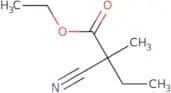
CAS:<p>Versatile small molecule scaffold</p>Formula:C12H13NO4Purity:Min. 95%Molecular weight:235.24 g/molEthyl 2-cyano-2-methylbutanoate
CAS:<p>Versatile small molecule scaffold</p>Formula:C8H13NO2Purity:Min. 95%Molecular weight:155.19 g/mol

![ethyl 3-hydroxybicyclo[3.1.0]hexane-6-carboxylate](/_next/image/?url=https%3A%2Fstatic.cymitquimica.com%2Fproducts%2F3D%2Fthumb-webp%2FBBA78636.webp&w=3840&q=75)
![3-{3,5-Dioxo-4-azatricyclo[5.2.1.0,2,6]dec-8-en-4-yl}propanoic acid](/_next/image/?url=https%3A%2Fstatic.cymitquimica.com%2Fproducts%2F3D%2Fthumb-webp%2FBBA74997.webp&w=3840&q=75)