Building Blocks
This section contains fundamental products for the synthesis of organic and biological compounds. Building blocks are the essential starting materials used to construct complex molecules through various chemical reactions. They play a critical role in drug discovery, material science, and chemical research. At CymitQuimica, we offer a diverse range of high-quality building blocks to support your innovative research and industrial projects, ensuring you have the essential components for successful synthesis.
Subcategories of "Building Blocks"
- Boronic Acids & Boronic Acid Derivatives(5,756 products)
- Chiral Building Blocks(1,242 products)
- Hydrocarbon Building Blocks(6,095 products)
- Organic Building Blocks(61,055 products)
Found 199650 products of "Building Blocks"
Sort by
Purity (%)
0
100
|
0
|
50
|
90
|
95
|
100
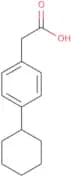
2-(4-Cyclohexylphenyl)acetic acid
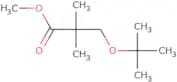
CAS:<p>2-(4-Cyclohexylphenyl)acetic acid is an organic compound that has a chloride substituent and a carboxylic acid functional group. The hydrogen chloride molecule is bound to the active site in the experimental model. 2-(4-Cyclohexylphenyl)acetic acid is also found in cyclohexane ring, phenylpropionic acid and diethylamine salt. It is an isomeric compound, which has two different forms, namely the cis and trans form. The cis form has a quadratic structure with 4 carbons in the benzene ring, while the trans form has a linear structure with 3 carbons in the benzene ring. Chromatographic analysis of 2-(4-cyclohexylphenyl)acetic acid shows a single peak at Rf 0.48 (chloride). High-performance liquid chromatography analysis shows that there are only two peaks detected, one at t=0</p>Formula:C14H18O2Purity:Min. 95%Molecular weight:218.29 g/molMethyl 3-(tert-butoxy)-2,2-dimethylpropanoate
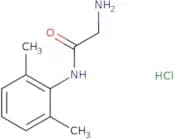
CAS:<p>Versatile small molecule scaffold</p>Formula:C10H20O3Purity:Min. 95%Molecular weight:188.26 g/mol2-Amino-N-(2,6-dimethylphenyl)acetamide hydrochloride
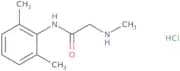
CAS:<p>Procaine is a local anesthetic that can be used in humans and animals. It is a competitive inhibitor of enzymes that catalyze the formation of prostaglandins from arachidonic acid, such as cyclooxygenase, lipoxygenase, and cytochrome P450. Procaine has been shown to inhibit the activity of these enzymes by binding to their active site, thereby preventing them from forming prostaglandins. The inhibition of prostaglandin synthesis by procaine prevents the pain caused by tissue damage or inflammation. Procaine is also thought to interact with calcium concentrations in neurons and synaptic vesicles, which may lead to its ability to block voltage-gated sodium channels in nerve cells (e.g., transmission).</p>Formula:C10H15ClN2OPurity:Min. 95%Molecular weight:214.69 g/molN-(2,6-Dimethylphenyl)-2-(methylamino)acetamide hydrochloride
CAS:<p>Versatile small molecule scaffold</p>Formula:C11H17ClN2OPurity:Min. 95%Molecular weight:228.72 g/mol2H,4H,5H,6H-Furo[3,2-b]pyridin-2-one
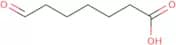
CAS:<p>Versatile small molecule scaffold</p>Formula:C7H7NO2Purity:Min. 95%Molecular weight:137.14 g/mol7-Oxoheptanoic acid
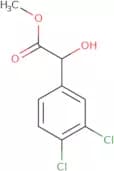
CAS:<p>7-Oxoheptanoic acid is a synthetic fatty acid that is found in the plasma of humans and other mammals. It is produced by oxidation of cholesterol, which occurs in the liver and small intestine. 7-Oxoheptanoic acid has been shown to be involved in the regulation of gene expression through modifications to DNA and protein targets. This fatty acid also has covalent adducts with plasma proteins such as trypsin and plasmin, which may contribute to its biological activity. 7-Oxoheptanoic acid can be oxidized into reactive oxygen species (ROS) that have been shown to cause oxidative damage to lipids, proteins, and DNA.</p>Formula:C7H12O3Purity:Min. 95%Molecular weight:144.17 g/molMethyl 2-(3,4-dichlorophenyl)-2-hydroxyacetate
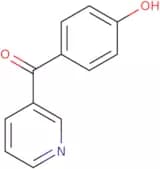
CAS:<p>Versatile small molecule scaffold</p>Formula:C9H8Cl2O3Purity:Min. 95%Molecular weight:235.06 g/mol(4-Hydroxyphenyl)(pyridin-3-yl)methanone
CAS:<p>Versatile small molecule scaffold</p>Formula:C12H9NO2Purity:Min. 95%Molecular weight:199.2 g/mol2-Iodo-5-methylphenol
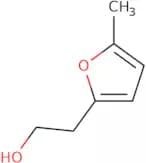
CAS:<p>2-Iodo-5-methylphenol (2IMP) is a dianionic, ionophore that utilizes the ionization reaction of potassium ions to sense and measure the concentration of potassium ions in a solution. The sensor consists of an ion-sensitive probe attached to a polydimethylsiloxane membrane on which 2IMP is immobilized. When 2IMP binds to potassium ions, it changes its fluorescence properties and this change can be measured with a fluorescent sensor. The macrocyclization of 2IMP is induced by light irradiation, leading to an increase in the sensitivity of the sensor. This sensor has been used for detection of potassium ions in various solutions such as wastewater and seawater.</p>Formula:C7H7IOPurity:Min. 95%Molecular weight:234.03 g/mol2-(5-Methylfuran-2-yl)ethanol
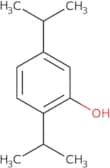
CAS:<p>Versatile small molecule scaffold</p>Formula:C7H10O2Purity:Min. 95%Molecular weight:126.15 g/mol2,5-Diisopropylphenol
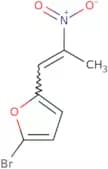
CAS:<p>2,5-Diisopropylphenol is a phenolic compound that belongs to the group of antioxidants. It is an effective scavenger and inhibitor of lipid peroxidation. 2,5-Diisopropylphenol also inhibits nitro and hydroxy radicals, which are reactive oxygen species (ROS) that can cause membrane lipid peroxidation and other oxidative damage. This compound has been shown to have a protective effect on the liver by reducing the toxicity of some drugs. In addition, it has antibacterial activity against Gram-positive bacteria. 2,5-Diisopropylphenol's antioxidant properties are due to its ability to interact with phosphatidylcholine and prevent its oxidation by ROS. It is also glucuronidated in humans and rats.</p>Formula:C12H18OPurity:Min. 95%Molecular weight:178.27 g/mol2-Bromo-5-(2-nitroprop-1-en-1-yl)furan
CAS:<p>Versatile small molecule scaffold</p>Formula:C7H6BrNO3Purity:Min. 95%Molecular weight:232.03 g/molEthyl 2,5-dihydro-1H-pyrrole-3-carboxylate hydrochloride
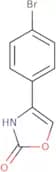
CAS:<p>Versatile small molecule scaffold</p>Formula:C7H12ClNO2Purity:Min. 95%Molecular weight:177.6 g/mol4-(4-Bromophenyl)-2,3-dihydro-1,3-oxazol-2-one
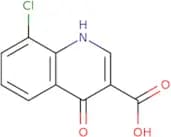
CAS:<p>Versatile small molecule scaffold</p>Formula:C9H6BrNO2Purity:Min. 95%Molecular weight:240.05 g/mol8-Chloro-4-hydroxyquinoline-3-carboxylic acid
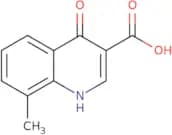
CAS:<p>Versatile small molecule scaffold</p>Formula:C10H6ClNO3Purity:Min. 95%Molecular weight:223.61 g/mol4-Hydroxy-8-methylquinoline-3-carboxylic acid
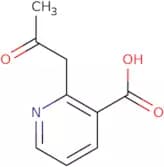
CAS:<p>4-Hydroxy-8-methylquinoline-3-carboxylic acid is a potent antibacterial compound that has been shown to have strong antibacterial activity against both gram-positive and gram-negative bacteria. 4-Hydroxy-8-methylquinoline-3-carboxylic acid has been shown to be active against several different types of bacteria, including Staphylococcus aureus, Streptococcus pneumoniae, Escherichia coli, Haemophilus influenzae, Neisseria gonorrhoeae, and Pseudomonas aeruginosa. It is also active against some antibiotic resistant strains of bacteria. 4HMQC is a quinoline derivative which is modified by the addition of a methyl group to one of the rings. This modification increases its potency because it makes the molecule more lipophilic and hydrophobic. The resulting molecule may also be used as a phase transfer catalyst or as an antimicrobial</p>Formula:C11H9NO3Purity:Min. 95%Molecular weight:203.2 g/mol2-(2-Oxopropyl)pyridine-3-carboxylic acid
CAS:<p>Versatile small molecule scaffold</p>Formula:C9H9NO3Purity:Min. 95%Molecular weight:179.17 g/mol2-(2-Ethoxy-2-oxoethyl)nicotinic acid
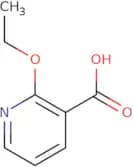
CAS:<p>2-(2-Ethoxy-2-oxoethyl)nicotinic acid (EETN) belongs to the class of intramolecular reactions. It is a urethane that undergoes an intramolecular cyclization reaction with isocyanate and azide. The nucleophiles are then incorporated into the resulting azaindole ring, which can be cleaved by hydrolysis to release nicotinic acid or azaindole. EETN has been used as a target compound in the synthesis of various other compounds, such as nicotinic acid and azaindole.</p>Formula:C10H11NO4Purity:Min. 95%Molecular weight:209.2 g/mol2-Ethoxy-nicotinic acid
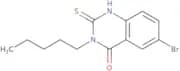
CAS:<p>2-Ethoxy-nicotinic acid is an inorganic compound that contains oxygen and hydrogen. It has been shown to interact with amines, carboxylates, and other inorganic compounds. 2-Ethoxy-nicotinic acid is a supramolecular complex consisting of naphthyridine and ethoxy groups. The hydrogen bonding interactions between the ethoxy groups and the amine groups are what make this molecule magnetic. The isomers of this compound have been synthesized and diffraction experiments have shown that it has a cyclic structure. Compounds similar to 2-Ethoxy-nicotinic acid include malonate, which has two carboxylate groups. This molecule also reacts with hydrogen gas at high temperatures to produce hydrogen gas and carbon dioxide.</p>Formula:C8H9NO3Purity:Min. 95%Molecular weight:167.16 g/mol6-Bromo-3-pentyl-2-sulfanyl-3,4-dihydroquinazolin-4-one
CAS:<p>Versatile small molecule scaffold</p>Formula:C13H15BrN2OSPurity:Min. 95%Molecular weight:327.24 g/mol

![2H,4H,5H,6H-Furo[3,2-b]pyridin-2-one](/_next/image/?url=https%3A%2Fstatic.cymitquimica.com%2Fproducts%2F3D%2Fthumb-webp%2FKBA89435.webp&w=3840&q=75)