Building Blocks
This section contains fundamental products for the synthesis of organic and biological compounds. Building blocks are the essential starting materials used to construct complex molecules through various chemical reactions. They play a critical role in drug discovery, material science, and chemical research. At CymitQuimica, we offer a diverse range of high-quality building blocks to support your innovative research and industrial projects, ensuring you have the essential components for successful synthesis.
Subcategories of "Building Blocks"
- Boronic Acids & Boronic Acid Derivatives(5,756 products)
- Chiral Building Blocks(1,242 products)
- Hydrocarbon Building Blocks(6,095 products)
- Organic Building Blocks(61,038 products)
Found 196817 products of "Building Blocks"
Sort by
Purity (%)
0
100
|
0
|
50
|
90
|
95
|
100
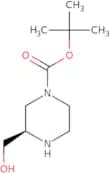
(R)-4-N-Boc-2-hydroxymethyl-piperazine
CAS:<p>Please enquire for more information about (R)-4-N-Boc-2-hydroxymethyl-piperazine including the price, delivery time and more detailed product information at the technical inquiry form on this page</p>Formula:C10H20N2O3Purity:Min. 95%Molecular weight:216.28 g/mol4-(Benzyloxy)piperidine HCl
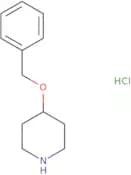
CAS:<p>4-(Benzyloxy)piperidine HCl is a versatile building block that is used in the synthesis of complex compounds such as research chemicals, reagents and speciality chemicals. 4-(Benzyloxy)piperidine HCl is also a useful intermediate in organic synthesis and can be used as a reaction component. 4-(Benzyloxy)piperidine HCl has CAS number 81151-68-0 and is a useful scaffold for chemical syntheses.</p>Formula:C12H17NOHClPurity:Min. 95%Color and Shape:White PowderMolecular weight:227.73 g/mol2-Bromo-5-hydroxypyridine
CAS:<p>2-Bromo-5-hydroxypyridine is an aromatic compound that is used in the synthesis of a variety of pharmaceuticals and other organic compounds. It can be synthesized by the Suzuki coupling reaction from 2-bromobenzaldehyde and 5-aminopyridine. 2-Bromo-5-hydroxypyridine has been shown to be a hepatotoxin in humans, with possible carcinogenic activity. It also has cholinergic properties, as well as being able to cause fluorescence when exposed to halogens. The carbon next to the hydroxyl group is a stereocenter, so there are two different configurations for this molecule. The configuration shown above (R) is the more stable form of this molecule due to its electron withdrawing power on the neighboring oxygen atom.</p>Formula:C5H4BrNOPurity:Min. 95%Color and Shape:White PowderMolecular weight:174 g/molN-Boc-glycine
CAS:<p>N-Boc-glycine is a chemical compound used in the synthesis of cyclic peptides. N-Boc-glycine is synthesized by the reaction of glycine with methanol and hydrochloric acid in the presence of an activated form of carbon monoxide. The pharmacokinetic properties of N-Boc-glycine are similar to those for human immunoglobulin, and it can be used as a reference compound for preparative high performance liquid chromatography (HPLC). It has been shown that the nitrogen atoms in N-Boc-glycine are chemically stable, which makes it suitable for asymmetric synthesis. N-Boc-glycine also has potent antagonist effects on biochemical properties such as calcium channel blockade, inhibition of platelet aggregation, and inhibition of neutrophil chemotaxis.</p>Formula:C7H13NO4Purity:Min. 95%Color and Shape:White PowderMolecular weight:175.18 g/mol3,3-Diethoxypropan-1-amine
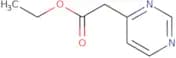
CAS:<p>3,3-Diethoxypropan-1-amine is a synthetic drug that reversibly inhibits the growth of bacteria. It has been shown to be effective against methicillin resistant strains of Staphylococcus aureus and Clostridium perfringens, with no detectable activity against acid-fast bacteria such as Mycobacterium tuberculosis or Mycobacterium avium complex. 3,3-Diethoxypropan-1-amine is a heterobifunctional compound that binds to epidermal growth factor with high affinity. 3,3-Diethoxypropan-1-amine can also bind to collagen and liposomal formulations, which may be useful for the treatment of wounds. This drug has been shown to inhibit δ opioid receptors in mice and rats, which is thought to contribute to its analgesic effects.</p>Formula:C7H17NO2Purity:Min. 95%Molecular weight:147.22 g/molEthyl 2-(pyrimidin-4-yl)acetate
CAS:<p>Versatile small molecule scaffold</p>Formula:C8H10N2O2Purity:Min. 95%Molecular weight:166.18 g/mol2-[(6-Chloro-3,4-dihydro-3-methyl-2,4-dioxo-1(2H)-pyrimidinyl)methyl]-benzonitrile
CAS:<p>2-[(6-Chloro-3,4-dihydro-3-methyl-2,4-dioxo-1(2H)-pyrimidinyl)methyl]-benzonitrile is an antibacterial agent that belongs to the group of nitro compounds. It inhibits bacterial growth by blocking the synthesis of proteins and DNA. 2-[(6-Chloro-3,4-dihydro-3-methyl-2,4-dioxo-1(2H)-pyrimidinyl)methyl]-benzonitrile has been shown to be active against a wide range of bacteria including Gram positive and Gram negative organisms. This compound also exhibits metal ion chelating properties and can be used for the removal of heavy metals from water. The square planar geometry of 2-[(6-Chloro-3,4-(dihydro)-3-(methyl)-2,4-(dioxo)-1</p>Formula:C13H10ClN3O2Purity:Min. 95%Molecular weight:275.69 g/mol3-(4-Hydroxyphenyl)hex-4-ynoic acid
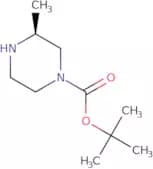
CAS:<p>Versatile small molecule scaffold</p>Formula:C12H12O3Purity:Min. 95%Molecular weight:204.22 g/mol(S)-1-Boc-3-methylpiperazine
CAS:<p>(S)-1-Boc-3-methylpiperazine is a hydrophobic compound that is structurally modified from the tetracyclic family of drugs. It has been shown to inhibit tumor cell growth by binding to the oncogene, KRASG12C, and downregulating its expression. (S)-1-Boc-3-methylpiperazine also inhibits cancer cell growth through the inhibition of the PI3K/AKT signaling pathway. The pharmacological effects of (S)-1-Boc-3-methylpiperazine are dependent on its ability to bind with high affinity to KRASG12C and inhibit its activity.</p>Formula:C10H20N2O2Purity:Min. 95%Color and Shape:White PowderMolecular weight:200.28 g/mol1,3-Bis(diphenylphosphino)propane
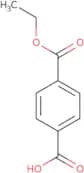
CAS:<p>1,3-Bis(diphenylphosphino)propane is a chelate ligand that forms complexes with a wide range of transition metal ions. It has been shown to be an effective catalyst for the conversion of aryl halides to acid derivatives. The compound has been found to have an excellent stability in aqueous solutions and does not hydrolyze readily in human serum or water. 1,3-Bis(diphenylphosphino)propane is also used as an additive in many industrial processes, such as the production of nylon and polyester fibers.</p>Formula:C27H26P2Purity:Min 96.0%Color and Shape:White Off-White PowderMolecular weight:412.44 g/mol1,4-Benzenedicarboxylic acid, monoethyl ester
CAS:<p>1,4-Benzenedicarboxylic acid, monoethyl ester (1,4-BDE) is a monomer that is used in the manufacture of polycarbonates and other plastics. 1,4-BDE is also used as a solvent for xylene and butanol. It has been shown to be useful in the production of polyester fibers. The monomer can be synthesized by reacting ethylene with terephthalic acid or dimethyl terephthalate (DMT). This reaction produces 1,4-BDE and methanol as byproducts. The process is carried out at temperatures of 250 °C to 300 °C and under atmospheric pressure. The purified product can be isolated using distillation or extraction with organic solvents such as benzene or butanol. The reaction can be carried out in the presence of ruthenium, which acts as a catalyst.</p>Formula:C10H10O4Purity:Min. 95%Color and Shape:White PowderMolecular weight:194.18 g/mol6-Chlorohexanol
CAS:<p>6-Chlorohexanol is a fatty alcohol with a hydroxyl group. It is soluble in water and has a phase transition temperature of -114°C. 6-Chlorohexanol can be synthesized by reacting 2,6-dichlorophenol with hydrochloric acid and sodium hydroxide in the presence of azobenzene. The reaction solution is then heated to about 300°C for 3 hours. 6-Chlorohexanol is used as a model system for studying the photochemical reactions of fatty acids. Hydroxy groups are susceptible to light exposure, which leads to the formation of carbonyl compounds such as malonic acid and chloride monomers.</p>Formula:C6H13ClOPurity:Min. 95%Color and Shape:PowderMolecular weight:136.62 g/molR-(-)-3-Chloro-1,2-propanediol
CAS:<p>R-(-)-3-Chloro-1,2-propanediol is a chiral epoxide that is used in the synthesis of other chemicals. It has been shown to be active against bacterial strains such as corynebacterium and coryneform bacteria. This chemical can be synthesized from hydrochloric acid and chlorinated propane with an asymmetric synthesis. The R-(-)-3-Chloro-1,2-propanediol can also be synthesized through electrochemical methods using chloride ion as the reducing agent. This compound is soluble in water and shows kinetic activity with carbon sources when used as an antibiotic.</p>Formula:C3H7ClO2Purity:Min. 95%Color and Shape:Colorless Clear LiquidMolecular weight:110.54 g/molH-β-Cyclohexyl-Ala-OMe·HCl
CAS:<p>Please enquire for more information about H-beta-Cyclohexyl-Ala-OMe·HCl including the price, delivery time and more detailed product information at the technical inquiry form on this page</p>Formula:C10H19NO2·HClPurity:Min. 95%Molecular weight:221.72 g/mol(1R)-2-Chloro-1-(2,4-dichlorophenyl)ethan-1-ol
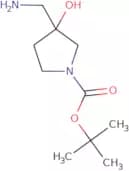
CAS:<p>(1R)-2-Chloro-1-(2,4-dichlorophenyl)ethan-1-ol is a substrate for acetylation that is used in the synthesis of enantiopure alcohols. It has been shown to be an inhibitor of alcohol dehydrogenases and hydrophobic alcohols. (1R)-2-Chloro-1-(2,4-dichlorophenyl)ethan-1-ol has also been found to be active against fungi such as Penicillium chrysogenum and Cryptococcus neoformans. This compound is stereoselective when used as an antifungal agent, which means it will only inhibit one enantiomer of a molecule.</p>Formula:C8H7OCl3Purity:Min. 95%Molecular weight:225.49 g/moltert-butyl 3-(aminomethyl)-3-hydroxypyrrolidine-1-carboxylate
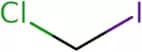
CAS:<p>Versatile small molecule scaffold</p>Formula:C10H20N2O3Purity:Min. 95%Molecular weight:216.3 g/molChloroiodomethane, stabilised with copper
CAS:<p>Chloroiodomethane is a chemical that is used as an intermediate in the production of other chemicals. It is a colourless liquid with a strong odour. 3-Bromopropylamine hydrobromide reacts with chloroiodomethane to form 3-bromopropyl bromide, which can be reacted with hydrogen chloride to form the corresponding acid chloride. This reaction product can then be reacted with β-amino acids to form amides or esters. The reaction mechanism of this process involves nucleophilic substitution of chloroiodomethane by the amino group of the β-amino acid to produce an intermediate α,β-unsaturated carbonyl chloride, which undergoes elimination to give the final product. Chloroiodomethane also reacts rapidly with fatty acids and hydroxyl groups in biological systems, leading to inflammatory diseases such as HIV infection.</p>Formula:CH2ClIPurity:Min. 95%Color and Shape:Colorless Clear LiquidMolecular weight:176.38 g/mol2-Bromo-1-(4-chloro-3-fluorophenyl)ethanone
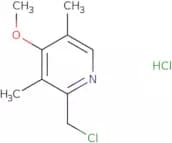
CAS:<p>Please enquire for more information about 2-Bromo-1-(4-chloro-3-fluorophenyl)ethanone including the price, delivery time and more detailed product information at the technical inquiry form on this page</p>Formula:C8H5BrCIFOPurity:Min. 95%Molecular weight:354.94 g/mol2-(Chloromethyl)-4-methoxy-3,5-dimethylpyridine hydrochloride
CAS:<p>2-(Chloromethyl)-4-methoxy-3,5-dimethylpyridine hydrochloride is a benzimidazole derivative. It has a chemical stability and can be used for wastewater treatment. It is also a pump inhibitor and can be used for anhydrous sodium magnesium salts. This product is synthesized from the reaction of protonated 2-bromo-4-methoxyphenol with 2,6-dimethylpyridine in the presence of hydrochloric acid. The reaction was carried out in an asymmetric synthesis using a proton transport system. 2-(Chloromethyl)-4-methoxy-3,5-dimethylpyridine hydrochloride is soluble in water and has a pH of 1 to 3. It has been shown that this product can be used as an antioxidant and as a metal chelation agent.</p>Formula:C9H13Cl2NOPurity:Min. 95%Color and Shape:PowderMolecular weight:222.11 g/molN-(11-Bromoundecyl)carbamic acid t-butyl ester
CAS:<p>Versatile small molecule scaffold</p>Formula:C16H32BrNO2Purity:Min. 95%Molecular weight:350.33 g/mol



![2-[(6-Chloro-3,4-dihydro-3-methyl-2,4-dioxo-1(2H)-pyrimidinyl)methyl]-benzonitrile](/_next/image/?url=https%3A%2Fstatic.cymitquimica.com%2Fproducts%2F3D%2Fthumb-webp%2FQJB75896.webp&w=3840&q=75)