Building Blocks
This section contains fundamental products for the synthesis of organic and biological compounds. Building blocks are the essential starting materials used to construct complex molecules through various chemical reactions. They play a critical role in drug discovery, material science, and chemical research. At CymitQuimica, we offer a diverse range of high-quality building blocks to support your innovative research and industrial projects, ensuring you have the essential components for successful synthesis.
Subcategories of "Building Blocks"
- Boronic Acids & Boronic Acid Derivatives(5,778 products)
- Chiral Building Blocks(1,242 products)
- Hydrocarbon Building Blocks(6,098 products)
- Organic Building Blocks(61,034 products)
Found 199601 products of "Building Blocks"
Sort by
Purity (%)
0
100
|
0
|
50
|
90
|
95
|
100
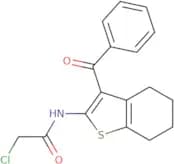
N-(3-Benzoyl-4,5,6,7-tetrahydro-1-benzothiophen-2-yl)-2-chloroacetamide
CAS:Versatile small molecule scaffoldFormula:C17H16ClNO2SPurity:Min. 95%Molecular weight:333.8 g/mol[5-(2-Chlorophenyl)fur-2-yl]methanol
CAS:<p>Versatile small molecule scaffold</p>Formula:C11H9ClO2Purity:Min. 95%Molecular weight:208.64 g/mol2-(5-Methyl-1,3-dioxo-2,3-dihydro-1H-isoindol-2-yl)acetic acid
CAS:<p>Versatile small molecule scaffold</p>Formula:C11H9NO4Purity:Min. 95%Molecular weight:219.19 g/mol4-Methylphthalimide
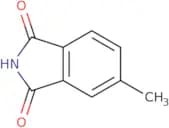
CAS:<p>4-Methylphthalimide is a chiral, birefringent, colorless crystalline compound. It is soluble in water and has a molecular weight of 98.4 g/mol. 4-Methylphthalimide is synthesized by the treatment of methylester with an oxidant and catalytic amide. The chemical reaction yields an isomeric mixture. 4-Methylphthalimide can be used in the treatment of biomolecular research as a chiral stationary phase for gel permeation chromatography (GPC). The compound's high refractive index leads to its use in densities measurements.br>br><br>br>br><br>Densities: 4-methylphthalimide has a density of 1.394 g/cm3 at 20 degrees Celsius and 1 atmosphere pressure.br>br><br>Temperature: 4-methylphthalimide melts at 247 degrees Celsius.br>br><br>Chiral: 4-methyl</p>Formula:C9H7NO2Purity:Min. 95%Molecular weight:161.15 g/mol4,6-Dichloropyridine-2-carbonitrile
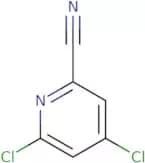
CAS:Versatile small molecule scaffoldFormula:C6H2N2Cl2Purity:Min. 95%Molecular weight:172.99 g/mol3,4-Dihydro-2H-1-benzothiopyran-4-ol
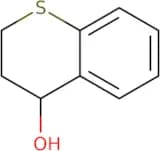
CAS:<p>3,4-Dihydro-2H-1-benzothiopyran-4-ol is a reactive intermediate that can be generated by dehydrogenation of benzothiophene. 3,4-Dihydro-2H-1-benzothiopyran-4-ol is used as an activating agent for cross coupling reactions and has been shown to possess functional groups such as cyclopentyl. 3,4-Dihydro-2H-1-benzothiopyran-4-ol has been detected in significant amounts in the X ray crystal structures of lipases. This compound binds to the substrate binding site on lipases and participates in catalytic cleavage. The rate of this reaction increases with temperature and decreases with increasing organic solvent concentration.</p>Formula:C9H10OSPurity:Min. 95%Molecular weight:166.24 g/mol2-Chloro-3-[(2S)-1-methylpyrrolidin-2-yl]pyridine
CAS:<p>Versatile small molecule scaffold</p>Formula:C10H13ClN2Purity:Min. 95%Molecular weight:196.67 g/molMethyl 4-methyl-1H-pyrrole-3-carboxylate
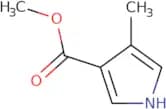
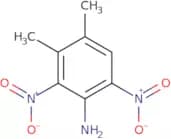
CAS:<p>Methyl 4-methyl-1H-pyrrole-3-carboxylate is a fluorescent probe that has been used in the detection of copper ions. The selectivity and sensitivity of this probe have been shown to be constant, with a detection limit of 0.5 nM and a stoichiometry of 1:1. Methyl 4-methyl-1H-pyrrole-3-carboxylate is also selective for copper, as it does not react with other metal ions such as nickel or cadmium. This compound has an affinity for copper ions and can be used in molecular probes to detect their presence in biological systems, such as cells or tissues. In addition, methyl 4-methyl-1H-pyrrole-3-carboxylate is sensitive to changes in pH levels and can be used to measure the pH of samples by using a colorimetric assay.</p>Formula:C7H9NO2Purity:Min. 95%Molecular weight:139.15 g/mol3,4-Dimethyl-2,6-dinitroaniline
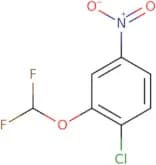
CAS:<p>Versatile small molecule scaffold</p>Formula:C8H9N3O4Purity:Min. 95%Color and Shape:PowderMolecular weight:211.17 g/mol1-Chloro-2-(difluoromethoxy)-4-nitrobenzene
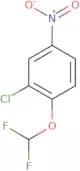
CAS:<p>Versatile small molecule scaffold</p>Formula:C7H4ClF2NO3Purity:Min. 95%Molecular weight:223.56 g/mol2-Chloro-1-(difluoromethoxy)-4-nitro-benzene
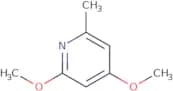
CAS:<p>Versatile small molecule scaffold</p>Formula:C7H4ClF2NO3Purity:Min. 95%Molecular weight:223.56 g/mol2,4-Dimethoxy-6-methylpyridine
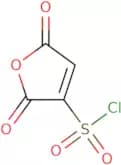
CAS:<p>Versatile small molecule scaffold</p>Formula:C8H11NO2Purity:Min. 95%Molecular weight:153.18 g/mol2,5-Dioxo-2,5-dihydrofuran-3-sulfonyl chloride
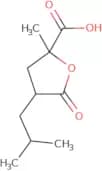
CAS:<p>Versatile small molecule scaffold</p>Formula:C4HClO5SPurity:Min. 95%Molecular weight:196.57 g/mol2-Methyl-4-(2-methylpropyl)-5-oxooxolane-2-carboxylic acid
CAS:<p>Versatile small molecule scaffold</p>Formula:C10H16O4Purity:Min. 95%Molecular weight:200.23 g/molrac-(1R,2R,4S)-2-(Aminomethyl)bicyclo[2.2.1]heptan-2-ol hydrochloride
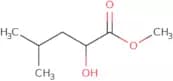
CAS:Versatile small molecule scaffoldFormula:C8H16ClNOPurity:Min. 95%Molecular weight:177.7 g/molMethyl 2-hydroxy-4-methylvalerate
CAS:<p>Methyl 2-hydroxy-4-methylvalerate is an organic compound that belongs to the class of fatty acids. It is a colorless liquid with a fruity odor. Methyl 2-hydroxy-4-methylvalerate has been shown to inhibit the formation of reactive oxygen species and has antioxidant potential. It also inhibits bone resorption, which may be due to its ability to reduce levels of isobutyric acid in rats and humans. Methyl 2-hydroxy-4-methylvalerate has been found in tropical fruits such as mangoes, durians, and papayas.</p>Formula:C7H14O3Purity:Min. 95%Molecular weight:146.18 g/mol1-[(tert-Butoxy)carbonyl]-4-hydroxypyrrolidine-2-carboxylic acid
CAS:<p>Versatile small molecule scaffold</p>Formula:C10H17NO5Purity:Min. 95%Molecular weight:231.25 g/mol1,3-Dihydro-2,1-benzothiazol-3-one
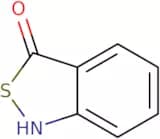
CAS:<p>1,3-Dihydro-2,1-benzothiazol-3-one is a versatile compound widely used in chemistry and research applications. It belongs to the category of Research Chemicals and is highly sought after by scientists and researchers worldwide. This Australian-made product offers exceptional quality and purity, making it a reliable choice for various laboratory experiments and studies. With its unique chemical structure, 1,3-Dihydro-2,1-benzothiazol-3-one opens up new possibilities for innovative research and discovery. Whether you are working on organic synthesis, drug development, or material science, this compound is an essential addition to your scientific toolkit. Trust in its proven performance and explore the endless potential it holds for advancing your research endeavors.</p>Formula:C7H5NOSPurity:Min. 95%Molecular weight:151.19 g/mol1-(2-Amino-5-methylthiazol-4-yl)ethanone
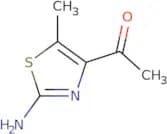
CAS:<p>Versatile small molecule scaffold</p>Formula:C6H8N2OSPurity:Min. 95%Molecular weight:156.21 g/mol4-Hydroxy-1-methyl-2-pyridone
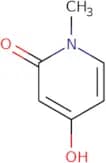
CAS:<p>Versatile small molecule scaffold</p>Formula:C6H7NO2Purity:Min. 95%Molecular weight:125.13 g/mol

![[5-(2-Chlorophenyl)fur-2-yl]methanol](/_next/image/?url=https%3A%2Fstatic.cymitquimica.com%2Fproducts%2F3D%2Fthumb-webp%2FQBA31366.webp&w=3840&q=75)

![2-Chloro-3-[(2S)-1-methylpyrrolidin-2-yl]pyridine](/_next/image/?url=https%3A%2Fstatic.cymitquimica.com%2Fproducts%2F3D%2Fthumb-webp%2FQBA31689.webp&w=3840&q=75)
![rac-(1R,2R,4S)-2-(Aminomethyl)bicyclo[2.2.1]heptan-2-ol hydrochloride](/_next/image/?url=https%3A%2Fstatic.cymitquimica.com%2Fproducts%2F3D%2Fthumb-webp%2FQBA34480.webp&w=3840&q=75)
![1-[(tert-Butoxy)carbonyl]-4-hydroxypyrrolidine-2-carboxylic acid](/_next/image/?url=https%3A%2Fstatic.cymitquimica.com%2Fproducts%2F3D%2Fthumb-webp%2FQBA35082.webp&w=3840&q=75)