Building Blocks
This section contains fundamental products for the synthesis of organic and biological compounds. Building blocks are the essential starting materials used to construct complex molecules through various chemical reactions. They play a critical role in drug discovery, material science, and chemical research. At CymitQuimica, we offer a diverse range of high-quality building blocks to support your innovative research and industrial projects, ensuring you have the essential components for successful synthesis.
Subcategories of "Building Blocks"
- Boronic Acids & Boronic Acid Derivatives(5,756 products)
- Chiral Building Blocks(1,242 products)
- Hydrocarbon Building Blocks(6,095 products)
- Organic Building Blocks(61,055 products)
Found 199650 products of "Building Blocks"
Sort by
Purity (%)
0
100
|
0
|
50
|
90
|
95
|
100
[(1,4-Dioxan-2-yl)methyl]urea
CAS:<p>Versatile small molecule scaffold</p>Formula:C6H12N2O3Purity:Min. 95%Molecular weight:160.17 g/mol4-(4-Nitrophenoxy)pyridine-2-carboxylic acid
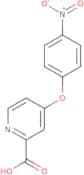
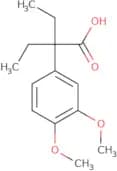
CAS:<p>Versatile small molecule scaffold</p>Formula:C12H8N2O5Purity:Min. 95%Molecular weight:260.2 g/mol2-(3,4-Dimethoxyphenyl)-2-ethylbutanoic acid
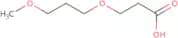
CAS:<p>Versatile small molecule scaffold</p>Formula:C14H20O4Purity:Min. 95%Molecular weight:252.31 g/mol3-(3-Methoxypropoxy)propanoic acid
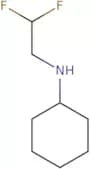
CAS:<p>Versatile small molecule scaffold</p>Formula:C7H14O4Purity:Min. 95%Molecular weight:162.18 g/molN-(2,2-Difluoroethyl)cyclohexanamine
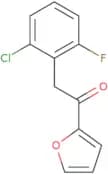
CAS:<p>Versatile small molecule scaffold</p>Formula:C8H15F2NPurity:Min. 95%Molecular weight:163.21 g/mol2-(2-Chloro-6-fluorophenyl)-1-(furan-2-yl)ethan-1-one
CAS:<p>Versatile small molecule scaffold</p>Formula:C12H8ClFO2Purity:Min. 95%Molecular weight:238.64 g/mol[4-(Heptafluoropropan-2-yl)phenyl]boronic acid
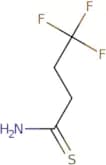
CAS:<p>Versatile small molecule scaffold</p>Formula:C9H6BF7O2Purity:Min. 95%Molecular weight:289.94 g/mol4,4,4-Trifluorobutanethioamide
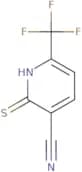
CAS:<p>Versatile small molecule scaffold</p>Formula:C4H6F3NSPurity:Min. 95%Molecular weight:157.16 g/mol2-Sulfanyl-6-(trifluoromethyl)pyridine-3-carbonitrile
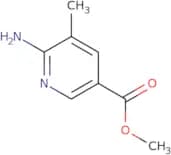
CAS:<p>2-Sulfanyl-6-(trifluoromethyl)pyridine-3-carbonitrile (2SF6MP) is a crystalline material with diffraction, simulations, and temperatures. It has been shown to have x-ray diffraction and high temperatures. 2SF6MP has been studied using the dynamical theory of x-ray diffraction and the theory of crystal curves. This compound is also a crystalline solid at room temperature.</p>Formula:C7H3F3N2SPurity:Min. 95%Molecular weight:204.17 g/molMethyl 6-amino-5-methylnicotinate
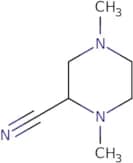
CAS:<p>Versatile small molecule scaffold</p>Formula:C8H10N2O2Purity:Min. 95%Molecular weight:166.18 g/mol1,4-Dimethylpiperazine-2-carbonitrile
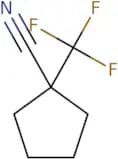
CAS:<p>Versatile small molecule scaffold</p>Formula:C7H13N3Purity:Min. 95%Molecular weight:139.2 g/mol1-(Trifluoromethyl)cyclopentane-1-carbonitrile
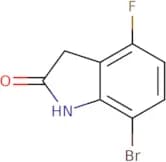
CAS:<p>Versatile small molecule scaffold</p>Formula:C7H8F3NPurity:Min. 95%Molecular weight:163.14 g/mol7-Bromo-4-fluoro-2-oxindole
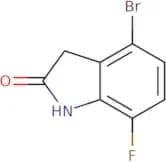
CAS:<p>Versatile small molecule scaffold</p>Formula:C8H5BrFNOPurity:Min. 95%Molecular weight:230.03 g/mol4-Bromo-7-fluoroindolin-2-one
CAS:<p>Versatile small molecule scaffold</p>Formula:C8H5BrFNOPurity:Min. 95%Molecular weight:230.04 g/mol1-[(3-Fluorophenyl)methyl]-1H-1,2,3-triazole-4-carboxylic acid
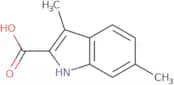
CAS:<p>Versatile small molecule scaffold</p>Formula:C10H8FN3O2Purity:Min. 95%Molecular weight:221.19 g/mol3,6-Dimethyl-1H-indole-2-carboxylic acid
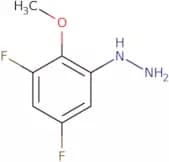
CAS:<p>Versatile small molecule scaffold</p>Formula:C11H11NO2Purity:Min. 95%Molecular weight:189.21 g/mol(3,5-Difluoro-2-methoxyphenyl)hydrazine
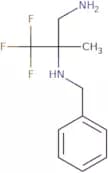
CAS:<p>Versatile small molecule scaffold</p>Formula:C7H8F2N2OPurity:Min. 95%Molecular weight:174.15 g/mol(3-Amino-1,1,1-trifluoro-2-methylpropan-2-yl)(benzyl)amine
CAS:<p>Versatile small molecule scaffold</p>Formula:C11H15F3N2Purity:Min. 95%Molecular weight:232.25 g/mol3-(Prop-2-yn-1-yl)piperidine hydrochloride
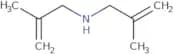
CAS:<p>Versatile small molecule scaffold</p>Formula:C8H14ClNPurity:Min. 95%Molecular weight:159.65 g/molDimethallylamine
CAS:<p>Dimethallylamine is a monomer that can be used as a polymerization initiator. Dimethallylamine has been shown to react with hydrochloric acid in an efficient method for the synthesis of polydimethylsiloxane. Dimethallylamine reacts with fatty acids to form esters and amines, which are structural components of many polymers. Dimethallylamine can also be used as a cross-linking agent in cellulose derivatives such as nitrocellulose and cellulose acetate butyrate.</p>Formula:C8H15NPurity:Min. 95%Molecular weight:125.21 g/mol
![[(1,4-Dioxan-2-yl)methyl]urea](/_next/image/?url=https%3A%2Fstatic.cymitquimica.com%2Fproducts%2F3D%2Fthumb-webp%2FJXB82665.webp&w=3840&q=75)

![[4-(Heptafluoropropan-2-yl)phenyl]boronic acid](/_next/image/?url=https%3A%2Fstatic.cymitquimica.com%2Fproducts%2F3D%2Fthumb-webp%2FJXB85050.webp&w=3840&q=75)
![1-[(3-Fluorophenyl)methyl]-1H-1,2,3-triazole-4-carboxylic acid](/_next/image/?url=https%3A%2Fstatic.cymitquimica.com%2Fproducts%2F3D%2Fthumb-webp%2FKAC91227.webp&w=3840&q=75)