Building Blocks
This section contains fundamental products for the synthesis of organic and biological compounds. Building blocks are the essential starting materials used to construct complex molecules through various chemical reactions. They play a critical role in drug discovery, material science, and chemical research. At CymitQuimica, we offer a diverse range of high-quality building blocks to support your innovative research and industrial projects, ensuring you have the essential components for successful synthesis.
Subcategories of "Building Blocks"
- Boronic Acids & Boronic Acid Derivatives(5,756 products)
- Chiral Building Blocks(1,242 products)
- Hydrocarbon Building Blocks(6,095 products)
- Organic Building Blocks(61,055 products)
Found 199650 products of "Building Blocks"
Sort by
Purity (%)
0
100
|
0
|
50
|
90
|
95
|
100
2-(2-Bromoethoxy)-1,3-dichlorobenzene
CAS:<p>Versatile small molecule scaffold</p>Formula:C8H7BrCl2OPurity:Min. 95%Molecular weight:269.95 g/mol3-(1-Oxo-2,3-dihydro-1H-isoindol-2-yl)piperidine-2,6-dione
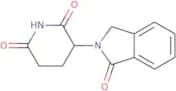
CAS:<p>3-(1-Oxo-2,3-dihydro-1H-isoindol-2-yl)piperidine-2,6-dione is a compound that inhibits the production of angiogenesis, which affects the growth and development of new blood vessels. This effect has been shown in laboratory tests on human lymphocytes and animal models for Alzheimer's disease. 3-(1-Oxo-2,3-dihydro-1H-isoindol-2-yl)piperidine-2,6-dione is metabolized to its active form by the liver and it has been shown to be safe in rats with liver microsomes. 3-(1 -Oxo - 2,3 - dihydro - 1H - isoindol - 2 - yl)piperidine - 2,6 - dione has also been found to be selective for erythropoietin receptor over the other ery</p>Formula:C13H12N2O3Purity:Min. 95%Molecular weight:244.25 g/molThieno[2,3-b]pyridin-3-amine
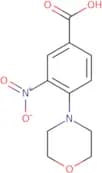
CAS:<p>Thieno[2,3-b]pyridin-3-amine is an azide that can be synthesized by the reaction of sodium azide with potassium nitrite. Thieno[2,3-b]pyridin-3-amine is a strong oxidizing agent and can react with an organic molecule to form a nitrile. The nitrile group has two resonance structures. The intramolecular version of this reaction is called the 1,3-dipolar cycloaddition and involves the formation of a five membered ring from two three membered rings. Thieno[2,3-b]pyridin-3-amine reacts with esters and carboxylates in the presence of dieckmann's reagent to form azides. The dieckmann's reagent reacts with pyridine to form nicotinic acid and ammonia water.</p>Formula:C7H6N2SPurity:Min. 95%Molecular weight:150.2 g/mol4-(morpholin-4-yl)-3-nitrobenzoic acid
CAS:<p>Versatile small molecule scaffold</p>Formula:C11H12N2O5Purity:Min. 95%Molecular weight:252.2 g/mol2-[4-(Morpholin-4-yl)phenyl]acetic acid
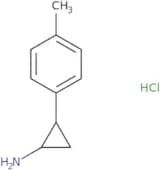
CAS:<p>Versatile small molecule scaffold</p>Formula:C12H15NO3Purity:Min. 95%Molecular weight:221.25 g/molrac-(1R,2S)-2-(4-Methylphenyl)cyclopropan-1-amine hydrochloride
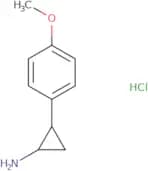
CAS:<p>Versatile small molecule scaffold</p>Formula:C10H14ClNPurity:Min. 95%Molecular weight:183.68 g/molrac-(1R,2S)-2-(4-Methoxyphenyl)cyclopropan-1-amine hydrochloride
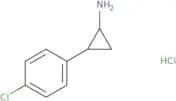
CAS:Versatile small molecule scaffoldFormula:C10H14ClNOPurity:Min. 95%Molecular weight:199.7 g/molrac-(1R,2S)-2-(4-Chlorophenyl)cyclopropan-1-amine hydrochloride
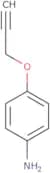
CAS:<p>Versatile small molecule scaffold</p>Formula:C9H11Cl2NPurity:Min. 95%Molecular weight:204.09 g/mol4-(Prop-2-yn-1-yloxy)aniline
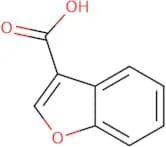
CAS:<p>4-(Prop-2-yn-1-yloxy)aniline is a monomer that is used in the production of polymers. It has been shown to have antimycobacterial and anti-influenza properties, which may be due to its function as a costimulatory molecule for T cells. 4-(Prop-2-yn-1-yloxy)aniline has shown hemolytic activity, which may be due to the presence of an alkynyl group. This compound also has photophysical properties and can be used as a nanomaterial.</p>Formula:C9H9NOPurity:Min. 95%Molecular weight:147.18 g/molBenzofuran-3-carboxylic acid
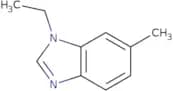
CAS:<p>Benzofuran-3-carboxylic acid is a furan derivative with an acetyl group at the 3 position. It is used as a fungicide and has significant antifungal activity against Cryptococcus neoformans. Benzofuran-3-carboxylic acid inhibits the growth of C. neoformans by binding to its cell membrane and disrupting its function, inhibiting protein synthesis and cytoplasmic membrane function. Benzofuran-3-carboxylic acid also inhibits the production of reactive oxygen species (ROS) in cells, which may be due to its ability to inhibit phospholipase A2. This compound has been shown to have an affinity for both benzoyl derivatives and ethyl diazoacetate molecules, which can be used for molecular docking studies on the effects of this molecule on cellular functions.</p>Formula:C9H6O3Purity:Min. 95%Molecular weight:162.14 g/mol1-Ethyl-6-methyl-1H-1,3-benzodiazole
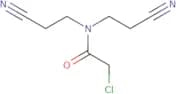
CAS:<p>Versatile small molecule scaffold</p>Formula:C10H12N2Purity:Min. 95%Molecular weight:160.22 g/mol2-Chloro-N,N-bis(2-cyanoethyl)acetamide
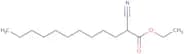
CAS:<p>Versatile small molecule scaffold</p>Formula:C8H10ClN3OPurity:Min. 95%Molecular weight:199.64 g/molEthyl 2-cyanododecanoate
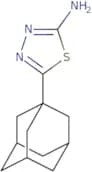
CAS:<p>Versatile small molecule scaffold</p>Formula:C15H27NO2Purity:Min. 95%Molecular weight:253.38 g/mol5-(Adamantan-1-yl)-1,3,4-thiadiazol-2-amine
CAS:<p>Versatile small molecule scaffold</p>Formula:C12H17N3SPurity:Min. 95%Molecular weight:235.35 g/molN-[1-(Adamantan-1-yl)propylidene]hydroxylamine
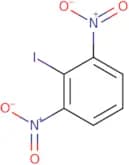
CAS:<p>Versatile small molecule scaffold</p>Formula:C13H21NOPurity:Min. 95%Molecular weight:207.31 g/mol2-Iodo-1,3-dinitrobenzene
CAS:<p>Versatile small molecule scaffold</p>Formula:C6H3IN2O4Purity:Min. 95%Molecular weight:294 g/mol1-Methyl-1,2,3,4-tetrahydronaphthalene-1-carboxylic acid
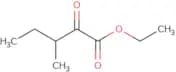
CAS:<p>Versatile small molecule scaffold</p>Formula:C12H14O2Purity:Min. 95%Molecular weight:190.24 g/mol3-Methyl-2-oxo-valeric acid ethyl ester
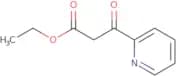
CAS:<p>Versatile small molecule scaffold</p>Formula:C8H14O3Purity:Min. 95%Molecular weight:158.19 g/molEthyl picolinoylacetate
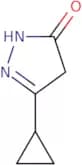
CAS:<p>Ethyl picolinoylacetate is an organic compound with the molecular formula CH2=C(O)CH(CO2Et)CO2Et. It is a colorless liquid with a boiling point of 153-154 °C and a density of 0.907 g/mL at 20 °C. Ethyl picolinoylacetate is used as a diluent for coloring compounds in pharmaceuticals and cosmetics. It has been shown to have congestive effects on the heart, including cardiomyopathy and congestive heart failure when administered to rats for 2 weeks. Previous studies have also shown that ethyl picolinoylacetate can cause sclerosis, which may be due to its ability to form n-oxides.</p>Formula:C10H11NO3Purity:Min. 95%Molecular weight:193.2 g/mol3-Cyclopropyl-4,5-dihydro-1H-pyrazol-5-one
CAS:<p>Versatile small molecule scaffold</p>Formula:C6H8N2OPurity:Min. 95%Molecular weight:124.14 g/mol


![Thieno[2,3-b]pyridin-3-amine](/_next/image/?url=https%3A%2Fstatic.cymitquimica.com%2Fproducts%2F3D%2Fthumb-webp%2FBBA57954.webp&w=3840&q=75)
![2-[4-(Morpholin-4-yl)phenyl]acetic acid](/_next/image/?url=https%3A%2Fstatic.cymitquimica.com%2Fproducts%2F3D%2Fthumb-webp%2FBBA57757.webp&w=3840&q=75)
![N-[1-(Adamantan-1-yl)propylidene]hydroxylamine](/_next/image/?url=https%3A%2Fstatic.cymitquimica.com%2Fproducts%2F3D%2Fthumb-webp%2FBBA52523.webp&w=3840&q=75)