Building Blocks
This section contains fundamental products for the synthesis of organic and biological compounds. Building blocks are the essential starting materials used to construct complex molecules through various chemical reactions. They play a critical role in drug discovery, material science, and chemical research. At CymitQuimica, we offer a diverse range of high-quality building blocks to support your innovative research and industrial projects, ensuring you have the essential components for successful synthesis.
Subcategories of "Building Blocks"
- Boronic Acids & Boronic Acid Derivatives(5,778 products)
- Chiral Building Blocks(1,242 products)
- Hydrocarbon Building Blocks(6,098 products)
- Organic Building Blocks(61,034 products)
Found 199601 products of "Building Blocks"
Sort by
Purity (%)
0
100
|
0
|
50
|
90
|
95
|
100
Thioammeline
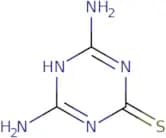
CAS:<p>Thioammeline is a natural compound that is classified as a fatty acid. It has been shown to be an oxidation product of triazine, and it can also form by reaction with inorganic metal ions such as copper or iron. Thioammeline is used in the production of amines, acids, and other organic compounds. The compound has been found to have a viscosity of 0.5 centipoise at 25 degrees Celsius in a sodium hydroxide solution with an acid catalyst. Thioammeline can also react with methyl ethyl chloride to form ethyl thioammine, which is then reacted with ammonia to produce ammonium thiocyanate.</p>Formula:C3H5N5SPurity:Min. 95%Molecular weight:143.17 g/mol3,3-Dimethylcyclohexan-1-ol
CAS:<p>Dimedone is a ketone that is found in the oils of many plants. It can be synthesized by the transformation of 3,3-dimethylcyclohexan-1-ol with ethynylation and sequence. This reaction sequence has been shown to produce high yields of dimedone.</p>Formula:C8H16OPurity:Min. 95%Molecular weight:128.21 g/mol3-(Oxolan-2-yl)propan-1-ol
CAS:<p>3-(Oxolan-2-yl)propan-1-ol is a compound that has been shown to have antioxidative activities. It can inhibit the formation of lipid hydroperoxides and prevent the denaturation of proteins. 3-(Oxolan-2-yl)propan-1-ol has a high melting point and is thermophilic, which makes it suitable for reactions requiring a high temperature. 3-(Oxolan-2-yl)propan-1-ol also reacts with ethanolamine to form reaction products that are more stable than the original compounds. This compound is used as an analytical reagent in methods such as chemical reactions or plasma protein assays. The chemical structure of 3-(oxolan-2-yl)propan-1-ol is similar to that of phosphatidylethanolamine, which may account for its antioxidative activity.</p>Formula:C7H14O2Purity:Min. 95%Molecular weight:130.18 g/mol3-Cyclopentyl-1-propanol
CAS:<p>3-Cyclopentyl-1-propanol (1-CPP) is a synthetic compound that is used as an intermediate in the production of other chemicals. It is also used to make pharmaceuticals, such as antibiotics and anti-allergic drugs. 1-CPP is soluble in water and has a boiling point of about 190 °C. It can be synthesized by reacting cyclohexanol with ethylene, or it can be produced by hydrolysis of 3-cyclohexene-1-methanol with strong acid. The hydroxyl group on the molecule makes it reactive with alkoxy radicals, which are found in small amounts in the environment and are generated by sunlight.</p>Formula:C8H16OPurity:Min. 95%Molecular weight:128.21 g/mol2-(Cyclopent-3-en-1-yl)acetic acid
CAS:<p>Versatile small molecule scaffold</p>Formula:C7H10O2Purity:Min. 95%Molecular weight:126.15 g/mol2-Chlorocycloheptanone
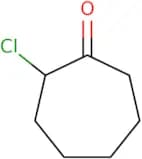
CAS:<p>2-Chlorocycloheptanone is a quaternary ammonium salt that has a cyclic and conformational geometry. It reacts with sodium borohydride to form the corresponding tertiary alcohol, and it can be reduced by borohydride or carbon tetrachloride to form the corresponding secondary alcohol. The compound is used in the synthesis of enamines and piperazinil esters, which are used in the field of population genetics. 2-Chlorocycloheptanone has been shown to yield high yields of product when synthesized from cyclohexanol.</p>Formula:C7H11ClOPurity:Min. 95%Molecular weight:146.61 g/mol3-(Chloromethyl)-2,5-dimethylthiophene
CAS:<p>Versatile small molecule scaffold</p>Formula:C7H9ClSPurity:Min. 95%Molecular weight:160.66 g/mol2-Ethynyltoluene
CAS:<p>2-Ethynyltoluene is an organic compound that has been reported to be reactive with various compounds. This chemical has been shown to inhibit the phosphorylation of tyrosine residues on human insulin receptor, which is a key step in insulin signaling pathways. The phosphate group in 2-ethynyl-toluene can be removed by protonation, allowing the molecule to react with other molecules and form model complexes. This chemical also forms polymers when heated and coated onto surfaces.2-Ethynyltoluene is soluble in polar solvents such as water, alcohols, and acetone.<br>2-Ethynyltoluene has a molecular weight of 130.1 g/mol and a boiling point of 148°C at 760 mmHg.</p>Formula:C9H8Purity:Min. 95%Molecular weight:116.16 g/mol3,4-Dichloro-5-hydroxyfuran-2(5H)-one
CAS:<p>3,4-Dichloro-5-hydroxyfuran-2(5H)-one (3,4-DCHF) is a hydroxylated compound that is the substrate for human enzymes. It reacts with serum proteins and forms products that are genotoxic in vitro. In vivo, 3,4-DCHF has been shown to induce mutations in the ovary of female mice.</p>Formula:C4H2Cl2O3Purity:Min. 95%Molecular weight:168.96 g/mol3,4-Dibromo-5-hydroxy-2,5-dihydrofuran-2-one
CAS:3,4-Dibromo-5-hydroxy-2,5-dihydrofuran-2-one (3,4DB) is a metabolic agent that belongs to the group of mucobromic compounds. It is used as a pharmaceutical intermediate in the production of ethylene diamine and as an intermediate in the synthesis of antiinflammatory agents. 3,4DB has been shown to have an antiallergic effect by inhibiting histamine release from mast cells and by reducing inflammatory responses. 3,4DB also inhibits cervical cancer cell growth by inhibiting DNA replication and protein synthesis. This agent also has a low toxicity for humans because it does not react with water or oxygen at neutral pH levels. The mechanism of action for 3,4DB is unknown but its activity may be due to its ability to form intramolecular hydrogen bonds with other nitrogen atoms on the molecule.Formula:C4H2Br2O3Purity:Min. 95%Molecular weight:257.87 g/mol7-Azaspiro[3.5]nonane
CAS:<p>Isoxazole compounds are a class of heterocyclic compounds that inhibit the enzyme acetylcholine esterase (AChE) and thus have anticholinesterase activity. Isoxazoles have been shown to be effective in treating bladder and bowel disease, cancer, depression and other neurological disorders. The isooxazole 7-azaspiro[3.5]nonane has been shown to be effective in vitro against fungi. It is a covalent inhibitor of the fungal enzyme β-glucosidase and can also act as an endocannabinoid receptor agonist. 7-Azaspiro[3.5]nonane has not been studied in vivo, but its pharmacokinetic properties suggest it may be useful for treatment of inflammatory bowel disease or depression due to its high bioavailability and long elimination half-life.</p>Formula:C8H15NPurity:Min. 95%Molecular weight:125.21 g/mol2,5,5-Trimethyl-1,3-dioxane
CAS:<p>2,5,5-Trimethyl-1,3-dioxane is an organic compound that has a strong odor. It is classified as an aliphatic ketone and has a cyclopropyl group.</p>Formula:C7H14O2Purity:Min. 95%Molecular weight:130.18 g/molCis-2,6-dimethylpiperidine
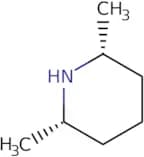
CAS:<p>Cis-2,6-dimethylpiperidine is an organic chemical compound that belongs to the group of amines. It is a colorless solid that is soluble in organic solvents such as chloroform and methanol. Cis-2,6-dimethylpiperidine reacts with zinc powder in the presence of a solvent to form cis-2,6-dimethylpiperidinium zinc (II) chloride. This reaction can be used to synthesize other compounds such as morpholine and piperidine. This compound also has a supramolecular interaction with electron deficient palladium catalysts for cross-coupling reactions. Cross coupling reactions are a type of chemical reaction where two or more organic molecules are combined to form new compounds by using organometallic reagents like Grignard reagents or trisubstituted phosphine ligands.</p>Formula:C7H15NPurity:Min. 95%Molecular weight:113.2 g/mol2-Cyclopentylethanol
CAS:<p>2-Cyclopentylethanol is a type of organic compound that belongs to the class of ethyl esters. It has been shown to have receptor activity, which may be related to its ability to reduce plasma glucose levels in type 2 diabetes patients. The mechanism by which 2-cyclopentylethanol affects glucose metabolism is not clear, but it has been found to inhibit serine protease and sulfonic acid-induced platelet aggregation. It has also been found to have anti-inflammatory effects and can inhibit the production of inflammatory mediators such as prostaglandin E2 (PGE2). 2-Cyclopentylethanol also inhibits the activity of certain types of enzymes, including pyrimidine hydroxylases and acylureas.</p>Formula:C7H14OPurity:Min. 95%Molecular weight:114.19 g/mol4-methylthiophene-3-carbaldehyde
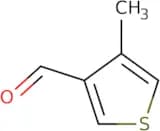
CAS:<p>Versatile small molecule scaffold</p>Formula:C6H6OSPurity:Min. 95%Molecular weight:126.17 g/mol6,6,6-Trifluorohexanoic acid
CAS:<p>Versatile small molecule scaffold</p>Formula:C6H9F3O2Purity:Min. 95%Molecular weight:170.13 g/mol(E)-Pent-3-en-1-ol
CAS:<p>Versatile small molecule scaffold</p>Formula:C5H10OPurity:Min. 95%Molecular weight:86.13 g/mol5-Fluoro-1-pentyne
CAS:<p>Versatile small molecule scaffold</p>Formula:C5H7FPurity:Min. 95%Molecular weight:86.11 g/mol2,2,2-Trichloroethyl Chlorosulfate
CAS:<p>2,2,2-Trichloroethyl chlorosulfate is an organic compound that has a hydroxyl group and a chlorine in its structure. It is cytotoxic to cells and causes health effects in humans. This compound binds to the p-coumaric acid in the cell and inhibits the enzyme activity of the demethylase, which is responsible for the oxidation of p-coumaric acid to ferulic acid. This prevents p-coumaric acid from being converted into other metabolites such as dihydroferulic acid and dihydrocaffeic acid. 2,2,2-Trichloroethyl chlorosulfate also inhibits enzymes involved in the synthesis of cholesterol by competitively inhibiting HMG CoA reductase.</p>Formula:C2H2Cl4O3SPurity:Min. 95%Molecular weight:247.91 g/molEthyl 3-Ethoxypropionate
CAS:<p>Ethyl 3-ethoxypropionate is a cycloaddition product of ethyl 3-ethoxypropanoate. It has been shown to be more chemically stable than the reactants and has an increased uptake in the reaction solution. <br>Ethyl 3-ethoxypropionate is able to undergo a cycloaddition process with diethyl succinate under conditions of high temperature and pressure, leading to the formation of methyl ethyl malonic acid. This chemical reaction takes place via an intermolecular hydrogen bonding interaction between the ethoxy group on one molecule and the ester group on the other molecule. The cyclohexane ring on each molecule also forms a hydrogen bonding interaction with its corresponding methyl or ethyl groups. Ethyl 3-ethoxypropionate is not reactive in its pure form but can undergo reactions when exposed to chemicals such as potassium hydroxide, which leads to its degradation into propionic acid and ethanol.</p>Formula:C7H14O3Purity:Min. 95%Molecular weight:146.19 g/mol




![7-Azaspiro[3.5]nonane](/_next/image/?url=https%3A%2Fstatic.cymitquimica.com%2Fproducts%2F3D%2Fthumb-webp%2FAAA76634.webp&w=3840&q=75)