Building Blocks
This section contains fundamental products for the synthesis of organic and biological compounds. Building blocks are the essential starting materials used to construct complex molecules through various chemical reactions. They play a critical role in drug discovery, material science, and chemical research. At CymitQuimica, we offer a diverse range of high-quality building blocks to support your innovative research and industrial projects, ensuring you have the essential components for successful synthesis.
Subcategories of "Building Blocks"
- Boronic Acids & Boronic Acid Derivatives(5,756 products)
- Chiral Building Blocks(1,242 products)
- Hydrocarbon Building Blocks(6,095 products)
- Organic Building Blocks(61,037 products)
Found 196200 products of "Building Blocks"
Sort by
Purity (%)
0
100
|
0
|
50
|
90
|
95
|
100
2-Amino-3-methyl-2-(propan-2-yl)butanoic acid hydrochloride
CAS:<p>Versatile small molecule scaffold</p>Formula:C8H18ClNO2Purity:Min. 95%Molecular weight:195.7 g/molRef: 3D-LLB46207
Discontinued product[4-(Pentan-3-yloxy)phenyl]methanol
CAS:<p>Versatile small molecule scaffold</p>Formula:C12H18O2Purity:Min. 95%Molecular weight:194.27 g/molRef: 3D-LXB63429
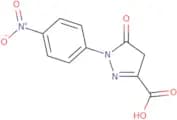
Discontinued product1-(4-Nitrophenyl)-5-oxo-4,5-dihydro-1H-pyrazole-3-carboxylic acid
CAS:<p>Versatile small molecule scaffold</p>Formula:C10H7N3O5Purity:Min. 95%Molecular weight:249.18 g/molRef: 3D-MCA08402
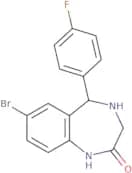
Discontinued product7-Bromo-5-(4-fluorophenyl)-2,3,4,5-tetrahydro-1H-1,4-benzodiazepin-2-one
CAS:Controlled Product<p>Versatile small molecule scaffold</p>Formula:C15H12BrFN2OPurity:Min. 95%Molecular weight:335.17 g/molRef: 3D-MKB20154
Discontinued product7',8'-Dihydro-6'H-spiro[azetidine-3,5'-imidazo[1,2-a]pyrimidine]-7'-one dihydrochloride
CAS:<p>Versatile small molecule scaffold</p>Formula:C8H12Cl2N4OPurity:Min. 95%Molecular weight:251.11 g/molRef: 3D-MKD83202
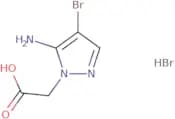
Discontinued product2-(5-Amino-4-bromo-1H-pyrazol-1-yl)acetic acid hydrobromide
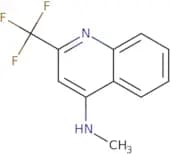
CAS:<p>Versatile small molecule scaffold</p>Formula:C5H7Br2N3O2Purity:Min. 95%Molecular weight:300.94 g/molN-Methyl-2-(trifluoromethyl)quinolin-4-amine
CAS:<p>Versatile small molecule scaffold</p>Formula:C11H9F3N2Purity:Min. 95%Molecular weight:226.2 g/molRef: 3D-AAC32902
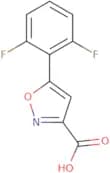
Discontinued product5-(2,6-Difluorophenyl)-1,2-oxazole-3-carboxylic acid
CAS:<p>Versatile small molecule scaffold</p>Formula:C10H5F2NO3Purity:Min. 95%Molecular weight:225.15 g/mol(2E)-3-[2-(Allyloxy)phenyl]acrylic acid
CAS:<p>Versatile small molecule scaffold</p>Formula:C12H12O3Purity:Min. 95%Molecular weight:204.22 g/mol2-Hydroxy-[1,1'-biphenyl]-3-carboxylic acid
CAS:<p>2-Hydroxy-[1,1'-biphenyl]-3-carboxylic acid (2HBC) is a monomer that belongs to the group of ester compounds. It has been shown to inhibit the growth of trichophyton mentagrophytes and other fungi by forming hydrogen bonds with the enzyme activities in the cell wall. 2HBC also inhibits microbial growth by binding to enzymes such as phospholipase A2, cyclooxygenase, and lipoxygenase, which are involved in inflammatory processes. This drug also inhibits bacterial growth by binding to the ribosome, preventing protein synthesis and leading to cell death. The inhibition of microbial growth is not limited to bacteria; it also occurs in fungi and protozoa. 2HBC has been shown to be active against both extracellular and intracellular microbial infections.</p>Formula:C13H10O3Purity:Min. 95%Molecular weight:214.22 g/molrac-(1R,3R,5S)-8-Oxobicyclo[3.2.1]octane-3-carboxylic acid, exo
CAS:<p>Versatile small molecule scaffold</p>Formula:C9H12O3Purity:Min. 95%Molecular weight:168.19 g/mol2-[(Cyclopropylmethyl)[(9H-fluoren-9-ylmethoxy)carbonyl]amino]acetic acid
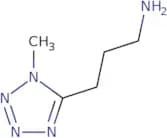
CAS:<p>Versatile small molecule scaffold</p>Formula:C21H21NO4Purity:Min. 95%Molecular weight:351.4 g/mol3-(1-Methyl-1H-1,2,3,4-tetrazol-5-yl)propan-1-amine
CAS:<p>Versatile small molecule scaffold</p>Formula:C5H11N5Purity:Min. 95%Molecular weight:141.2 g/molRef: 3D-SAC17952
Discontinued product6-Bromo-4-hydroxy-8-methylquinoline-3-carbonitrile
CAS:<p>Versatile small molecule scaffold</p>Formula:C11H7BrN2OPurity:Min. 95%Molecular weight:263.09 g/molRef: 3D-SCA64341
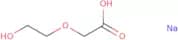
Discontinued productSodium ²-Hydroxyethoxyacetate
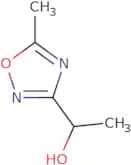
CAS:<p>Sodium 2-hydroxyethoxyacetate is a cross-linker that is used to immobilize proteins and enzymes. It has been shown to be effective in the treatment of autoimmune diseases, such as rheumatoid arthritis. This chemical can also be used as a cross-linking agent for the production of biodegradable polymers. The synthesis of this chemical was first reported in 1874 and it has been used for copolymerization with other compounds to form particles with potential biomedical applications.</p>Formula:C4H7NaO4Purity:Min. 95%Molecular weight:142.09 g/mol1-(5-Methyl-1,2,4-oxadiazol-3-yl)ethan-1-ol
CAS:<p>Versatile small molecule scaffold</p>Formula:C5H8N2O2Purity:Min. 95%Molecular weight:128.13 g/molRef: 3D-SNC58637
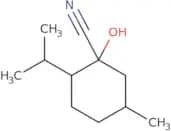
Discontinued product(1R,2S,5R)-1-Hydroxy-5-methyl-2-(propan-2-yl)cyclohexane-1-carbonitrile
CAS:<p>Versatile small molecule scaffold</p>Formula:C11H19NOPurity:Min. 95%Molecular weight:181.3 g/molRef: 3D-SPA93958
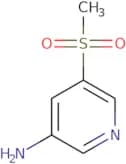
Discontinued product5-(methylsulfonyl)pyridin-3-amine
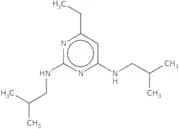
CAS:<p>Versatile small molecule scaffold</p>Formula:C6H8N2O2SPurity:Min. 95%Molecular weight:172.21 g/mol6-Ethyl-2-N,4-N-bis(2-methylpropyl)pyrimidine-2,4-diamine
CAS:<p>Versatile small molecule scaffold</p>Formula:C14H26N4Purity:Min. 95%Molecular weight:250.4 g/molRef: 3D-SSB67952
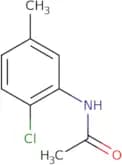
Discontinued productN-(2-Chloro-5-methylphenyl)acetamide
CAS:<p>Versatile small molecule scaffold</p>Formula:C9H10ClNOPurity:Min. 95%Molecular weight:183.63 g/molRef: 3D-TAA93183
Discontinued product

![[4-(Pentan-3-yloxy)phenyl]methanol](/_next/image/?url=https%3A%2Fstatic.cymitquimica.com%2Fproducts%2F3D%2Fthumb-webp%2FLXB63429.webp&w=3840&q=75)
![7',8'-Dihydro-6'H-spiro[azetidine-3,5'-imidazo[1,2-a]pyrimidine]-7'-one dihydrochloride](/_next/image/?url=https%3A%2Fstatic.cymitquimica.com%2Fproducts%2F3D%2Fthumb-webp%2FMKD83202.webp&w=3840&q=75)
![(2E)-3-[2-(Allyloxy)phenyl]acrylic acid](/_next/image/?url=https%3A%2Fstatic.cymitquimica.com%2Fproducts%2F3D%2Fthumb-webp%2FPWB51701.webp&w=3840&q=75)
![2-Hydroxy-[1,1'-biphenyl]-3-carboxylic acid](/_next/image/?url=https%3A%2Fstatic.cymitquimica.com%2Fproducts%2F3D%2Fthumb-webp%2FAAA30406.webp&w=3840&q=75)
![rac-(1R,3R,5S)-8-Oxobicyclo[3.2.1]octane-3-carboxylic acid, exo](/_next/image/?url=https%3A%2Fstatic.cymitquimica.com%2Fproducts%2F3D%2Fthumb-webp%2FQNA16419.webp&w=3840&q=75)
![2-[(Cyclopropylmethyl)[(9H-fluoren-9-ylmethoxy)carbonyl]amino]acetic acid](/_next/image/?url=https%3A%2Fstatic.cymitquimica.com%2Fproducts%2F3D%2Fthumb-webp%2FRDC30632.webp&w=3840&q=75)