Building Blocks
This section contains fundamental products for the synthesis of organic and biological compounds. Building blocks are the essential starting materials used to construct complex molecules through various chemical reactions. They play a critical role in drug discovery, material science, and chemical research. At CymitQuimica, we offer a diverse range of high-quality building blocks to support your innovative research and industrial projects, ensuring you have the essential components for successful synthesis.
Subcategories of "Building Blocks"
- Boronic Acids & Boronic Acid Derivatives(5,756 products)
- Chiral Building Blocks(1,242 products)
- Hydrocarbon Building Blocks(6,095 products)
- Organic Building Blocks(61,055 products)
Found 199650 products of "Building Blocks"
Sort by
Purity (%)
0
100
|
0
|
50
|
90
|
95
|
100
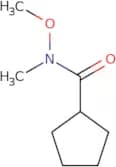
N-Methoxy-N-methyl-cyclopentanecarboxamide
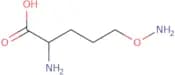
CAS:<p>Versatile small molecule scaffold</p>Formula:C8H15NO2Purity:Min. 95%Molecular weight:157.21 g/mol(2S)-2-Amino-5-(aminooxy)pentanoic acid
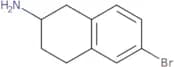
CAS:<p>Versatile small molecule scaffold</p>Formula:C5H12N2O3Purity:Min. 95%Molecular weight:148.16 g/mol6-Bromo-1,2,3,4-tetrahydronaphthalen-2-amine
CAS:Controlled Product<p>Versatile small molecule scaffold</p>Formula:C10H12BrNPurity:Min. 95%Molecular weight:226.11 g/mol7-Chloro-5-ethyl-[1,2,4]triazolo[1,5-a]pyrimidine
CAS:<p>Versatile small molecule scaffold</p>Formula:C7H7ClN4Purity:Min. 95%Molecular weight:182.61 g/molN-Hexylhydroxylamine hydrochloride
CAS:<p>N-Hexylhydroxylamine hydrochloride is a metal chelator that is used to bind heavy metals in the gastrointestinal tract. It is taken as a pill, and then binds to heavy metals such as lead, mercury, and arsenic. This prevents absorption of these toxic substances into the body. N-Hexylhydroxylamine hydrochloride has been shown to be most effective when it is given at high doses (2-3 grams) and causes less side effects than other chelators. One of the side effects of N-Hexylhydroxylamine hydrochloride is an increased risk for asphyxiation due to the increased concentration of gases in the lungs. The drug also has an effect on reticulatum pigment cells in the foregut, which can cause ulcers or cancerous growths if too much hexylhydroxylamine hydrochloride accumulates there.</p>Formula:C6H16ClNOPurity:Min. 95%Molecular weight:153.65 g/mol4-Cyclopropylbenzene-1-sulfonamide
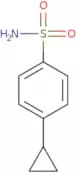
CAS:<p>Versatile small molecule scaffold</p>Formula:C9H11NO2SPurity:Min. 95%Molecular weight:197.26 g/molMethyl 3-methyl-2,4-dioxohexanoate
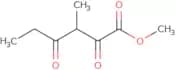
CAS:<p>Versatile small molecule scaffold</p>Formula:C8H12O4Purity:Min. 95%Molecular weight:172.18 g/molMethyl 3-(piperidin-4-yl)propanoate hydrochloride
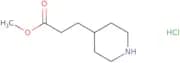
CAS:<p>Versatile small molecule scaffold</p>Formula:C9H18ClNO2Purity:Min. 95%Molecular weight:207.7 g/mol(S)-2-(2-Methoxybenzamido)propanoic acid
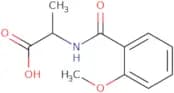
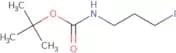
CAS:<p>Versatile small molecule scaffold</p>Formula:C11H13NO4Purity:Min. 95%Color and Shape:PowderMolecular weight:223.22 g/moltert-Butyl 3-iodopropylcarbamate
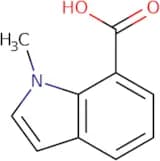
CAS:<p>Tert-Butyl 3-iodopropylcarbamate is a monomer that possesses reactive chemical groups, such as carbonyl and iodide. It is used in the synthesis of polyamides and other molecules containing pyrrole rings. Tert-Butyl 3-iodopropylcarbamate is also used to synthesize oligonucleotides by coupling reactive groups on the nucleotide phosphoramidite monomers. This coupling reaction can be done with imidazole or tripyrrole nucleophiles. Tert-Butyl 3-iodopropylcarbamate can also be used to form heterodimeric complexes with cysteine. The tert-butyl group of tert-Butyl 3-iodopropylcarbamate is a sequence that may be removed by hydrolysis or reductive amination.</p>Formula:C8H16INO2Purity:Min. 95%Molecular weight:285.12 g/mol1-Methyl-1H-indole-7-carboxylic acid
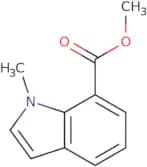
CAS:<p>Versatile small molecule scaffold</p>Formula:C10H9NO2Purity:Min. 95%Molecular weight:175.18 g/molMethyl 1-Methyl-7-indolecarboxylate
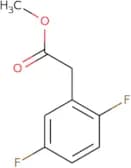
CAS:<p>Versatile small molecule scaffold</p>Formula:C11H11NO2Purity:Min. 95%Molecular weight:189.21 g/molMethyl 2-(2,5-difluorophenyl)acetate
CAS:<p>Versatile small molecule scaffold</p>Formula:C9H8F2O2Purity:Min. 95%Molecular weight:186.15 g/mol2H-Spiro[1-benzofuran-3,4'-piperidine] hydrochloride
CAS:<p>Versatile small molecule scaffold</p>Formula:C12H16ClNOPurity:Min. 95%Molecular weight:225.71 g/mol2-Amino-3-[4-(trifluoromethyl)phenyl]propanoic acid hydrochloride
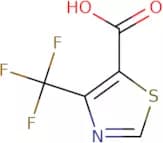
CAS:<p>Versatile small molecule scaffold</p>Formula:C10H11ClF3NO2Purity:Min. 95%Molecular weight:269.65 g/mol4-(Trifluoromethyl)-1,3-thiazole-5-carboxylic Acid
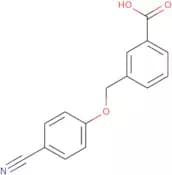
CAS:<p>Versatile small molecule scaffold</p>Formula:C5H2NO2F3SPurity:Min. 95%Molecular weight:197.13 g/mol3-(4-Cyanophenoxymethyl)benzoic acid
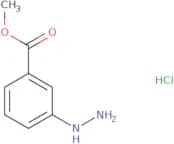
CAS:<p>Versatile small molecule scaffold</p>Formula:C15H11NO3Purity:Min. 95%Molecular weight:253.25 g/molMethyl 3-hydrazinylbenzoate hydrochloride
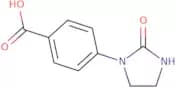
CAS:<p>Versatile small molecule scaffold</p>Formula:C8H11ClN2O2Purity:Min. 95%Molecular weight:202.64 g/mol4-(2-Oxoimidazolidin-1-yl)benzoic acid
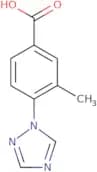
CAS:<p>Versatile small molecule scaffold</p>Formula:C10H10N2O3Purity:Min. 95%Molecular weight:206.2 g/mol3-Methyl-4-(1H-1,2,4-triazol-1-yl)benzoic acid
CAS:<p>Versatile small molecule scaffold</p>Formula:C10H9N3O2Purity:Min. 95%Molecular weight:203.2 g/mol

![7-Chloro-5-ethyl-[1,2,4]triazolo[1,5-a]pyrimidine](/_next/image/?url=https%3A%2Fstatic.cymitquimica.com%2Fproducts%2F3D%2Fthumb-webp%2FSGA37176.webp&w=3840&q=75)

![2H-Spiro[1-benzofuran-3,4'-piperidine] hydrochloride](/_next/image/?url=https%3A%2Fstatic.cymitquimica.com%2Fproducts%2F3D%2Fthumb-webp%2FSGA48472.webp&w=3840&q=75)
![2-Amino-3-[4-(trifluoromethyl)phenyl]propanoic acid hydrochloride](/_next/image/?url=https%3A%2Fstatic.cymitquimica.com%2Fproducts%2F3D%2Fthumb-webp%2FSGA49628.webp&w=3840&q=75)