Building Blocks
This section contains fundamental products for the synthesis of organic and biological compounds. Building blocks are the essential starting materials used to construct complex molecules through various chemical reactions. They play a critical role in drug discovery, material science, and chemical research. At CymitQuimica, we offer a diverse range of high-quality building blocks to support your innovative research and industrial projects, ensuring you have the essential components for successful synthesis.
Subcategories of "Building Blocks"
- Boronic Acids & Boronic Acid Derivatives(5,756 products)
- Chiral Building Blocks(1,242 products)
- Hydrocarbon Building Blocks(6,095 products)
- Organic Building Blocks(61,055 products)
Found 199650 products of "Building Blocks"
Sort by
Purity (%)
0
100
|
0
|
50
|
90
|
95
|
100
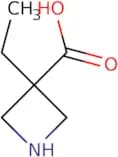
3-Ethylazetidine-3-carboxylic acid
CAS:<p>Versatile small molecule scaffold</p>Formula:C6H11NO2Purity:Min. 95%Molecular weight:129.16 g/molMethyl 4-oxospiro[2.4]heptane-5-carboxylate
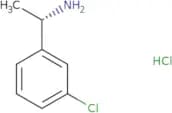
CAS:<p>Versatile small molecule scaffold</p>Formula:C9H12O3Purity:Min. 95%Molecular weight:168.19 g/mol(S)-1-(3-Chlorophenyl)ethanamine HCl
CAS:<p>Versatile small molecule scaffold</p>Formula:C8H11Cl2NPurity:Min. 95%Molecular weight:192.09 g/molN-(1-Methyl-1H-1,2,3,4-tetrazol-5-yl)formamide
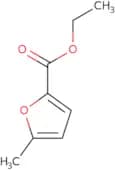
CAS:<p>Versatile small molecule scaffold</p>Formula:C3H5N5OPurity:Min. 95%Molecular weight:127.1 g/molEthyl 5-methylfuran-2-carboxylate
CAS:<p>Ethyl 5-methylfuran-2-carboxylate is a feedstock that is used in the production of additives for lubricants. Ethyl 5-methylfuran-2-carboxylate has been shown to have high thermal stability, excellent lubricity, and good resistance to oxidation. This feedstock has also been found to be compatible with alkoxycarbonyl groups and can be used as an additive for gasoline. The synthesis of this compound involves the alkylation of pyrrole using ethyllithium followed by dehydration, which leads to a high yield of this compound.</p>Formula:C8H10O3Purity:Min. 95%Molecular weight:154.16 g/mol4-Phenyl-tetrahydro-pyran-4-ylamine
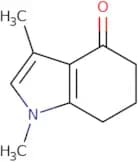
CAS:<p>Versatile small molecule scaffold</p>Formula:C11H15NOPurity:Min. 95%Molecular weight:177.24 g/mol1,3-Dimethyl-4,5,6,7-tetrahydro-1H-indol-4-one
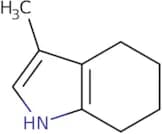
CAS:<p>Versatile small molecule scaffold</p>Formula:C10H13NOPurity:Min. 95%Molecular weight:163.22 g/mol3-Methyl-4,5,6,7-tetrahydro-1H-indole
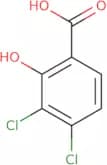
CAS:<p>Versatile small molecule scaffold</p>Formula:C9H13NPurity:Min. 95%Molecular weight:135.2 g/mol3,4-Dichloro-2-hydroxybenzoic acid
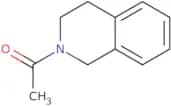
CAS:<p>3,4-Dichloro-2-hydroxybenzoic acid is a byproduct of the chlorination of carbon tetrachloride and 2,6-dichlorobenzoic acid. It can be used as an intermediate in the production of polyphosphoric acid. 3,4-Dichloro-2-hydroxybenzoic acid has been shown to have high yields and processability for use in polymer manufacturing. This active substance has also been shown to exhibit antibiotic activity against Staphylococcus aureus, which may be due to its ability to inhibit protein synthesis.</p>Formula:C7H4Cl2O3Purity:Min. 95%Molecular weight:207.01 g/mol1-(1,2,3,4-Tetrahydroisoquinolin-2-yl)ethan-1-one
CAS:<p>Versatile small molecule scaffold</p>Formula:C11H13NOPurity:Min. 95%Molecular weight:175.23 g/mol[(4-Amino-3,5-dimethylphenyl)sulfanyl]formonitrile
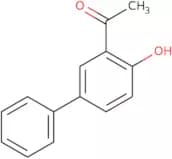
CAS:<p>Versatile small molecule scaffold</p>Formula:C9H10N2SPurity:Min. 95%Molecular weight:178.26 g/mol1-(2-Hydroxy-5-phenylphenyl)ethan-1-one
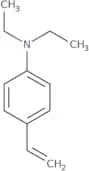
CAS:<p>Versatile small molecule scaffold</p>Formula:C14H12O2Purity:Min. 95%Molecular weight:212.24 g/mol4-Ethenyl-N,N-diethylaniline
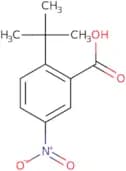
CAS:<p>Versatile small molecule scaffold</p>Formula:C12H17NPurity:Min. 95%Molecular weight:175.27 g/mol2-tert-Butyl-5-nitrobenzoic acid
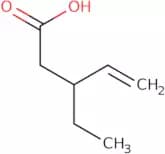
CAS:<p>Versatile small molecule scaffold</p>Formula:C11H13NO4Purity:Min. 95%Molecular weight:223.22 g/mol3-Ethylpent-4-enoic acid
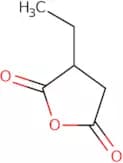
CAS:<p>Versatile small molecule scaffold</p>Formula:C7H12O2Purity:Min. 95%Molecular weight:128.17 g/mol3-Ethyloxolane-2,5-dione
CAS:<p>3-Ethyloxolane-2,5-dione is a polymerization initiator that is used in the production of polymers and sealants. Its main application is for the production of polycarboxylic acid ester resins, which are monosubstituted with an ethyloxolane group. 3-Ethyloxolane-2,5-dione reacts with aluminium chloride to form a hydrochloric acid salt. This polymerization initiator also reacts with hydrogen chloride to form a monomer that is soluble in organic solvents. It has been shown to be biodegradable and not toxic to humans or animals at low doses.</p>Formula:C6H8O3Purity:Min. 95%Molecular weight:128.13 g/mol3-(2-Methylpropyl)oxolane-2,5-dione
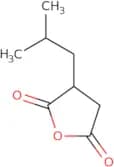
CAS:<p>3-(2-Methylpropyl)oxolane-2,5-dione is a synthetic drug that inhibits bone resorption and is used as an anti-inflammatory agent. It has been shown to have a synergistic effect with calcium carbonate in the prevention of restenosis. 3-(2-Methylpropyl)oxolane-2,5-dione also inhibits gelatinase activity and has been shown to be effective against cancer cells.</p>Formula:C8H12O3Purity:Min. 95%Molecular weight:156.18 g/mol3-Bromo-6-methoxyquinoline
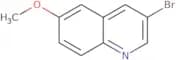
CAS:<p>Versatile small molecule scaffold</p>Formula:C10H8BrNOPurity:Min. 95%Molecular weight:238.08 g/mol1-(4-Chlorophenyl)-1H-pyrazol-4-amine
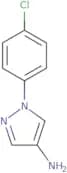
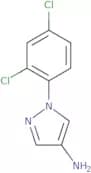
CAS:<p>Versatile small molecule scaffold</p>Formula:C9H8ClN3Purity:Min. 95%Molecular weight:193.63 g/mol1-(2,4-Dichlorophenyl)-1H-pyrazol-4-amine
CAS:<p>Versatile small molecule scaffold</p>Formula:C9H7Cl2N3Purity:Min. 95%Molecular weight:228.07 g/mol

![Methyl 4-oxospiro[2.4]heptane-5-carboxylate](/_next/image/?url=https%3A%2Fstatic.cymitquimica.com%2Fproducts%2F3D%2Fthumb-webp%2FNYB26580.webp&w=3840&q=75)
![[(4-Amino-3,5-dimethylphenyl)sulfanyl]formonitrile](/_next/image/?url=https%3A%2Fstatic.cymitquimica.com%2Fproducts%2F3D%2Fthumb-webp%2FPAA03102.webp&w=3840&q=75)