Building Blocks
This section contains fundamental products for the synthesis of organic and biological compounds. Building blocks are the essential starting materials used to construct complex molecules through various chemical reactions. They play a critical role in drug discovery, material science, and chemical research. At CymitQuimica, we offer a diverse range of high-quality building blocks to support your innovative research and industrial projects, ensuring you have the essential components for successful synthesis.
Subcategories of "Building Blocks"
- Boronic Acids & Boronic Acid Derivatives(5,756 products)
- Chiral Building Blocks(1,242 products)
- Hydrocarbon Building Blocks(6,095 products)
- Organic Building Blocks(61,055 products)
Found 199650 products of "Building Blocks"
Sort by
Purity (%)
0
100
|
0
|
50
|
90
|
95
|
100
3-(4-Bromophenyl)-2-oxopropanoic acid
CAS:<p>Versatile small molecule scaffold</p>Formula:C9H7BrO3Purity:Min. 95%Molecular weight:243.05 g/mol1-(Piperidin-2-yl)propan-1-one hydrochloride
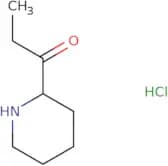
CAS:<p>Versatile small molecule scaffold</p>Formula:C8H16ClNOPurity:Min. 95%Molecular weight:177.67 g/mol3-Hydrazinyl-6-methyl-4H-1,2,4-triazin-5-one
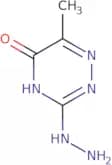
CAS:<p>3-Hydrazinyl-6-methyl-4H-1,2,4-triazin-5-one is a chemical compound that belongs to the group of aromatic aldehydes. It has been shown to react with elemental chlorine, forming 3-chloro-6-methyl-4H-[1,2,4]triazin-5(3H)-one. This reaction can be accomplished by photolysis or pyrolysis. The magnetic properties of this compound allow for its use in studies involving electron spin resonance spectroscopy and nuclear magnetic resonance spectroscopy. 3-Hydrazinyl-6-methyl-[1,2,4]triazin-[5-(3H)]one can also undergo a photochemical reaction when exposed to ultraviolet radiation with molecular oxygen. The mechanism of this reaction is not fully understood but it is thought to involve electron transfer from the excited state of the 3 hydrazine molecule to an oxygen molecule followed by</p>Formula:C4H7N5OPurity:Min. 95%Molecular weight:141.13 g/mol3-Bromo-L-tyrosine
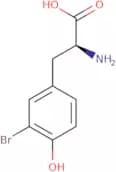
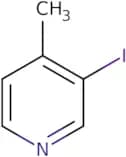
CAS:<p>3-Bromo-L-tyrosine is a reactive eosinophilic compound that is formed in human serum during the activation process. 3-Bromo-L-tyrosine has been used as an analytical method for the measurement of eosinophil peroxidase and tissue culture cells. 3-Bromo-L-tyrosine has also been shown to be a marker for infectious diseases, such as cytomegalovirus (CMV), influenza, and parainfluenza virus infections. This compound can also be used to evaluate the efficacy of treatments for infectious diseases, such as CMV and influenza.</p>Formula:C9H10BrNO3Purity:Min. 95%Molecular weight:260.1 g/mol3-Iodo-4-methylpyridine
CAS:<p>Versatile small molecule scaffold</p>Formula:C6H6INPurity:Min. 95%Molecular weight:219.02 g/mol1-Chloro-4-[(2-isothiocyanatoethyl)sulfanyl]benzene
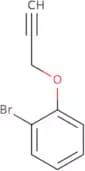
CAS:<p>Versatile small molecule scaffold</p>Formula:C9H8ClNS2Purity:Min. 95%Molecular weight:229.8 g/mol1-Bromo-2-prop-2-ynoxy-benzene
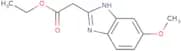
CAS:<p>Versatile small molecule scaffold</p>Formula:C9H7OBrPurity:Min. 95%Molecular weight:211.06 g/molEthyl (5-methoxy-1H-benzimidazol-2-yl)acetate
CAS:<p>Versatile small molecule scaffold</p>Formula:C12H14N2O3Purity:Min. 95%Molecular weight:234.25 g/molMethyl 5-Methoxypyrazinecarboxylate
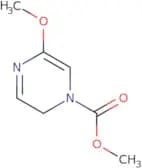
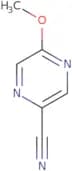
CAS:<p>Methyl 5-methoxypyrazinecarboxylate is an organic compound that belongs to the group of triazoles. It has been used as a pesticide for the control of plant pathogenic fungi, nematodes and insects, such as dextrose, chloride, oxadiazoles and agriculturally. This product is effective against pests at low doses. Methyl 5-methoxypyrazinecarboxylate inhibits the synthesis of proteins in plants by inhibiting chitin synthase enzymes in fungi and nematodes. It also inhibits the synthesis of proteins in insects by interfering with the synthesis of proteins involved in cell division.</p>Formula:C7H8N2O3Purity:Min. 95%Molecular weight:168.15 g/mol5-Methoxypyrazine-2-carbonitrile
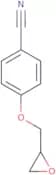
CAS:<p>5-Methoxypyrazine-2-carbonitrile is a reactive, electron-deficient heterocycle that is used as a synthetic intermediate in organic synthesis. The reactivity of this molecule is similar to that of the cyanide ion, which can be used for the selective incorporation of carbon monoxide into organic molecules. 5-Methoxypyrazine-2-carbonitrile has been shown to react with trimethylsilyl cyanide, forming the corresponding trimethylsilyl cyanohydrin. This reaction proceeds via an anti-Markovnikov addition and produces a hemiaminal product.</p>Formula:C6H5N3OPurity:Min. 95%Molecular weight:135.12 g/mol4-(2-Oxiranylmethoxy)benzenecarbonitrile
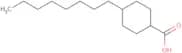
CAS:<p>Versatile small molecule scaffold</p>Formula:C10H9NO2Purity:Min. 95%Molecular weight:175.18 g/mol4-Octylcyclohexane-1-carboxylic acid
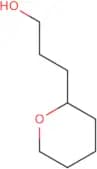
CAS:<p>Versatile small molecule scaffold</p>Formula:C15H28O2Purity:Min. 95%Molecular weight:240.38 g/mol3-(Oxan-2-yl)propan-1-ol
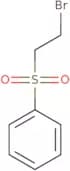
CAS:<p>Versatile small molecule scaffold</p>Formula:C8H16O2Purity:Min. 95%Molecular weight:144.21 g/mol(2-Bromoethanesulfonyl)benzene
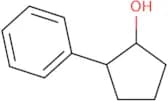
CAS:<p>Versatile small molecule scaffold</p>Formula:C8H9BrO2SPurity:Min. 95%Molecular weight:249.13 g/mol(1S,2R)-2-Phenylcyclopentan-1-ol
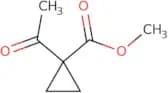
CAS:<p>Versatile small molecule scaffold</p>Formula:C11H14OPurity:Min. 95%Molecular weight:162.2 g/mol1-Acetylcyclopropanecarboxylic Acid Methyl Ester
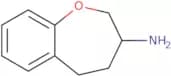
CAS:Versatile small molecule scaffoldFormula:C7H10O3Purity:Min. 95%Molecular weight:142.15 g/mol2,3,4,5-Tetrahydro-1-benzoxepin-3-amine
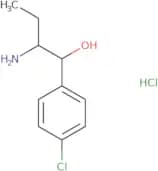
CAS:<p>Versatile small molecule scaffold</p>Formula:C10H13NOPurity:Min. 95%Molecular weight:163.22 g/mol2-Amino-1-(4-chlorophenyl)butan-1-ol hydrochloride
CAS:Controlled Product<p>Versatile small molecule scaffold</p>Formula:C10H15Cl2NOPurity:Min. 95%Molecular weight:236.13 g/mol1,4-Dioxaspiro[4.4]nonane-6-carboxylic acid
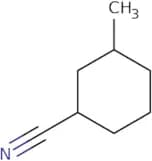
CAS:<p>Versatile small molecule scaffold</p>Formula:C8H12O4Purity:Min. 95%Molecular weight:172.18 g/mol3-Methylcyclohexane-1-carbonitrile
CAS:<p>Versatile small molecule scaffold</p>Formula:C8H13NPurity:Min. 95%Molecular weight:123.2 g/mol


![1-Chloro-4-[(2-isothiocyanatoethyl)sulfanyl]benzene](/_next/image/?url=https%3A%2Fstatic.cymitquimica.com%2Fproducts%2F3D%2Fthumb-webp%2FNBA75240.webp&w=3840&q=75)
![1,4-Dioxaspiro[4.4]nonane-6-carboxylic acid](/_next/image/?url=https%3A%2Fstatic.cymitquimica.com%2Fproducts%2F3D%2Fthumb-webp%2FNBA85385.webp&w=3840&q=75)