Building Blocks
This section contains fundamental products for the synthesis of organic and biological compounds. Building blocks are the essential starting materials used to construct complex molecules through various chemical reactions. They play a critical role in drug discovery, material science, and chemical research. At CymitQuimica, we offer a diverse range of high-quality building blocks to support your innovative research and industrial projects, ensuring you have the essential components for successful synthesis.
Subcategories of "Building Blocks"
- Boronic Acids & Boronic Acid Derivatives(5,756 products)
- Chiral Building Blocks(1,242 products)
- Hydrocarbon Building Blocks(6,095 products)
- Organic Building Blocks(61,055 products)
Found 199650 products of "Building Blocks"
Sort by
Purity (%)
0
100
|
0
|
50
|
90
|
95
|
100
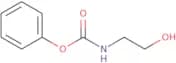
Phenyl N-(2-hydroxyethyl)carbamate
CAS:<p>Versatile small molecule scaffold</p>Formula:C9H11NO3Purity:Min. 95%Molecular weight:181.19 g/molBenzyl N-ethylcarbamate
CAS:<p>Benzyl N-ethylcarbamate is a carbonyl compound that inhibits the activity of enzymes involved in the production of beta-amyloid peptide. This drug has been shown to be effective in the treatment of depression, inflammatory diseases, and autoimmune diseases. It also has a lipid lowering effect and is used as an anti-hyperlipidemic agent. Benzyl N-ethylcarbamate binds to 3-hydroxy-3-methylglutaryl coenzyme A (HMG CoA) reductase, which catalyzes the conversion of HMG CoA to mevalonic acid. This binding inhibits the conversion and prevents cholesterol synthesis by inhibiting the enzyme’s activity.</p>Formula:C10H13NO2Purity:Min. 95%Molecular weight:179.22 g/mol2-Methyl-4-nitrobenzene-1,3-diol
CAS:<p>Versatile small molecule scaffold</p>Formula:C7H7NO4Purity:Min. 95%Molecular weight:169.13 g/mol4-Methylpyridine-2-sulfonamide
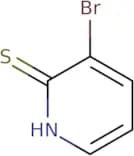
CAS:<p>Versatile small molecule scaffold</p>Formula:C6H8N2O2SPurity:Min. 95%Molecular weight:172.2 g/mol3-Bromopyridine-2-thiol
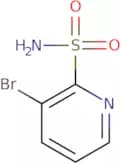
CAS:<p>Versatile small molecule scaffold</p>Formula:C5H4BrNSPurity:Min. 95%Molecular weight:190.06 g/mol3-Bromopyridine-2-sulfonamide
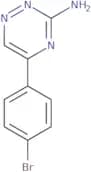
CAS:<p>Versatile small molecule scaffold</p>Formula:C5H5BrN2O2SPurity:Min. 95%Molecular weight:237.08 g/mol5-(4-Bromophenyl)-1,2,4-triazin-3-amine
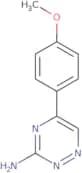
CAS:Versatile small molecule scaffoldFormula:C9H7BrN4Purity:Min. 95%Molecular weight:251.08 g/mol5-(4-Methoxyphenyl)-1,2,4-triazin-3-amine
CAS:<p>Versatile small molecule scaffold</p>Formula:C10H10N4OPurity:Min. 95%Molecular weight:202.21 g/mol4,4,4-Trifluoro-3-phenylbutan-1-ol
CAS:<p>Versatile small molecule scaffold</p>Formula:C10H11F3OPurity:Min. 95%Molecular weight:204.19 g/mol6-Phenoxybenzo[d]thiazol-2-amine
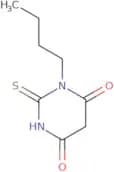
CAS:<p>6-Phenoxybenzo[d]thiazol-2-amine is a benzothiazole that modulates the membrane potential and dilates blood vessels. It has been shown to lower blood pressure in vivo studies, and has been shown to be a neuroprotectant in murine models of stroke. 6-Phenoxybenzo[d]thiazol-2-amine also activates calcium channels, which may potentiate its effects on blood pressure.</p>Formula:C13H10N2OSPurity:Min. 95%Molecular weight:242.3 g/mol1-Butyl-2-thioxodihydropyrimidine-4,6(1H,5H)-dione
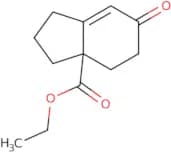
CAS:<p>Versatile small molecule scaffold</p>Formula:C8H12N2O2SPurity:Min. 95%Molecular weight:200.26 g/molEthyl 6-oxo-2,3,3a,4,5,6-hexahydro-1H-indene-3a-carboxylate
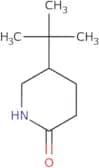
CAS:<p>Versatile small molecule scaffold</p>Formula:C12H16O3Purity:Min. 95%Molecular weight:208.25 g/mol5-tert-Butylpiperidin-2-one
CAS:<p>Versatile small molecule scaffold</p>Formula:C9H17NOPurity:Min. 95%Molecular weight:155.24 g/mol1,4-Dioxa-8λ⁴-thiaspiro[4.5]decan-8-one
CAS:<p>Versatile small molecule scaffold</p>Formula:C7H12O3SPurity:Min. 95%Molecular weight:176.2 g/mol5-Chlorothieno[3,2-B]pyridine-6-carbaldehyde
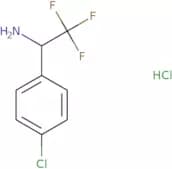
CAS:<p>Versatile small molecule scaffold</p>Formula:C8H4ClNOSPurity:Min. 95%Molecular weight:197.65 g/mol1-(4-Chlorophenyl)-2,2,2-trifluoroethanamine hydrochloride
CAS:<p>Versatile small molecule scaffold</p>Formula:C8H8Cl2F3NPurity:Min. 95%Molecular weight:246.06 g/mol2-(Prop-2-yn-1-yl)pent-4-ynoic acid
CAS:<p>2-(Prop-2-yn-1-yl)pent-4-ynoic acid is an organic solvent that is activated with a molecule of argon. It has been shown to have affinity for malonic acid, which may be due to its ability to form hydrogen bonds with the carboxyl group on the ligand. 2-(Prop-2-yn-1-yl)pent-4-ynoic acid has also been shown to be nonpolymeric, which means it does not form long chains or rings of molecules. This makes it ideal for use as a ligand in pharmaceuticals and biochemistry. 2-(Prop-2-yn-1-yl)pent -4 -ynoic acid can be used as a binding agent in lithography because it can bind to both monomers and other agents. Research has shown that this chemical is able to increase serum glucose levels in hyperglycemic rats by inhibiting gluconeogenesis and glycogenolysis,</p>Formula:C8H8O2Purity:Min. 95%Molecular weight:136.15 g/molN-(3-Amino-2-methylphenyl)acetamide
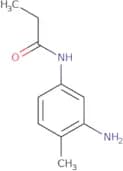
CAS:<p>Versatile small molecule scaffold</p>Formula:C9H12N2OPurity:Min. 95%Molecular weight:164.2 g/molN-(3-Amino-4-methylphenyl)propanamide
CAS:<p>Versatile small molecule scaffold</p>Formula:C10H14N2OPurity:Min. 95%Molecular weight:178.23 g/moltert-Butyl 3-bromo-5-iodobenzoate
CAS:<p>Versatile small molecule scaffold</p>Formula:C11H12BrIO2Purity:Min. 95%Molecular weight:383.02 g/mol



![6-Phenoxybenzo[d]thiazol-2-amine](/_next/image/?url=https%3A%2Fstatic.cymitquimica.com%2Fproducts%2F3D%2Fthumb-webp%2FQCA94819.webp&w=3840&q=75)
![1,4-Dioxa-8λ⁴-thiaspiro[4.5]decan-8-one](/_next/image/?url=https%3A%2Fstatic.cymitquimica.com%2Fproducts%2F3D%2Fthumb-webp%2FQCA97324.webp&w=3840&q=75)
![5-Chlorothieno[3,2-B]pyridine-6-carbaldehyde](/_next/image/?url=https%3A%2Fstatic.cymitquimica.com%2Fproducts%2F3D%2Fthumb-webp%2FQCA97756.webp&w=3840&q=75)