Building Blocks
This section contains fundamental products for the synthesis of organic and biological compounds. Building blocks are the essential starting materials used to construct complex molecules through various chemical reactions. They play a critical role in drug discovery, material science, and chemical research. At CymitQuimica, we offer a diverse range of high-quality building blocks to support your innovative research and industrial projects, ensuring you have the essential components for successful synthesis.
Subcategories of "Building Blocks"
- Boronic Acids & Boronic Acid Derivatives(5,778 products)
- Chiral Building Blocks(1,242 products)
- Hydrocarbon Building Blocks(6,098 products)
- Organic Building Blocks(61,034 products)
Found 199601 products of "Building Blocks"
Sort by
Purity (%)
0
100
|
0
|
50
|
90
|
95
|
100
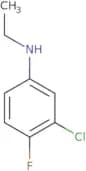
3-Chloro-N-ethyl-4-fluoroaniline
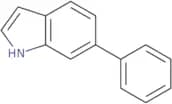
CAS:<p>Versatile small molecule scaffold</p>Formula:C8H9ClFNPurity:Min. 95%Molecular weight:173.61 g/mol6-Phenyl-1H-indole
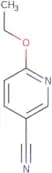
CAS:<p>6-Phenyl-1H-indole is a tripeptide that has been modified to include a pharmacophore group. It has potential use in cancer therapy as a factor receptor ligand. This drug has shown some efficacy against muramyl dipeptide and mononuclear leukocytes in cell culture models, suggesting that it may be useful for cancer therapy. 6-Phenyl-1H-indole is also able to bind to chloride ions, which are involved in the regulation of growth factors and efficiencies of cells. The lack of this ion can lead to inefficient growth and cancer.</p>Formula:C14H11NPurity:Min. 95%Molecular weight:193.24 g/mol6-Ethoxynicotinonitrile
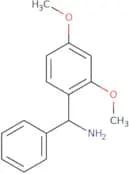
CAS:<p>Versatile small molecule scaffold</p>Formula:C8H8N2OPurity:Min. 95%Molecular weight:148.16 g/mol(2,4-Dimethoxyphenyl)(phenyl)methanamine
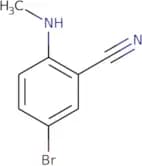
CAS:<p>2,4-Dimethoxyphenyl-(phenyl)methanamine (2,4-DMPP) is a synthetic amino acid. It is synthesized from the reaction of acetonitrile and phenylmagnesium bromide in trifluoroacetic acid. The product is purified by preparative ion-exchange chromatography, followed by amino acid analysis. 2,4-DMPP has been shown to have biological properties that are similar to those of serotonin. This compound has been used as a starting material for the synthesis of other compounds with biological activity. 2,4-DMPP can be synthesized by solid phase synthesis or high pressure liquid chromatography with reversed phase. Selectivities for these processes are controlled by the type and concentration of solvents used in the process.</p>Formula:C15H17NO2Purity:Min. 95%Molecular weight:243.3 g/mol5-Bromo-2-(methylamino)benzonitrile
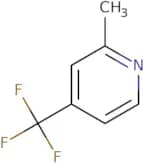
CAS:<p>Versatile small molecule scaffold</p>Formula:C8H7BrN2Purity:Min. 95%Molecular weight:211.06 g/mol2-Methyl-4-(trifluoromethyl)pyridine
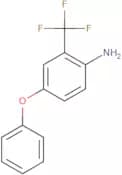
CAS:<p>Versatile small molecule scaffold</p>Formula:C7H6F3NPurity:Min. 95%Molecular weight:161.13 g/mol4-Phenoxy-2-(trifluoromethyl)aniline
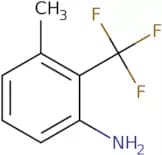
CAS:<p>Versatile small molecule scaffold</p>Formula:C13H10F3NOPurity:Min. 95%Molecular weight:253.22 g/mol3-Methyl-2-(trifluoromethyl)aniline
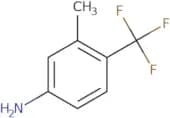
CAS:<p>Versatile small molecule scaffold</p>Formula:C8H8F3NPurity:Min. 95%Molecular weight:175.15 g/mol3-Methyl-4-(trifluoromethyl)aniline
CAS:<p>3-Methyl-4-(trifluoromethyl)aniline is a methyl ester that has been analyzed using cyclic voltammetry and photovoltaic techniques. It is used in solar cells as an acceptor molecule to enhance the efficiency of the cell. 3-Methyl-4-(trifluoromethyl)aniline is a metabolite of endogenous compounds, such as tryptophan, which is a precursor for serotonin. It has shown efficiencies up to 10% in photoelectrochemical cells and can be quantified by analyzing its mass spectrometric profile.</p>Formula:C8H8F3NPurity:Min. 95%Molecular weight:175.15 g/mol5-Methyl-2-(trifluoromethyl)phenol
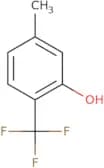
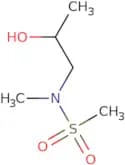
CAS:<p>Versatile small molecule scaffold</p>Formula:C8H7F3OPurity:Min. 95%Molecular weight:176.14 g/molN-(2-Hydroxypropyl)-N-methylmethanesulfonamide
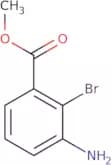
CAS:<p>Versatile small molecule scaffold</p>Formula:C5H13NO3SPurity:Min. 95%Molecular weight:167.23 g/molmethyl 3-amino-2-bromobenzoate
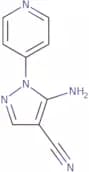
CAS:<p>Versatile small molecule scaffold</p>Formula:C8H8BrNO2Purity:Min. 95%Molecular weight:230.1 g/mol5-Amino-1-(pyridin-4-yl)-1H-pyrazole-4-carbonitrile
CAS:<p>Versatile small molecule scaffold</p>Formula:C9H7N5Purity:Min. 95%Molecular weight:185.19 g/mol2-[2-(Methylamino)phenyl]ethan-1-ol
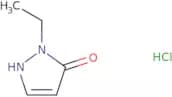
CAS:<p>Versatile small molecule scaffold</p>Formula:C9H13NOPurity:Min. 95%Molecular weight:151.2 g/mol1-Ethyl-1H-pyrazol-5-ol hydrochloride
CAS:<p>Versatile small molecule scaffold</p>Formula:C5H9ClN2OPurity:Min. 95%Molecular weight:148.59 g/mol(R)-2-(Benzylamino)-3-hydroxypropanoic acid
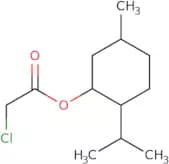
CAS:<p>(R)-2-(Benzylamino)-3-hydroxypropanoic acid is a methyl ester of the amino acid, L-leucine. It is an efficient reagent for the synthesis of chiral amides and esters, with high stereoselectivity and diastereoselectivity. The use of an allyl group as a protecting group in this synthesis provides a regioisomerically pure product. (R)-2-(Benzylamino)-3-hydroxypropanoic acid has been used in syntheses of sulfamidates with high diastereoselectivity.</p>Formula:C10H13NO3Purity:Min. 95%Molecular weight:195.22 g/mol5-Methyl-2-(propan-2-yl)cyclohexyl 2-chloroacetate
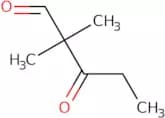
CAS:<p>5-Methyl-2-(propan-2-yl)cyclohexyl 2-chloroacetate is a molecule with a carbonyl group and trifluoroacetic acid. It is used in the preparation of pharmaceuticals, such as cardiotonics, antiarrhythmics, and antianxiety agents. This compound has been shown to be an effective insecticide against mosquitoes. 5-Methyl-2-(propan-2-yl)cyclohexyl 2-chloroacetate is also used in the synthesis of fatty acid esters and hydroxyl groups. <br>The desymmetrization reaction of 5-methylcyclohexanecarboxylic acid with chloroacetic acid under kinetic conditions was successfully carried out using deionized water and sodium hydrogen at room temperature for 16 hours.</p>Formula:C12H21ClO2Purity:Min. 95%Molecular weight:232.74 g/mol2,2-Dimethyl-3-oxopentanal
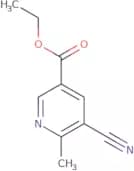
CAS:<p>2,2-Dimethyl-3-oxopentanal is a molecule that forms during the oxidation of isobutene. It is involved in a variety of reactions and has been shown to have surface chemistry properties. The adsorption and desorption of 2,2-dimethyl-3-oxopentanal on a ruthenium surface has been studied by XPS and photoelectron spectroscopy. The molecule has also been shown to form from the gas phase reaction of monoxide and metallic rhodium. This molecule can be used as a ligand in coordination chemistry.</p>Formula:C7H12O2Purity:Min. 95%Molecular weight:128.17 g/molEthyl 5-cyano-6-methylnicotinate
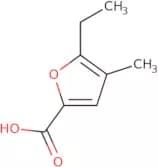
CAS:<p>Versatile small molecule scaffold</p>Formula:C10H10N2O2Purity:Min. 95%Molecular weight:190.2 g/mol5-Ethyl-4-methylfuran-2-carboxylic acid
CAS:<p>Versatile small molecule scaffold</p>Formula:C8H10O3Purity:Min. 95%Molecular weight:154.16 g/mol

![2-[2-(Methylamino)phenyl]ethan-1-ol](/_next/image/?url=https%3A%2Fstatic.cymitquimica.com%2Fproducts%2F3D%2Fthumb-webp%2FGEA89900.webp&w=3840&q=75)