Building Blocks
This section contains fundamental products for the synthesis of organic and biological compounds. Building blocks are the essential starting materials used to construct complex molecules through various chemical reactions. They play a critical role in drug discovery, material science, and chemical research. At CymitQuimica, we offer a diverse range of high-quality building blocks to support your innovative research and industrial projects, ensuring you have the essential components for successful synthesis.
Subcategories of "Building Blocks"
- Boronic Acids & Boronic Acid Derivatives(5,756 products)
- Chiral Building Blocks(1,242 products)
- Hydrocarbon Building Blocks(6,095 products)
- Organic Building Blocks(61,055 products)
Found 199650 products of "Building Blocks"
Sort by
Purity (%)
0
100
|
0
|
50
|
90
|
95
|
100
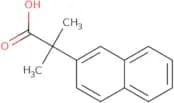
2-Methyl-2-(2-naphthyl)propanoic acid
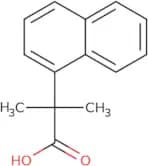
CAS:<p>Versatile small molecule scaffold</p>Formula:C14H14O2Purity:Min. 95%Molecular weight:214.27 g/mol2-Methyl-2-(naphthalen-1-yl)propanoic acid
CAS:<p>Versatile small molecule scaffold</p>Formula:C14H14O2Purity:Min. 95%Molecular weight:214.26 g/mol2-Chloro-6-hydroxypurine
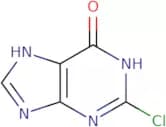
CAS:<p>2-Chloro-6-hydroxypurine is a purine derivative that inhibits the synthesis of nucleic acids, proteins and lipids. It has been shown to be effective in the treatment of myeloproliferative diseases and some forms of cancer. The 2-chloro-6-hydroxypurine molecule has two tautomeric forms, including the lactam form and the mesomeric form. The lactam form is more stable than the mesomeric form, but both forms are active in inhibiting DNA synthesis.</p>Formula:C5H3ClN4OPurity:Min. 95%Molecular weight:170.56 g/mol4-Bromo-1-(prop-2-en-1-yl)-1H-pyrazole
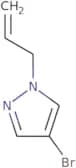
CAS:<p>Versatile small molecule scaffold</p>Formula:C6H7BrN2Purity:Min. 95%Molecular weight:187.04 g/mol2-Iodo-5-nitro-1H-imidazole
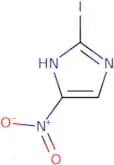
CAS:<p>2-Iodo-5-nitro-1H-imidazole is an intermediate in the synthesis of a number of drugs, including antibiotics, antiparasitics, and antimalarial agents. This compound is a potent inhibitor of bacterial growth and has shown some activity against protozoal infections.</p>Formula:C3H2IN3O2Purity:Min. 95%Molecular weight:238.97 g/mol4,5-Diiodo-1,2-dimethyl-1H-imidazole
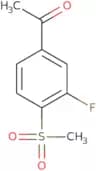
CAS:<p>Versatile small molecule scaffold</p>Formula:C5H6I2N2Purity:Min. 95%Molecular weight:347.92 g/mol3'-Fluoro-4'-(methylsulphonyl)acetophenone
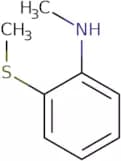
CAS:<p>Versatile small molecule scaffold</p>Formula:C9H9FO3SPurity:Min. 95%Molecular weight:216.23 g/molN-Methyl-2-(methylsulfanyl)aniline
CAS:<p>Versatile small molecule scaffold</p>Formula:C8H11NSPurity:Min. 95%Molecular weight:153.25 g/molN-{[4-(Propan-2-yl)phenyl]methylidene}hydroxylamine
CAS:<p>N-{[4-(Propan-2-yl)phenyl]methylidene}hydroxylamine is a tartrate reagent that is used in the asymmetric synthesis of chiral compounds. It has been shown to be effective in the synthesis of enantiomerically pure amines, ketones, and alcohols. This reagent has been shown to catalyze reactions with high enantioselectivities and tolerates a wide range of functional groups. The tartrate anion is formed stoichiometrically by the reaction of two equivalents of tartaric acid with one equivalent of a base such as dicyclohexyl or dimethylzinc. The glyoxal group may be converted to a dioxane by heating with ethylene glycol at 160 °C for 30 minutes. The acid ester may be hydrolyzed by heating with water at 100 °C for 2 hours.</p>Formula:C10H13NOPurity:Min. 95%Molecular weight:163.22 g/mol2-{[2-(Methylsulfanyl)phenoxy]methyl}oxirane
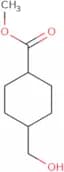
CAS:<p>Versatile small molecule scaffold</p>Formula:C10H12O2SPurity:Min. 95%Molecular weight:196.27 g/molMethyl cis-4-hydroxymethylcyclohexane-1-carboxylate
CAS:<p>Versatile small molecule scaffold</p>Formula:C9H16O3Purity:Min. 95%Molecular weight:172.22 g/mol[2-(Hydroxymethyl)oxolan-2-yl]methanol
CAS:<p>2-(Hydroxymethyl)oxolan-2-yl]methanol is a factor receptor agonist that has been shown to inhibit the growth of human colon cancer cells. The enantiomers of 2-(hydroxymethyl)oxolan-2-yl]methanol were found to have an opposite effect on cell proliferation in vitro, with the levorotatory form being more potent than the dextrorotatory form. This leads to inhibition of cell proliferation and differentiation, which may be due to its ability to induce phospholipase A2 activity and affect cellular signal transduction pathways. 2-(Hydroxymethyl)oxolan-2-yl]methanol is also able to inhibit tumorigenesis in mammary carcinoma cells and leukemia cells.</p>Formula:C6H12O3Purity:Min. 95%Molecular weight:132.16 g/molBicyclo[3.1.0]hexane-3-carboxylic acid
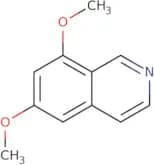
CAS:<p>Versatile small molecule scaffold</p>Formula:C7H10O2Purity:Min. 95%Molecular weight:126.15 g/mol6,8-Dimethoxyisoquinoline
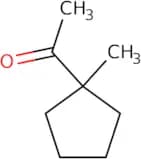
CAS:<p>Versatile small molecule scaffold</p>Formula:C11H11NO2Purity:Min. 95%Molecular weight:189.21 g/mol1-(1-Methylcyclopentyl)ethan-1-one
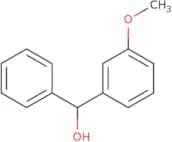
CAS:<p>Versatile small molecule scaffold</p>Formula:C8H14OPurity:Min. 95%Molecular weight:126.2 g/mol3-Methoxybenzhydrol
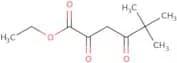
CAS:<p>Versatile small molecule scaffold</p>Formula:C14H14O2Purity:Min. 95%Molecular weight:214.26 g/molEthyl Trimethylacetopyruvate
CAS:<p>Ethyl Trimethylacetopyruvate is a chemical compound that belongs to the class of organic ester compounds. It has been shown to have high proton chemical stability and strong hydrogen bonding properties. This compound also has a chelate ring, which is formed through a reaction between an acid and a metal ion, such as ethyl acetate (CH3CO2CH3) or ethyl propionate (CH3CO2CH2CH3). Ethyl Trimethylacetopyruvate is synthesized by reacting ethanol with trimethylacetaldehyde in the presence of sulfuric acid. This process produces two products: Ethyl 2-methylpropanoate (Et2MP) and Ethyl 3-methylbutanoate (Et3MB). The molecule's x-ray diffraction data has been obtained using synchrotron radiation, which can be used to study the molecular structure and identify its purity.</p>Formula:C10H16O4Purity:Min. 95%Molecular weight:200.23 g/mol2,4,4-Trimethylcyclohex-2-en-1-one
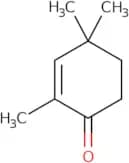
CAS:<p>2,4,4-Trimethylcyclohex-2-en-1-one (TMC) is a carbonyl group that has an oxime group. It can be used as an intermediate in the synthesis of dienones and ester compounds. TMC can be prepared by reacting 2,4,4-trimethylcyclohexanone with formaldehyde or acetaldehyde in the presence of a base. TMC is also used as a reagent for the synthesis of safranal and exocyclic dienones. Safranal is found in plants such as saffron, which gives it its distinctive aroma and flavor. Exocyclic dienones are found in plants such as coffee beans and vanilla beans.</p>Formula:C9H14OPurity:Min. 95%Color and Shape:PowderMolecular weight:138.21 g/mol2,3-Dimethylcyclohexan-1-one
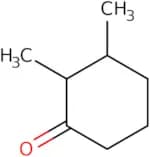
CAS:<p>2,3-Dimethylcyclohexan-1-one is a synthetic compound that belongs to the group of enolates. This molecule can be synthesized from 2,3-dimethylcyclohexane by alkylation with bromide and then reduction with sodium borohydride. It has anti-inflammatory properties that are due to its ability to inhibit prostaglandin synthesis. The levorotatory form is more active than the dextrorotatory form. Kinetic studies have shown that the stereoselectivity is dependent on the solvent and temperature used in the reaction.</p>Formula:C8H14OPurity:Min. 95%Molecular weight:126.2 g/mol4,4-Diethoxybut-1-yne
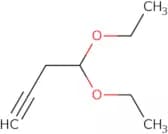
CAS:<p>4,4-Diethoxybut-1-yne is a versatile chemical that can be used in a variety of configurations. It is an efficient and trackable chemical that has been extracted from coal tar. The configurations of 4,4-diethoxybut-1-yne include the cis and trans isomers. This chemical can be used as a solvent in organic synthesis and as an intermediate in the production of pharmaceuticals. The stereochemistry of 4,4-diethoxybut-1-yne is controlled with the use of chiral auxiliary groups.</p>Formula:C8H14O2Purity:Min. 95%Molecular weight:142.2 g/mol

![N-{[4-(Propan-2-yl)phenyl]methylidene}hydroxylamine](/_next/image/?url=https%3A%2Fstatic.cymitquimica.com%2Fproducts%2F3D%2Fthumb-webp%2FNAA37280.webp&w=3840&q=75)
![2-{[2-(Methylsulfanyl)phenoxy]methyl}oxirane](/_next/image/?url=https%3A%2Fstatic.cymitquimica.com%2Fproducts%2F3D%2Fthumb-webp%2FNAA37985.webp&w=3840&q=75)
![[2-(Hydroxymethyl)oxolan-2-yl]methanol](/_next/image/?url=https%3A%2Fstatic.cymitquimica.com%2Fproducts%2F3D%2Fthumb-webp%2FNAA38657.webp&w=3840&q=75)
![Bicyclo[3.1.0]hexane-3-carboxylic acid](/_next/image/?url=https%3A%2Fstatic.cymitquimica.com%2Fproducts%2F3D%2Fthumb-webp%2FNAA38851.webp&w=3840&q=75)