Building Blocks
This section contains fundamental products for the synthesis of organic and biological compounds. Building blocks are the essential starting materials used to construct complex molecules through various chemical reactions. They play a critical role in drug discovery, material science, and chemical research. At CymitQuimica, we offer a diverse range of high-quality building blocks to support your innovative research and industrial projects, ensuring you have the essential components for successful synthesis.
Subcategories of "Building Blocks"
- Boronic Acids & Boronic Acid Derivatives(5,756 products)
- Chiral Building Blocks(1,242 products)
- Hydrocarbon Building Blocks(6,095 products)
- Organic Building Blocks(61,055 products)
Found 199650 products of "Building Blocks"
Sort by
Purity (%)
0
100
|
0
|
50
|
90
|
95
|
100
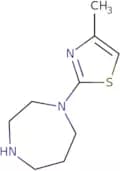
1-(4-Methyl-1,3-thiazol-2-yl)-1,4-diazepane
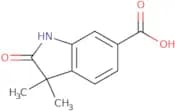
CAS:<p>Versatile small molecule scaffold</p>Formula:C9H15N3SPurity:Min. 95%Molecular weight:197.3 g/mol3,3-Dimethyl-2-oxo-2,3-dihydro-1H-indole-6-carboxylic acid
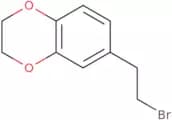
CAS:<p>Versatile small molecule scaffold</p>Formula:C11H11NO3Purity:Min. 95%Molecular weight:205.21 g/mol6-(2-Bromoethyl)-2,3-dihydro-1,4-benzodioxine
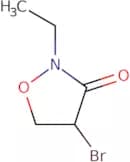
CAS:<p>Versatile small molecule scaffold</p>Formula:C10H11BrO2Purity:Min. 95%Molecular weight:243.1 g/mol4-Bromo-2-ethyl-1,2-oxazolidin-3-one
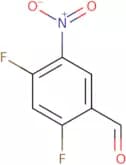
CAS:<p>Versatile small molecule scaffold</p>Formula:C5H8BrNO2Purity:Min. 95%Molecular weight:194.03 g/mol2,4-difluoro-5-nitrobenzaldehyde
CAS:<p>2,4-Difluoro-5-nitrobenzaldehyde is a compound used in the synthesis of benzotriazole derivatives. It has been shown to interact with other molecules and is a photoactive molecule. 2,4-Difluoro-5-nitrobenzaldehyde has been used to regulate the efficiency of solar cells by utilizing its ability to absorb light energy. This molecule can be used as a fluorine source for photovoltaic devices and can be utilized in crystalline solids that have morphologies such as needles, plates, or rods. The presence of this molecule deteriorates crystalline solids.</p>Formula:C7H3F2NO3Purity:Min. 95%Molecular weight:187.1 g/mol(3E)-4-(Dimethylamino)-1,1,1-trifluorobut-3-en-2-one
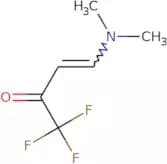
CAS:<p>The compound (3E)-4-(dimethylamino)-1,1,1-trifluorobut-3-en-2-one is a trifluoromethylated derivative of the non-covalently bound complex 2,6-diaminohexane. It has been shown to have interactions with diazonium salts and shows similarities to the structure of an arylhydrazone. The compound has been used for x-ray diffraction analysis and x-ray diffraction studies. The crystal structure for this molecule was determined by x-ray diffraction methods.</p>Formula:C6H8F3NOPurity:Min. 95%Molecular weight:167.13 g/mol3-(Dimethylamino)-N-methylbenzamide
CAS:<p>Versatile small molecule scaffold</p>Formula:C10H14N2OPurity:Min. 95%Molecular weight:178.23 g/mol1,1,1-Trifluoro-3-sulfanylpropan-2-one
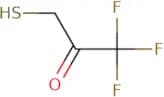
CAS:<p>1,1,1-Trifluoro-3-sulfanylpropan-2-one (TFPS) is a sulfonyl proton equivalent. It is hydrolyzed in vivo to its active form, trifluoromethanesulfonic acid (TFMSA), which binds to the enzyme cytochrome P450 and inhibits its activity. TFPS has been shown to inhibit the biosynthesis of hormones such as thyroxine and testosterone in insects. TFPS was also found to bind to specific binding sites on the surface of the mitochondria that are not present in other tissues. The inhibition of these sites by TFPS may be due to its ability to act as a competitive inhibitor for other substances, such as ATP or glucose 6-phosphate.</p>Formula:C3H3F3OSPurity:Min. 95%Molecular weight:144.12 g/molMethyl[2-(1-methylpiperidin-2-yl)ethyl]amine
CAS:<p>Versatile small molecule scaffold</p>Formula:C9H20N2Purity:Min. 95%Molecular weight:156.27 g/mol4-Bromoisoindoline
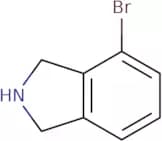
CAS:<p>4-Bromoisoindoline is an industrial chemical that belongs to the group of medicines. It is synthesized by a reaction of 2,4-dichlorobenzoyl chloride with 4-aminoindoline. The synthesis process is not yet known.</p>Formula:C8H8BrNPurity:Min. 95%Molecular weight:198.06 g/mol5-Chloroisoindoline
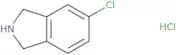
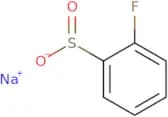
CAS:<p>5-Chloroisoindoline is a compound that can be synthesized from amines. It is a cyclic compound with a high yield. 5-Chloroisoindoline can be used to synthesize other compounds, including pharmaceuticals and dyestuffs.</p>Formula:C8H8ClNPurity:Min. 95%Molecular weight:153.61 g/molSodium 2-fluorobenzene-1-sulfinate
CAS:<p>Sodium 2-fluorobenzene-1-sulfinate is an arylation agent that can be used to synthesize substituted phenols. It is a regioselective reagent, which means it only reacts at the para position of the aromatic ring. The carbonate group can be removed by treatment with tripotassium phosphate in acidic solution, yielding the corresponding n-oxide. Sodium 2-fluorobenzene-1-sulfinate can also be used for palladium-catalyzed arylating reactions. This reaction requires a stoichiometric amount of triphenylphosphine and yields excellent yields. It reacts with diphenylphosphine to form the corresponding oxide in high yield. Sodium 2-fluorobenzene-1-sulfinate is commercially available and synlett has been reported.</p>Formula:C6H4FNaO2SPurity:Min. 95%Molecular weight:182.15 g/mol7-{4-[(tert-Butoxy)carbonyl]piperazin-1-yl}-1-ethyl-6-fluoro-4-oxo-1,4-dihydroquinoline-3-carboxylic acid
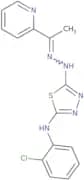
CAS:<p>Versatile small molecule scaffold</p>Formula:C21H26FN3O5Purity:Min. 95%Molecular weight:419.4 g/mol2-Acetylpyridine (5-(2-chloroanilino)-1,3,4-thiadiazol-2-yl)hydrazone
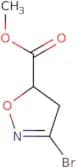
CAS:<p>Versatile small molecule scaffold</p>Formula:C15H13ClN6SPurity:Min. 95%Molecular weight:344.8 g/molMethyl 3-bromo-4,5-dihydro-1,2-oxazole-5-carboxylate
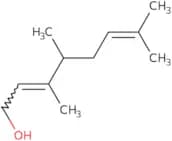
CAS:<p>Versatile small molecule scaffold</p>Formula:C5H6BrNO3Purity:Min. 95%Molecular weight:208.01 g/mol3,4,7-Trimethylocta-2,6-dien-1-ol
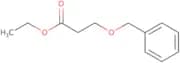
CAS:<p>Versatile small molecule scaffold</p>Formula:C11H20OPurity:Min. 95%Molecular weight:168.3 g/molEthyl 3-(benzyloxy)propanoate
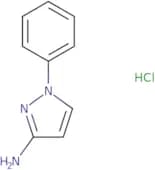
CAS:<p>Versatile small molecule scaffold</p>Formula:C12H16O3Purity:Min. 95%Molecular weight:208.25 g/mol1-Phenyl-1H-pyrazol-3-amine hydrochloride
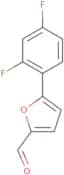
CAS:<p>Versatile small molecule scaffold</p>Formula:C9H10ClN3Purity:Min. 95%Molecular weight:195.65 g/mol5-(2,4-Difluoro-phenyl)-furan-2-carbaldehyde
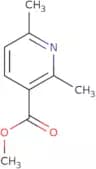
CAS:<p>Versatile small molecule scaffold</p>Formula:C11H6F2O2Purity:Min. 95%Molecular weight:208.17 g/mol2,6-Dimethyl-3-pyridinecarboxylic Acid Methyl Ester
CAS:<p>2,6-Dimethyl-3-pyridinecarboxylic acid methyl ester is a ketone with the chemical formula C5H8O2. It is a polysubstituted vinyl compound that contains two methyl groups. This chemical can be synthesized by the dehydrogenation of 2,6-dimethyl-3-pyridinecarboxylic acid with diels-alder and tetrahydropyridine catalysts. The synthesis of this compound was first reported in 1887 by Diels and Alder. 2,6-Dimethyl-3-pyridinecarboxylic acid methyl ester is an important intermediate in the preparation of pyridines, as well as cycloaddition reactions that form vinyl ketones or dienes from ethylenic compounds.</p>Formula:C9H11NO2Purity:Min. 95%Molecular weight:165.19 g/mol


![Methyl[2-(1-methylpiperidin-2-yl)ethyl]amine](/_next/image/?url=https%3A%2Fstatic.cymitquimica.com%2Fproducts%2F3D%2Fthumb-webp%2FCFA17348.webp&w=3840&q=75)
![7-{4-[(tert-Butoxy)carbonyl]piperazin-1-yl}-1-ethyl-6-fluoro-4-oxo-1,4-dihydroquinoline-3-carboxyl…](/_next/image/?url=https%3A%2Fstatic.cymitquimica.com%2Fproducts%2F3D%2Fthumb-webp%2FCFA14290.webp&w=3840&q=75)