


Building Blocks
This section contains fundamental products for the synthesis of organic and biological compounds. Building blocks are the essential starting materials used to construct complex molecules through various chemical reactions. They play a critical role in drug discovery, material science, and chemical research. At CymitQuimica, we offer a diverse range of high-quality building blocks to support your innovative research and industrial projects, ensuring you have the essential components for successful synthesis.
Subcategories of "Building Blocks"
- Boronic Acids & Boronic Acid Derivatives(5,756 products)
- Chiral Building Blocks(1,242 products)
- Hydrocarbon Building Blocks(6,095 products)
- Organic Building Blocks(61,055 products)
Found 199650 products of "Building Blocks"
Sort by
Purity (%)
0
100
|
0
|
50
|
90
|
95
|
100
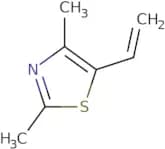
2,4-Dimethyl-5-vinylthiazole
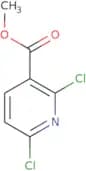
CAS:<p>Versatile small molecule scaffold</p>Formula:C7H9NSPurity:Min. 95%Molecular weight:139.22 g/molMethyl 2,6-dichloropyridine-3-carboxylate
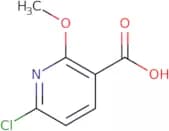
CAS:<p>Methyl 2,6-dichloropyridine-3-carboxylate is a carboxylic acid that can be synthesized by reacting 2,6-dichloropyridine with an acetyl chloride. It has been used in the synthesis of dopamine D2 receptor antagonists. The sulfoxide group in this compound may undergo alkaline hydrolysis to yield an anion and a nucleophilic adduct. This carboxylic acid also reacts with triethylamine to form esters. In addition, methyl 2,6-dichloropyridine-3-carboxylate is regioselective for the alpha position when it reacts with methyltetrahydrofuran.</p>Formula:C7H5Cl2NO2Purity:Min. 95%Molecular weight:206.03 g/mol6-Chloro-2-methoxynicotinic acid
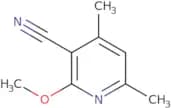
CAS:<p>6-Chloro-2-methoxynicotinic acid is a ketone that reacts with chlorine in the presence of light to form chlorinated products. It is a versatile intermediate for the synthesis of various compounds. 6-Chloro-2-methoxynicotinic acid is used in the synthesis of naphthacene, which is a precursor to dyes and pharmaceuticals. The reactivity of this compound depends on substituents located at the 2 position. Substituents cause sterically hindering effects and lead to different geometries and reactivities, such as attack by chlorine or substitution by hydrogen.</p>Formula:C7H6ClNO3Purity:Min. 95%Molecular weight:187.58 g/mol2-Methoxy-4,6-dimethylnicotinonitrile
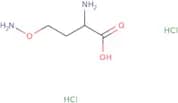
CAS:<p>2-Methoxy-4,6-dimethylnicotinonitrile is a photoreactive compound that reacts with UV light to produce an adduct. The 1-cyanonaphthalene group in 2-methoxy-4,6-dimethylnicotinonitrile undergoes a photochemical reaction to form an adduct with the benzene ring. It is postulated that the dimer and x-ray structural analysis of 2-methoxy-4,6-dimethylnicotinonitrile are stable and pyridine can be used as a solvent.</p>Formula:C9H10N2OPurity:Min. 95%Molecular weight:162.19 g/mol2-Amino-4-(aminooxy)butanoic acid dihydrochloride
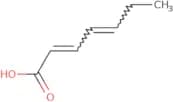
CAS:<p>2-Amino-4-(aminooxy)butanoic acid dihydrochloride is a cyclization product of the antibiotic cycloserine. It has been synthesised from 2-amino-4-oxobutanoic acid by the addition of hydrochloric acid and then heated to reflux for 20 hours. The purity of this product is >98%.<br>2-Amino-4-(aminooxy)butanoic acid dihydrochloride has been shown to be a homologue of canaline, which is an antibiotic used in the treatment of tuberculosis. This compound also has antibacterial activity, although it is less potent than cycloserine.</p>Formula:C4H12Cl2N2O3Purity:Min. 95%Molecular weight:207.05 g/mol(2E,4E)-Hepta-2,4-dienoic acid
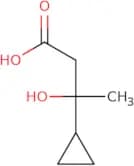
CAS:<p>(2E,4E)-Hepta-2,4-dienoic acid is an organic compound that belongs to the group of quinoline derivatives. It is a colorless liquid at room temperature and is soluble in organic solvents. This compound can be used as a dehydrohalogenating agent in the synthesis of mappicine and camptothecin derivatives. (2E,4E)-Hepta-2,4-dienoic acid can also react with ketocarboxylic acids to form carotenoid compounds. The chemical formula for this molecule is C8H10O3.</p>Formula:C7H10O2Purity:Min. 95%Molecular weight:126.15 g/mol3-Cyclopropyl-3-hydroxybutanoic acid
CAS:<p>Versatile small molecule scaffold</p>Formula:C7H12O3Purity:Min. 95%Molecular weight:144.17 g/mol3,3-Dimethyl-1,5-dioxa-9-azaspiro[5.5]undecane
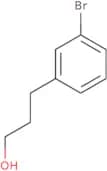
CAS:Controlled Product<p>Versatile small molecule scaffold</p>Formula:C10H19NO2Purity:Min. 95%Molecular weight:185.26 g/mol3-(3-Bromophenyl)propan-1-ol
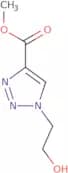
CAS:<p>Versatile small molecule scaffold</p>Formula:C9H11BrOPurity:Min. 95%Molecular weight:215.09 g/molMethyl 1-(2-hydroxyethyl)-1H-1,2,3-triazole-4-carboxylate
CAS:<p>Versatile small molecule scaffold</p>Formula:C6H9N3O3Purity:Min. 95%Molecular weight:171.15 g/mol2-Pyridin-2-yl-cyclopropanecarboxylic acid
CAS:<p>2-Pyridin-2-yl-cyclopropanecarboxylic acid is a chemotype that belongs to the class of echs. It has been shown to regulate the expression of genes in the erythroid lineage and inhibit Keap1. 2-Pyridin-2-yl-cyclopropanecarboxylic acid has been shown to bind to erythrocyte proteins and act as an anti-oxidant. This molecule has also been found to interact with proteins such as glutathione reductase, cytochrome P450, and glutathione S transferases. 2-Pyridin-2-yl-cyclopropanecarboxylic acid disrupts homoeostasis by regulating the levels of cytoprotective agents such as heme oxygenase 1 and prostaglandins. The therapeutic effect of this molecule is currently being researched for use in medicinal treatments.</p>Formula:C9H9NO2Purity:Min. 95%Molecular weight:163.18 g/mol3,4-Dihydro-2H-1,4-benzoxazine-2-carboxylic acid
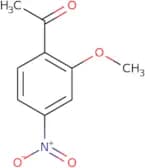
CAS:<p>3,4-Dihydro-2H-1,4-benzoxazine-2-carboxylic acid is a chemical compound that is used in the synthesis of esters. It can be used to separate mixtures of compounds in liquid chromatography and reversed phase liquid chromatography. This chemical compound has been shown to have adrenolytic properties, which are due to its ability to modify the activity of the alpha and beta adrenergic receptors. 3,4-Dihydro-2H-1,4-benzoxazine-2-carboxylic acid inhibits lipogenesis by inhibiting enzymes that catalyze this process.</p>Formula:C9H9NO3Purity:Min. 95%Molecular weight:179.17 g/mol1-(2-Methoxy-4-nitrophenyl)ethanone
CAS:<p>Versatile small molecule scaffold</p>Formula:C9H9NO4Purity:Min. 95%Molecular weight:195.17 g/mol2-Ethyl-4-nitro-benzoic acid
CAS:<p>Versatile small molecule scaffold</p>Formula:C9H9NO4Purity:Min. 95%Molecular weight:195.17 g/mol2-Ethyl-5-nitrobenzoic acid
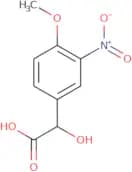
CAS:<p>Versatile small molecule scaffold</p>Formula:C9H9NO4Purity:Min. 95%Molecular weight:195.17 g/mol2-Hydroxy-2-(4-methoxy-3-nitrophenyl)acetic acid
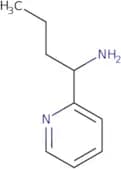
CAS:<p>Versatile small molecule scaffold</p>Formula:C9H9NO6Purity:Min. 95%Molecular weight:227.17 g/mol1-(Pyridin-2-yl)butan-1-amine
CAS:<p>Versatile small molecule scaffold</p>Formula:C9H14N2Purity:Min. 95%Molecular weight:150.22 g/mol1-[4-(Aminomethyl)phenyl]ethan-1-amine
CAS:Versatile small molecule scaffoldFormula:C9H14N2Purity:Min. 95%Molecular weight:150.22 g/mol2-tert-Butyl-6-methylpyrimidin-4-ol
CAS:<p>Versatile small molecule scaffold</p>Formula:C9H14N2OPurity:Min. 95%Molecular weight:166.22 g/mol6,6-Dimethyl-1,3-diazaspiro[4.4]nonane-2,4-dione
CAS:<p>Versatile small molecule scaffold</p>Formula:C9H14N2O2Purity:Min. 95%Molecular weight:182.22 g/mol

![3,3-Dimethyl-1,5-dioxa-9-azaspiro[5.5]undecane](/_next/image/?url=https%3A%2Fstatic.cymitquimica.com%2Fproducts%2F3D%2Fthumb-webp%2FQCA53586.webp&w=3840&q=75)




![1-[4-(Aminomethyl)phenyl]ethan-1-amine](/_next/image/?url=https%3A%2Fstatic.cymitquimica.com%2Fproducts%2F3D%2Fthumb-webp%2FQDA56531.webp&w=3840&q=75)

![6,6-Dimethyl-1,3-diazaspiro[4.4]nonane-2,4-dione](/_next/image/?url=https%3A%2Fstatic.cymitquimica.com%2Fproducts%2F3D%2Fthumb-webp%2FQDA56574.webp&w=3840&q=75)