


Building Blocks
This section contains fundamental products for the synthesis of organic and biological compounds. Building blocks are the essential starting materials used to construct complex molecules through various chemical reactions. They play a critical role in drug discovery, material science, and chemical research. At CymitQuimica, we offer a diverse range of high-quality building blocks to support your innovative research and industrial projects, ensuring you have the essential components for successful synthesis.
Subcategories of "Building Blocks"
- Boronic Acids & Boronic Acid Derivatives(5,756 products)
- Chiral Building Blocks(1,242 products)
- Hydrocarbon Building Blocks(6,095 products)
- Organic Building Blocks(61,055 products)
Found 199650 products of "Building Blocks"
Sort by
Purity (%)
0
100
|
0
|
50
|
90
|
95
|
100
4-[(Ethylsulfanyl)methyl]aniline
CAS:<p>Versatile small molecule scaffold</p>Formula:C9H13NSPurity:Min. 95%Molecular weight:167.27 g/mol4-(Pyrrolidin-1-yl)pyridin-3-amine
CAS:<p>Versatile small molecule scaffold</p>Formula:C9H13N3Purity:Min. 95%Molecular weight:163.22 g/mol4-Morpholinopyridin-3-amine
CAS:Versatile small molecule scaffoldFormula:C9H13N3OPurity:Min. 95%Molecular weight:179.22 g/mol1-(2-Chloro-4-methylphenyl)-ethanone
CAS:<p>Versatile small molecule scaffold</p>Formula:C9H9ClOPurity:Min. 95%Molecular weight:168.62 g/mol4-Chloro-2,5-dimethylbenzoic acid
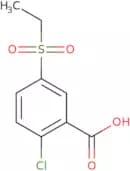
CAS:<p>Versatile small molecule scaffold</p>Formula:C9H9ClO2Purity:Min. 95%Molecular weight:184.62 g/mol2-Chloro-5-(ethanesulfonyl)benzoic acid
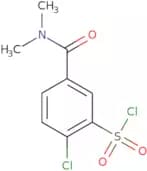
CAS:<p>Versatile small molecule scaffold</p>Formula:C9H9ClO4SPurity:Min. 95%Molecular weight:248.68 g/mol2-Chloro-5-(dimethylcarbamoyl)benzene-1-sulfonyl chloride
CAS:<p>Versatile small molecule scaffold</p>Formula:C9H9Cl2NO3SPurity:Min. 95%Molecular weight:282.14 g/mol1-[(tert-Butyldimethylsilyl)oxy]cyclopropane-1-carbaldehyde
CAS:<p>1-[(tert-Butyldimethylsilyl)oxy]cyclopropane-1-carbaldehyde is a cyclopropanecarboxylic acid that can be prepared by reacting cyclopropane with an ester of ethoxyethyl chloride. It has been used as a precursor for the synthesis of sulfoxide and sulfone derivatives. Cyclopropanecarboxylic acids are used in the preparation of chlorides, esters, and solvents. This compound has also been used as a reagent for the synthesis of oxalyl chloride and pyridinium chloride. 1-[(tert-Butyldimethylsilyl)oxy]cyclopropane-1-carbaldehyde can be purified by recrystallization from organic solvents such as benzene or ether, or it can be purified by preparative thin layer chromatography (PTLC).</p>Formula:C10H20O2SiPurity:Min. 95%Molecular weight:200.35 g/mol4-amino-3-fluoro-n-methylbenzamide
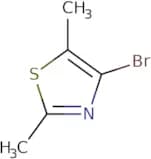
CAS:<p>Versatile small molecule scaffold</p>Formula:C8H9FN2OPurity:Min. 95%Molecular weight:168.17 g/mol4-Bromo-2,5-dimethyl-1,3-thiazole
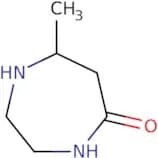
CAS:<p>Versatile small molecule scaffold</p>Formula:C5H6BrNSPurity:Min. 95%Molecular weight:192.08 g/mol7-Methyl-1,4-diazepan-5-one
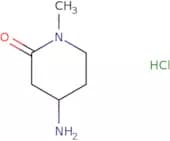
CAS:<p>Versatile small molecule scaffold</p>Formula:C6H12N2OPurity:Min. 95%Molecular weight:128.17 g/mol1-Methyl-4-amino-2-piperidinone hydrochloride
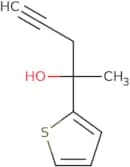
CAS:<p>Versatile small molecule scaffold</p>Formula:C6H13ClN2OPurity:Min. 95%Molecular weight:164.63 g/mol2-(Thiophen-2-yl)pent-4-yn-2-ol
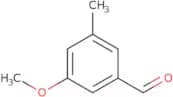
CAS:<p>Versatile small molecule scaffold</p>Formula:C9H10OSPurity:Min. 95%Molecular weight:166.24 g/mol3-Methoxy-5-methylbenzaldehyde
CAS:<p>3-Methoxy-5-methylbenzaldehyde is a natural product that has been identified as an intermediate in the biosynthesis of the sesquiterpene, ursolic acid. It can be synthesized by reacting piperazine with methoxymethyl chloride. 3-Methoxy-5-methylbenzaldehyde has also been used for labeling proteins and nucleic acids. The technique of chromatographic mass spectrometric detection uses this compound to detect volatile compounds in headspace by gas chromatography.</p>Formula:C9H10O2Purity:Min. 95%Molecular weight:150.17 g/mol2-Propylcyclohexanol (cis- and trans- mixture)
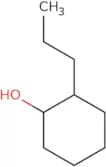
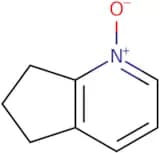
CAS:<p>2-Propylcyclohexanol is a cyclic alcohol that is used as a solvent in organic chemistry. It has two different forms: cis-2-proptyclohexanol and trans-2-proptyclohexanol, which is a mixture of the two. 2-Propylcyclohexanol can be used as a bifunctional reagent for bond cleavage reactions and dehydration reactions. This compound also has properties that make it useful as an organic solvent, such as its ability to dissolve hydronium ions and its relatively low boiling point. 2-Propylcyclohexanol can be used in microscopy because it does not interfere with fluorescence detection or other light sources. It can also be used in the preparation of carbohydrates. The monomers from which this compound is made are cyclic, meaning that they are shaped like circles or rings. These monomers are made up of carbon atoms, hydrogen atoms, and oxygen atoms.</p>Formula:C9H18OPurity:Min. 95%Molecular weight:142.24 g/mol2,3-Cyclopentenopyridine N-oxide
CAS:<p>Versatile small molecule scaffold</p>Formula:C8H9NOPurity:Min. 95%Molecular weight:135.17 g/mol6,7-Dihydro-5h-cyclopenta[b]pyridin-7-yl acetate
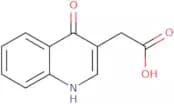
CAS:<p>Versatile small molecule scaffold</p>Formula:C10H11NO2Purity:Min. 95%Molecular weight:177.19 g/mol2-(4-Hydroxyquinolin-3-yl)acetic acid
CAS:<p>Versatile small molecule scaffold</p>Formula:C11H9NO3Purity:Min. 95%Molecular weight:203.19 g/mol5-Chloro-7-methoxythieno[3,2-b]pyridine
CAS:Versatile small molecule scaffoldFormula:C8H6ClNOSPurity:Min. 95%Molecular weight:199.65 g/mol7-Chlorothieno[3,2-b]pyridine-6-carboxylic Acid
CAS:Versatile small molecule scaffoldFormula:C8H4NO2SClPurity:Min. 95%Molecular weight:213.64 g/mol
![4-[(Ethylsulfanyl)methyl]aniline](/_next/image/?url=https%3A%2Fstatic.cymitquimica.com%2Fproducts%2F3D%2Fthumb-webp%2FQDA64806.webp&w=3840&q=75)


![1-[(tert-Butyldimethylsilyl)oxy]cyclopropane-1-carbaldehyde](/_next/image/?url=https%3A%2Fstatic.cymitquimica.com%2Fproducts%2F3D%2Fthumb-webp%2FQDA66009.webp&w=3840&q=75)

![6,7-Dihydro-5h-cyclopenta[b]pyridin-7-yl acetate](/_next/image/?url=https%3A%2Fstatic.cymitquimica.com%2Fproducts%2F3D%2Fthumb-webp%2FQDA68559.webp&w=3840&q=75)
![5-Chloro-7-methoxythieno[3,2-b]pyridine](/_next/image/?url=https%3A%2Fstatic.cymitquimica.com%2Fproducts%2F3D%2Fthumb-webp%2FQDA69091.webp&w=3840&q=75)
![7-Chlorothieno[3,2-b]pyridine-6-carboxylic Acid](/_next/image/?url=https%3A%2Fstatic.cymitquimica.com%2Fproducts%2F3D%2Fthumb-webp%2FQDA69094.webp&w=3840&q=75)