Building Blocks
This section contains fundamental products for the synthesis of organic and biological compounds. Building blocks are the essential starting materials used to construct complex molecules through various chemical reactions. They play a critical role in drug discovery, material science, and chemical research. At CymitQuimica, we offer a diverse range of high-quality building blocks to support your innovative research and industrial projects, ensuring you have the essential components for successful synthesis.
Subcategories of "Building Blocks"
- Boronic Acids & Boronic Acid Derivatives(5,756 products)
- Chiral Building Blocks(1,242 products)
- Hydrocarbon Building Blocks(6,095 products)
- Organic Building Blocks(61,055 products)
Found 199650 products of "Building Blocks"
Sort by
Purity (%)
0
100
|
0
|
50
|
90
|
95
|
100
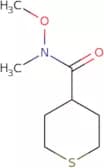
N-Methoxy-N-methylthiane-4-carboxamide
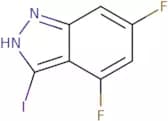
CAS:<p>Versatile small molecule scaffold</p>Formula:C8H15NO2SPurity:Min. 95%Molecular weight:189.28 g/mol4,6-Difluoro-3-iodo-1H-indazole
CAS:<p>Versatile small molecule scaffold</p>Formula:C7H3F2IN2Purity:Min. 95%Molecular weight:280.02 g/mol4-Fluoro-6-methoxy-1H-indazole
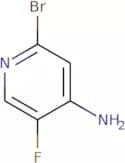
CAS:<p>Versatile small molecule scaffold</p>Formula:C8H7FN2OPurity:Min. 95%Molecular weight:166.15 g/mol2-Bromo-5-fluoropyridin-4-amine
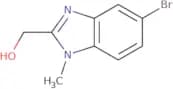
CAS:<p>Versatile small molecule scaffold</p>Formula:C5H4BrFN2Purity:Min. 95%Molecular weight:191 g/mol(5-Bromo-1-methyl-1H-1,3-benzodiazol-2-yl)methanol
CAS:Controlled Product<p>Versatile small molecule scaffold</p>Formula:C9H9BrN2OPurity:Min. 95%Molecular weight:241.08 g/mol5-Bromo-1-methyl-1H-1,3-benzodiazole-2-carbaldehyde
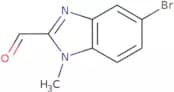
CAS:<p>Versatile small molecule scaffold</p>Formula:C9H7BrN2OPurity:Min. 95%Molecular weight:239.07 g/mol7-(4-Methylphenyl)pteridine
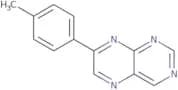
CAS:<p>Versatile small molecule scaffold</p>Formula:C13H10N4Purity:Min. 95%Molecular weight:222.24 g/mol1-(4,6-dichloropyridin-3-yl)ethan-1-one
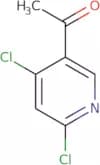
CAS:<p>Versatile small molecule scaffold</p>Formula:C7H5Cl2NOPurity:Min. 95%Molecular weight:190 g/mol4-Bromo-2,5-dimethylthiophene-3-carbaldehyde
CAS:<p>Versatile small molecule scaffold</p>Formula:C7H7BrOSPurity:Min. 95%Molecular weight:219.1 g/mol3-formyl-1H-indole-6-carboxylic acid
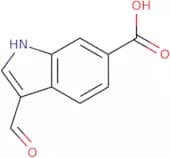
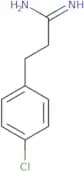
CAS:<p>Versatile small molecule scaffold</p>Formula:C10H7NO3Purity:Min. 95%Molecular weight:189.2 g/mol3-(4-Chlorophenyl)propanimidamide
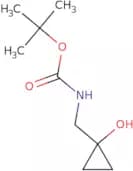
CAS:<p>Versatile small molecule scaffold</p>Formula:C9H11ClN2Purity:Min. 95%Molecular weight:182.65 g/mol1-(Boc-aminomethyl)cyclopropanol
CAS:<p>Versatile small molecule scaffold</p>Formula:C9H17NO3Purity:Min. 95%Molecular weight:187.24 g/mol3,5-Dichloro-4-hydrazinylbenzoic acid
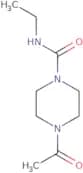
CAS:<p>Versatile small molecule scaffold</p>Formula:C7H6Cl2N2O2Purity:Min. 95%Molecular weight:221.04 g/mol4-Acetyl-N-ethylpiperazine-1-carboxamide
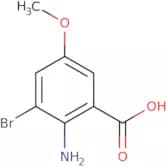
CAS:<p>Versatile small molecule scaffold</p>Formula:C9H17N3O2Purity:Min. 95%Molecular weight:199.25 g/mol2-Amino-3-bromo-5-methoxybenzoic acid
CAS:<p>Versatile small molecule scaffold</p>Formula:C8H8BrNO3Purity:Min. 95%Molecular weight:246.06 g/mol6-(Ethylsulfanyl)pyridine-3-carboxylic acid
CAS:<p>6-(Ethylsulfanyl)pyridine-3-carboxylic acid (ESPCA) is a peptide that belongs to the class of activators. It has been shown to act as an inhibitor of ion channels, such as those found in the heart and brain. ESPCA also acts as an inhibitor of receptor interactions and ligand binding. The molecule has been shown to bind to proteins, including antibodies, which may be due to its structural similarity to L-leucine.</p>Formula:C8H9NO2SPurity:Min. 95%Molecular weight:183.23 g/mol7-Bromo-1H-indazol-3-ol
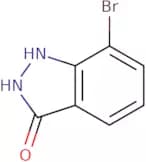
CAS:<p>Versatile small molecule scaffold</p>Formula:C7H5BrN2OPurity:Min. 95%Molecular weight:213.03 g/mol2-Bromo-4-pyridine carboxylic acid tert-butyl ester
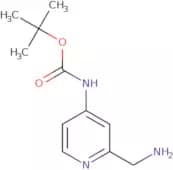
CAS:<p>Versatile small molecule scaffold</p>Formula:C10H12BrNO2Purity:Min. 95%Molecular weight:258.11 g/mol(2-Aminomethyl-pyridin-4-yl)-carbamic acid tert-butyl ester
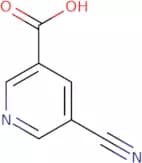
CAS:<p>Versatile small molecule scaffold</p>Formula:C11H17N3O2Purity:Min. 95%Molecular weight:223.27 g/mol5-Cyanonicotinic acid
CAS:<p>Versatile small molecule scaffold</p>Formula:C7H4N2O2Purity:Min. 95%Molecular weight:148.12 g/mol