Building Blocks
This section contains fundamental products for the synthesis of organic and biological compounds. Building blocks are the essential starting materials used to construct complex molecules through various chemical reactions. They play a critical role in drug discovery, material science, and chemical research. At CymitQuimica, we offer a diverse range of high-quality building blocks to support your innovative research and industrial projects, ensuring you have the essential components for successful synthesis.
Subcategories of "Building Blocks"
- Boronic Acids & Boronic Acid Derivatives(5,756 products)
- Chiral Building Blocks(1,242 products)
- Hydrocarbon Building Blocks(6,095 products)
- Organic Building Blocks(61,055 products)
Found 199650 products of "Building Blocks"
Sort by
Purity (%)
0
100
|
0
|
50
|
90
|
95
|
100
4-[5-(Pyridin-3-yl)-1,2,4-oxadiazol-3-yl]phenol
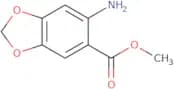
CAS:<p>Versatile small molecule scaffold</p>Formula:C13H9N3O2Purity:Min. 95%Molecular weight:239.23 g/molMethyl 6-amino-1,3-dioxaindane-5-carboxylate
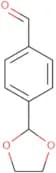
CAS:<p>Versatile small molecule scaffold</p>Formula:C9H9NO4Purity:Min. 95%Molecular weight:195.17 g/mol4-(1,3-Dioxolan-2-yl)benzaldehyde
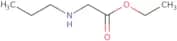
CAS:<p>Versatile small molecule scaffold</p>Formula:C10H10O3Purity:Min. 95%Molecular weight:178.18 g/molethyl 2-(propylamino)acetate
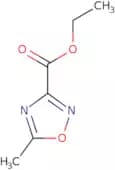
CAS:<p>Ethyl 2-(propylamino)acetate is an amine that is classified as a nucleophile. It reacts with other molecules to form new compounds and has been shown to react with a variety of nucleophiles including alcohols, carboxylic acids, and phenols. Spectroscopic techniques have revealed that ethyl 2-(propylamino)acetate exists in two isomeric forms: the cis-isomer and the trans-isomer. The cis-isomer is more reactive than the trans-isomer because it has a greater electron density on its alpha carbon atom.</p>Formula:C7H15NO2Purity:Min. 95%Molecular weight:145.2 g/molEthyl 5-methyl-1,2,4-oxadiazole-3-carboxylate
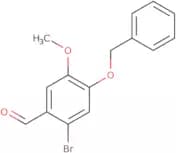
CAS:<p>Versatile small molecule scaffold</p>Formula:C6H8N2O3Purity:Min. 95%Molecular weight:156.14 g/mol4-(Benzyloxy)-2-bromo-5-methoxybenzaldehyde
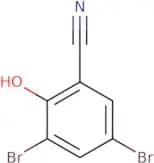
CAS:<p>Versatile small molecule scaffold</p>Formula:C15H13BrO3Purity:Min. 95%Molecular weight:321.2 g/mol3,5-Dibromo-2-hydroxybenzonitrile
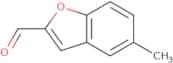
CAS:<p>3,5-Dibromo-2-hydroxybenzonitrile is an organic compound with the formula C6H4Br2O. It is a yellow liquid that is soluble in organic solvents. 3,5-Dibromo-2-hydroxybenzonitrile can be synthesized by reacting tert-butyl nitrite with bromine and acetonitrile in a solvent. The reaction rate of this chemical reaction is rapid and the molecule has been shown to be stable when exposed to light. The hydroxyl group on the molecule makes it hydrophobic, which means it does not dissolve well in water. 3,5-Dibromo-2-hydroxybenzonitrile has a photolabile profile, meaning that it quickly decomposes when exposed to light. This chemical compound has two isomers: synopses A and B. Synopsis A has an electron configuration of 1s22s22p</p>Formula:C7H3Br2NOPurity:Min. 95%Molecular weight:276.92 g/mol5-Methyl-1-benzofuran-2-carbaldehyde
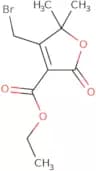
CAS:<p>Versatile small molecule scaffold</p>Formula:C10H8O2Purity:Min. 95%Molecular weight:160.17 g/molEthyl 4-(bromomethyl)-5,5-dimethyl-2-oxo-2,5-dihydrofuran-3-carboxylate
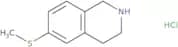
CAS:Versatile small molecule scaffoldFormula:C10H13BrO4Purity:Min. 95%Molecular weight:277.11 g/mol6-(Methylthio)-1,2,3,4-tetrahydroisoquinoline hydrochloride
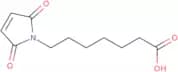
CAS:<p>Versatile small molecule scaffold</p>Formula:C10H14ClNSPurity:Min. 95%Molecular weight:215.74 g/mol7-(2,5-Dioxo-2,5-dihydro-1H-pyrrol-1-yl)heptanoic acid
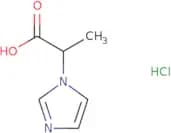
CAS:<p>Versatile small molecule scaffold</p>Formula:C11H15NO4Purity:Min. 95%Molecular weight:225.24 g/mol2-Imidazol-1-yl-propionic acidhydrochloride
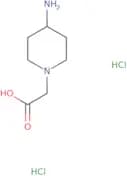
CAS:<p>Versatile small molecule scaffold</p>Formula:C6H9ClN2O2Purity:Min. 95%Molecular weight:176.6 g/mol2-(4-Aminopiperidin-1-yl)acetic acid dihydrochloride
CAS:<p>Versatile small molecule scaffold</p>Formula:C7H16Cl2N2O2Purity:Min. 95%Molecular weight:231.12 g/mol2-[(2-Aminophenyl)sulfanyl]acetamide
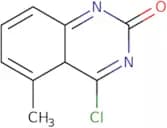
CAS:<p>Versatile small molecule scaffold</p>Formula:C8H10N2OSPurity:Min. 95%Molecular weight:182.25 g/mol4-chloro-5-methylquinazoline
CAS:<p>Versatile small molecule scaffold</p>Formula:C9H7ClN2Purity:Min. 95%Molecular weight:178.62 g/mol2-Chloro-N-[4-(furan-2-yl)-1,3-thiazol-2-yl]acetamide
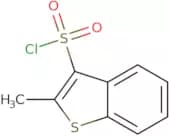
CAS:<p>Versatile small molecule scaffold</p>Formula:C9H7ClN2O2SPurity:Min. 95%Molecular weight:242.68 g/mol2-Methyl-1-benzothiophene-3-sulfonyl chloride
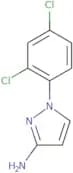
CAS:<p>Versatile small molecule scaffold</p>Formula:C9H7ClO2S2Purity:Min. 95%Molecular weight:246.7 g/mol1-(2,4-Dichlorophenyl)-1H-pyrazol-3-amine
CAS:<p>Versatile small molecule scaffold</p>Formula:C9H7Cl2N3Purity:Min. 95%Molecular weight:228.07 g/mol2-[(4-Cyanophenyl)formamido]acetic acid
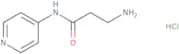
CAS:<p>2-[(4-Cyanophenyl)formamido]acetic acid is a secondary metabolite that is found in plants. It has been isolated from the leaves of the plant, Aerva lanata. 2-[(4-Cyanophenyl)formamido]acetic acid has been used as an analytical standard and as a reference material for quality control testing in the pharmaceutical industry. This compound is also being studied for its bioactive properties, including anti-inflammatory and antimicrobial activities.</p>Formula:C10H8N2O3Purity:Min. 95%Molecular weight:204.18 g/mol3-Amino-N-(pyridin-4-yl)propanamide hydrochloride
CAS:<p>Versatile small molecule scaffold</p>Formula:C8H12ClN3OPurity:Min. 95%Molecular weight:201.65 g/mol
![4-[5-(Pyridin-3-yl)-1,2,4-oxadiazol-3-yl]phenol](/_next/image/?url=https%3A%2Fstatic.cymitquimica.com%2Fproducts%2F3D%2Fthumb-webp%2FQBA67880.webp&w=3840&q=75)

![2-[(2-Aminophenyl)sulfanyl]acetamide](/_next/image/?url=https%3A%2Fstatic.cymitquimica.com%2Fproducts%2F3D%2Fthumb-webp%2FQDA27133.webp&w=3840&q=75)
![2-Chloro-N-[4-(furan-2-yl)-1,3-thiazol-2-yl]acetamide](/_next/image/?url=https%3A%2Fstatic.cymitquimica.com%2Fproducts%2F3D%2Fthumb-webp%2FQDA27300.webp&w=3840&q=75)
![2-[(4-Cyanophenyl)formamido]acetic acid](/_next/image/?url=https%3A%2Fstatic.cymitquimica.com%2Fproducts%2F3D%2Fthumb-webp%2FQDA29083.webp&w=3840&q=75)