Building Blocks
This section contains fundamental products for the synthesis of organic and biological compounds. Building blocks are the essential starting materials used to construct complex molecules through various chemical reactions. They play a critical role in drug discovery, material science, and chemical research. At CymitQuimica, we offer a diverse range of high-quality building blocks to support your innovative research and industrial projects, ensuring you have the essential components for successful synthesis.
Subcategories of "Building Blocks"
- Boronic Acids & Boronic Acid Derivatives(5,778 products)
- Chiral Building Blocks(1,242 products)
- Hydrocarbon Building Blocks(6,098 products)
- Organic Building Blocks(61,034 products)
Found 199601 products of "Building Blocks"
Sort by
Purity (%)
0
100
|
0
|
50
|
90
|
95
|
100
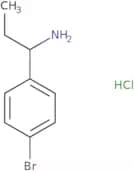
1-(4-Bromophenyl)propan-1-amine hydrochloride
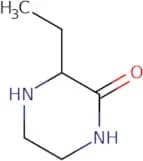
CAS:Versatile small molecule scaffoldFormula:C9H13BrClNPurity:Min. 95%Molecular weight:250.56 g/mol3-Ethylpiperazin-2-one
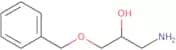
CAS:<p>Versatile small molecule scaffold</p>Formula:C6H12N2OPurity:Min. 95%Molecular weight:128.17 g/mol1-Amino-3-benzyloxy-propan-2-ol
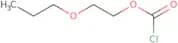
CAS:<p>Versatile small molecule scaffold</p>Formula:C10H15NO2Purity:Min. 95%Molecular weight:181.24 g/mol2-Propoxyethyl chloroformate
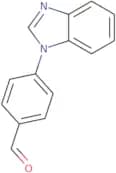
CAS:<p>Versatile small molecule scaffold</p>Formula:C6H11ClO3Purity:Min. 95%Molecular weight:166.6 g/mol4-(1H-1,3-Benzimidazol-1-yl)benzenecarbaldehyde
CAS:<p>4-(1H-1,3-Benzimidazol-1-yl)benzenecarbaldehyde (BABA) is an imidazole that can be used for labeling and detection. It has been shown to react with hydrosulfite in the presence of chloroform to produce a fluorescent compound. This compound can be detected using UV light at 365 nm. BABA has also been shown to react with chalcone in the presence of potassium cyanide in order to produce a fluorescent compound. BABA is also used as a reagent in the detection of Leishmania organisms and has been shown to have low detection limits. This compound is often used as a leukocyte lysis agent and can be activated by guanidine hydrochloride.</p>Formula:C14H10N2OPurity:Min. 95%Molecular weight:222.24 g/mol4-Bromo-2-methanesulfonyl-1-methoxybenzene
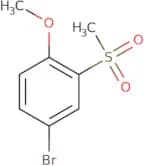
CAS:<p>Versatile small molecule scaffold</p>Formula:C8H9BrO3SPurity:Min. 95%Molecular weight:265.13 g/mol1-(Bromomethyl)-3-(methylsulfanyl)benzene
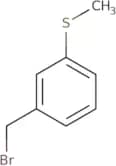
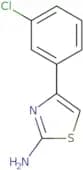
CAS:<p>Versatile small molecule scaffold</p>Formula:C8H9BrSPurity:Min. 95%Molecular weight:217.13 g/mol2-Amino-4-(3-chlorophenyl) thiazole
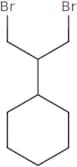
CAS:Versatile small molecule scaffoldFormula:C9H7ClN2SPurity:Min. 95%Molecular weight:210.69 g/mol(1,3-Dibromopropan-2-yl)cyclohexane
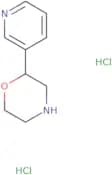
CAS:<p>Versatile small molecule scaffold</p>Formula:C9H16Br2Purity:Min. 95%Molecular weight:284.03 g/mol2-(Pyridin-3-yl)morpholine dihydrochloride
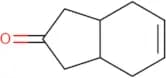
CAS:Versatile small molecule scaffoldFormula:C9H14Cl2N2OPurity:Min. 95%Molecular weight:237.12 g/mol2,3,3a,4,7,7a-Hexahydro-1H-inden-2-one
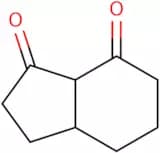
CAS:<p>Versatile small molecule scaffold</p>Formula:C9H12OPurity:Min. 95%Molecular weight:136.2 g/molOctahydro-1H-indene-1,7-dione
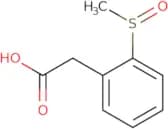
CAS:<p>Versatile small molecule scaffold</p>Formula:C9H12O2Purity:Min. 95%Molecular weight:152.19 g/mol2-(2-Methanesulfinylphenyl)acetic acid
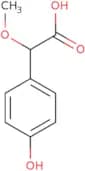
CAS:<p>Versatile small molecule scaffold</p>Formula:C9H10O3SPurity:Min. 95%Molecular weight:198.24 g/mol2-(4-Hydroxyphenyl)-2-methoxyacetic acid
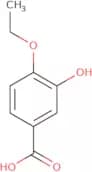
CAS:<p>Versatile small molecule scaffold</p>Formula:C9H10O4Purity:Min. 95%Molecular weight:182.17 g/mol4-Ethoxy-3-hydroxybenzoic acid
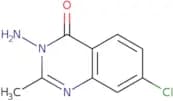
CAS:<p>Versatile small molecule scaffold</p>Formula:C9H10O4Purity:Min. 95%Molecular weight:182.17 g/mol3-Amino-7-chloro-2-methylquinazolin-4(3H)-one
CAS:Controlled Product<p>Versatile small molecule scaffold</p>Formula:C9H8ClN3OPurity:Min. 95%Molecular weight:209.63 g/mol[(5-bromothiophen-2-yl)methyl](methyl)amine
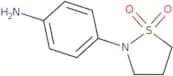
CAS:<p>Versatile small molecule scaffold</p>Formula:C6H8BrNSPurity:Min. 95%Molecular weight:206.1 g/molN-(4-Aminophenyl)-1,3-propanesultam
CAS:<p>Versatile small molecule scaffold</p>Formula:C9H12N2O2SPurity:Min. 95%Molecular weight:212.27 g/mol2-[(4-Methanesulfonyl-2-nitrophenyl)amino]acetic acid
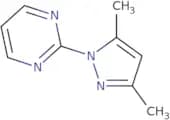
CAS:<p>Versatile small molecule scaffold</p>Formula:C9H10N2O6SPurity:Min. 95%Molecular weight:274.25 g/mol2-(3,5-Dimethyl-1H-pyrazol-1-yl)pyrimidine
CAS:<p>2-(3,5-Dimethyl-1H-pyrazol-1-yl)pyrimidine (2DMP) is an organic compound that belongs to the group of steric compounds. It has been shown that 2DMP can be prepared by the reaction of copper and a pyrimidine derivative. The molecule is composed of two rings: a pyrimidine ring and a pyrazole ring. The three methyl groups on the pyrazole ring are in ortho, meta, and para positions. In 2DMP, the methyl groups are in a meta position. This isomer has been studied using NMR spectroscopy and it was found that it reacts with ruthenium to form a fluxional complex. Thermodynamically, this isomer is more stable than its counterpart with all methyl groups in ortho positions.<br>2DMP also reacts with palladium to form an acyl group from which it can be converted back to the original p</p>Formula:C9H10N4Purity:Min. 95%Molecular weight:174.2 g/mol

amine](/_next/image/?url=https%3A%2Fstatic.cymitquimica.com%2Fproducts%2F3D%2Fthumb-webp%2FQDA55343.webp&w=3840&q=75)
![2-[(4-Methanesulfonyl-2-nitrophenyl)amino]acetic acid](/_next/image/?url=https%3A%2Fstatic.cymitquimica.com%2Fproducts%2F3D%2Fthumb-webp%2FQDA55840.webp&w=3840&q=75)