


Building Blocks
This section contains fundamental products for the synthesis of organic and biological compounds. Building blocks are the essential starting materials used to construct complex molecules through various chemical reactions. They play a critical role in drug discovery, material science, and chemical research. At CymitQuimica, we offer a diverse range of high-quality building blocks to support your innovative research and industrial projects, ensuring you have the essential components for successful synthesis.
Subcategories of "Building Blocks"
- Boronic Acids & Boronic Acid Derivatives(5,756 products)
- Chiral Building Blocks(1,242 products)
- Hydrocarbon Building Blocks(6,095 products)
- Organic Building Blocks(61,051 products)
Found 199813 products of "Building Blocks"
Sort by
Purity (%)
0
100
|
0
|
50
|
90
|
95
|
100
2-Oxo-2,3-dihydro-1H-imidazole-4,5-dicarboxylic acid
CAS:<p>Versatile small molecule scaffold</p>Formula:C5H4N2O5Purity:Min. 95%Molecular weight:172.1 g/mol2H,3H,5H-Indeno[1,2-c]pyridazin-3-one
CAS:<p>Versatile small molecule scaffold</p>Formula:C11H8N2OPurity:Min. 95%Molecular weight:184.19 g/mol3-Chloro-5H-indeno[1,2-c]pyridazine
CAS:<p>Versatile small molecule scaffold</p>Formula:C11H7ClN2Purity:Min. 95%Molecular weight:202.64 g/molTricyclo[7.1.1.0,2,7]undeca-2,4,6-trien-8-one
CAS:Versatile small molecule scaffoldFormula:C11H10OPurity:Min. 95%Molecular weight:158.2 g/mol2-Pentyl-1,3-thiazolidine-4-carboxylic acid
CAS:<p>Versatile small molecule scaffold</p>Formula:C9H17NO2SPurity:Min. 95%Molecular weight:203.3 g/mol6-Chloro-N-phenyl-4-pyrimidinamine
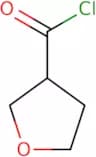
CAS:<p>Versatile small molecule scaffold</p>Formula:C10H8ClN3Purity:Min. 95%Molecular weight:205.65 g/molTetrahydrofuran-3-carbonyl chloride
CAS:<p>Tetrahydrofuran-3-carbonyl chloride is a chiral, stereoselective, and sustainable chemical. It is used in the synthesis of various chiral compounds with high stereospecificity. Tetrahydrofuran-3-carbonyl chloride is an imine that reacts with an amine to produce an unsymmetrical ketone. The reaction mechanism involves the formation of a mixed anhydride as the first step by reacting the amine with chlorine or bromine. In this step, the carbonyl group of the reactant becomes attached to one carbon atom of the double bond in the mixed anhydride. This reaction can be used to synthesize staudinger and stereoselectively substituted tetrahydrofurans with high selectivity.</p>Formula:C5H7ClO2Purity:Min. 95%Molecular weight:134.56 g/mol3-tert-Butyl-5-(chloromethyl)-1,2-oxazole
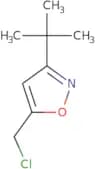
CAS:<p>Versatile small molecule scaffold</p>Formula:C8H12ClNOPurity:Min. 95%Molecular weight:173.64 g/mol1-Methyl-L-histidine dihydrochloride
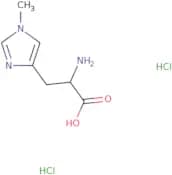
CAS:<p>Versatile small molecule scaffold</p>Formula:C7H13Cl2N3O2Purity:Min. 95%Molecular weight:242.1 g/mol5-Amino-3-hydroxypentanoic acid hydrochloride
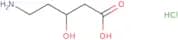
CAS:<p>Versatile small molecule scaffold</p>Formula:C5H12ClNO3Purity:Min. 95%Molecular weight:169.61 g/molEthyl 5-{[(tert-butoxy)carbonyl]amino}-3-oxopentanoate
CAS:<p>Versatile small molecule scaffold</p>Formula:C12H21NO5Purity:Min. 95%Molecular weight:259.3 g/mol2-Iodo-1-benzofuran
CAS:<p>2-Iodo-1-benzofuran is a polymerase chain inhibitor that can bind to the d2 dopamine receptor. This drug has been shown to have potential use in the treatment of diseases such as autoimmune diseases, Parkinson’s disease, and cancer. 2-Iodo-1-benzofuran is a potent inhibitor of HIV replication in vitro and has been shown to be active against other retroviruses. 2-Iodo-1-benzofuran also binds with high affinity and specificity to rat striatal D2 dopamine receptors. The binding of this drug to the receptor leads to a decrease in the levels of dopamine in the brain and an increase in blood pressure.</p>Formula:C8H5IOPurity:Min. 95%Molecular weight:244.03 g/mol3-Cyclopropylimidazolidine-2,4-dione
CAS:<p>Versatile small molecule scaffold</p>Formula:C6H8N2O2Purity:Min. 95%Molecular weight:140.14 g/molPhenyl morpholine-4-carboxylate
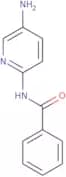
CAS:<p>Versatile small molecule scaffold</p>Formula:C11H13NO3Purity:Min. 95%Molecular weight:207.23 g/molN-(5-Aminopyridin-2-yl)benzamide
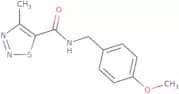
CAS:<p>Versatile small molecule scaffold</p>Formula:C12H11N3OPurity:Min. 95%Molecular weight:213.23 g/molN-(4-Methoxybenzyl)-4-methyl-1,2,3-thiadiazole-5-carboxamide
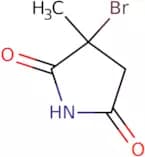
CAS:Versatile small molecule scaffoldFormula:C12H13N3O2SPurity:Min. 95%Molecular weight:263.32 g/mol3-Bromo-3-methylpyrrolidine-2,5-dione
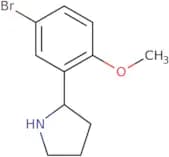
CAS:<p>Versatile small molecule scaffold</p>Formula:C5H6BrNO2Purity:Min. 95%Molecular weight:192.01 g/mol2-(5-Bromo-2-methoxyphenyl)pyrrolidine
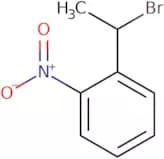
CAS:<p>Versatile small molecule scaffold</p>Formula:C11H14BrNOPurity:Min. 95%Molecular weight:256.14 g/mol1-(1-Bromoethyl)-2-nitrobenzene
CAS:<p>Versatile small molecule scaffold</p>Formula:C8H8BrNO2Purity:Min. 95%Molecular weight:230.06 g/molPentacyclo[6.3.0.0(2,7).0(4,11).0(5,9)]undecan-3-one
CAS:<p>Pentacyclo[6.3.0.0(2,7).0(4,11).0(5,9)]undecan-3-one is a polycyclic compound that has been postulated to be a thione derived from the desulfurization of pentacyclo[6.3.0.0(2,7).0(4,11).0(5,9)]undecane with dimethoxycarbene and toluene as reagents in the presence of a catalyst (Scheme 1). The stereoselective desulfurization of the lactams leads to the formation of either (1S) or (1R) products depending on the conditions used for the reaction. This reaction is thermally driven and occurs at 130°C under vacuum with a pressure of 10-2 Torr. The desulfurized product can then be converted into various esters by treatment with alcohols in the presence of</p>Formula:C11H12OPurity:Min. 95%Molecular weight:160.21 g/mol


![2H,3H,5H-Indeno[1,2-c]pyridazin-3-one](/_next/image/?url=https%3A%2Fstatic.cymitquimica.com%2Fproducts%2F3D%2Fthumb-webp%2FUCA58116.webp&w=3840&q=75)
![3-Chloro-5H-indeno[1,2-c]pyridazine](/_next/image/?url=https%3A%2Fstatic.cymitquimica.com%2Fproducts%2F3D%2Fthumb-webp%2FUCA58117.webp&w=3840&q=75)
![Tricyclo[7.1.1.0,2,7]undeca-2,4,6-trien-8-one](/_next/image/?url=https%3A%2Fstatic.cymitquimica.com%2Fproducts%2F3D%2Fthumb-webp%2FUCA58447.webp&w=3840&q=75)


![Ethyl 5-{[(tert-butoxy)carbonyl]amino}-3-oxopentanoate](/_next/image/?url=https%3A%2Fstatic.cymitquimica.com%2Fproducts%2F3D%2Fthumb-webp%2FUCA61921.webp&w=3840&q=75)


![Pentacyclo[6.3.0.0(2,7).0(4,11).0(5,9)]undecan-3-one](/_next/image/?url=https%3A%2Fstatic.cymitquimica.com%2Fproducts%2F3D%2Fthumb-webp%2FUCA64919.webp&w=3840&q=75)