Building Blocks
This section contains fundamental products for the synthesis of organic and biological compounds. Building blocks are the essential starting materials used to construct complex molecules through various chemical reactions. They play a critical role in drug discovery, material science, and chemical research. At CymitQuimica, we offer a diverse range of high-quality building blocks to support your innovative research and industrial projects, ensuring you have the essential components for successful synthesis.
Subcategories of "Building Blocks"
- Boronic Acids & Boronic Acid Derivatives(5,756 products)
- Chiral Building Blocks(1,242 products)
- Hydrocarbon Building Blocks(6,095 products)
- Organic Building Blocks(61,055 products)
Found 199650 products of "Building Blocks"
Sort by
Purity (%)
0
100
|
0
|
50
|
90
|
95
|
100
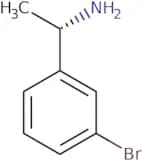
(S)-3-Bromo-±-methylbenzylamine
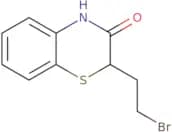
CAS:<p>Versatile small molecule scaffold</p>Formula:C8H10BrNPurity:Min. 95%Molecular weight:200.08 g/mol2-(2-Bromoethyl)-3,4-dihydro-2H-1,4-benzothiazin-3-one
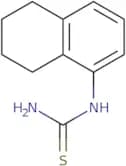
CAS:<p>Versatile small molecule scaffold</p>Formula:C10H10BrNOSPurity:Min. 95%Molecular weight:272.16 g/mol(5,6,7,8-Tetrahydronaphthalen-1-yl)thiourea
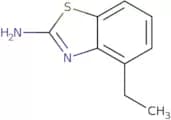
CAS:<p>Versatile small molecule scaffold</p>Formula:C11H14N2SPurity:Min. 95%Molecular weight:206.31 g/mol4-Ethyl-benzothiazol-2-ylamine
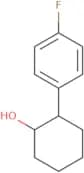
CAS:Versatile small molecule scaffoldFormula:C9H10N2SPurity:Min. 95%Molecular weight:178.26 g/molrac-(1R,2S)-2-(4-Fluorophenyl)cyclohexan-1-ol
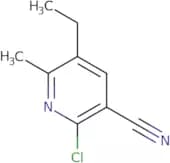
CAS:<p>Versatile small molecule scaffold</p>Formula:C12H15FOPurity:Min. 95%Molecular weight:194.24 g/mol2-Chloro-5-ethyl-6-methylpyridine-3-carbonitrile
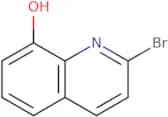
CAS:<p>Versatile small molecule scaffold</p>Formula:C9H9ClN2Purity:Min. 95%Molecular weight:180.63 g/mol2-Bromoquinolin-8-ol
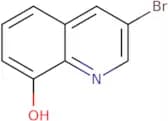
CAS:<p>2-Bromoquinolin-8-ol is an antifungal agent that inhibits the growth of fungi by binding to their sterols and disrupting their membranes. It has been shown to be toxic to animals, although it is not as well studied as other drugs in its class. 2-Bromoquinolin-8-ol has synergistic properties with other antifungal agents such as ketoconazole, and may be useful for the treatment of mycoses caused by Candida albicans or Mucorales. This drug also has a low level of toxicity to humans and does not produce allergic reactions.</p>Formula:C9H6BrNOPurity:Min. 95%Molecular weight:224.06 g/mol3-bromoquinolin-8-ol
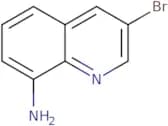
CAS:<p>3-Bromoquinolin-8-ol is an antifungal agent that has been shown to have a wide range of activity against fungi, including some strains of the genus Myrothecium. 3-Bromoquinolin-8-ol inhibits the growth of fungi by binding to sterically complementary sites on their surface, forming a complex with the fungal cell membrane that disrupts ionic balance and leads to leakage of intracellular contents. The compound also has toxic effects on plants, which may be due to its inhibition of chlorophyll synthesis or interference with photosynthesis. 3-Bromoquinolin-8-ol is not active against bacteria and therefore is used as an antifungal agent in agriculture.</p>Formula:C9H6BrNOPurity:Min. 95%Molecular weight:224.06 g/mol3-bromoquinolin-8-amine
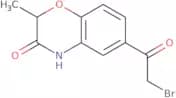
CAS:<p>3-bromoquinolin-8-amine is a chemical compound that belongs to the group of quinolines. It has overlapping functionalities with other compounds and has been shown to have autofluorescent properties. 3-Bromoquinolin-8-amine can be used in assays, such as mass spectrometric analysis and kinetic studies, to determine its concentration response curves. This compound also has potential for use in cheminformatics and transfection experiments, although validation studies are required.</p>Formula:C9H7BrN2Purity:Min. 95%Molecular weight:223.1 g/mol6-(2-Bromoacetyl)-2-methyl-3,4-dihydro-2H-1,4-benzoxazin-3-one
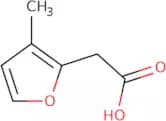
CAS:<p>Versatile small molecule scaffold</p>Formula:C11H10BrNO3Purity:Min. 95%Molecular weight:284.11 g/mol2-(3-Methylfuran-2-yl)acetic acid
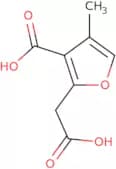
CAS:<p>Versatile small molecule scaffold</p>Formula:C7H8O3Purity:Min. 95%Molecular weight:140.14 g/mol2-(Carboxymethyl)-4-methylfuran-3-carboxylic acid
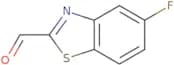
CAS:<p>Versatile small molecule scaffold</p>Formula:C8H8O5Purity:Min. 95%Molecular weight:184.15 g/mol5-Fluoro-1,3-benzothiazole-2-carbaldehyde
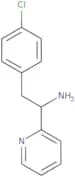
CAS:<p>Versatile small molecule scaffold</p>Formula:C8H4FNOSPurity:Min. 95%Molecular weight:181.19 g/mol2-(4-Chlorophenyl)-1-(pyridin-2-yl)ethan-1-amine
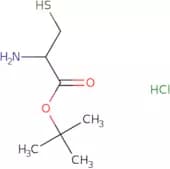
CAS:<p>Versatile small molecule scaffold</p>Formula:C13H13ClN2Purity:Min. 95%Molecular weight:232.71 g/moltert-Butyl (2R)-2-amino-3-sulfanylpropanoate hydrochloride
CAS:<p>Versatile small molecule scaffold</p>Formula:C7H16ClNO2SPurity:Min. 95%Molecular weight:213.73 g/mol6-Methyl-2-phenyl-3H,4H,5H,6H,7H,8H-pyrido[4,3-d]pyrimidin-4-one
CAS:<p>Versatile small molecule scaffold</p>Formula:C14H15N3OPurity:Min. 95%Molecular weight:241.29 g/mol3-Benzyl-3H-[1,2,3]triazole-4-carbaldehyde
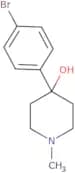
CAS:<p>Versatile small molecule scaffold</p>Formula:C10H9N3OPurity:Min. 95%Molecular weight:187.19 g/mol4-(4-Bromophenyl)-1-methylpiperidin-4-ol
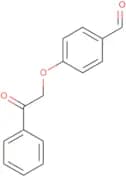
CAS:<p>Versatile small molecule scaffold</p>Formula:C12H16BrNOPurity:Min. 95%Molecular weight:270.17 g/mol4-(2-Oxo-2-phenylethoxy)benzaldehyde
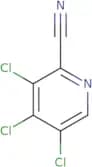
CAS:<p>4-(2-Oxo-2-phenylethoxy)benzaldehyde is an aldehyde that is used as a starting material for the synthesis of other chemical compounds. It is prepared from phenylacetaldehyde and acetone in the presence of a nucleophile such as hydrochloric acid. The mechanism for this reaction is postulated to be similar to that of the nitronate reduction, which involves the addition of a nucleophile to form an intermediate iminium salt. This intermediate then reacts with hydrogen gas, yielding 4-(2-oxo-2-phenylethoxy)benzaldehyde. The reaction can also be catalyzed by ruthenium or palladium complexes.</p>Formula:C15H12O3Purity:Min. 95%Molecular weight:240.25 g/mol3,4,5-Trichloropicolinonitrile
CAS:<p>3,4,5-Trichloropicolinonitrile is a pyridine derivative that has been shown to be a potent inhibitor of the enzyme xanthine oxidase. Xanthine oxidase catalyses the oxidation of hypoxanthine to xanthine and then to uric acid. This reaction is important in the purification of nucleotides and in the production of uric acid as a component of urine. 3,4,5-Trichloropicolinonitrile binds reversibly to xanthine oxidase by means of its hydrazone group. It reacts with nucleophilic groups on the enzyme's surface and inhibits its activity by preventing access to substrates.<br>3,4,5-Trichloropicolinonitrile has been shown to inhibit xanthine oxidase from human erythrocytes and rat liver preparations.</p>Formula:C6HCl3N2Purity:Min. 95%Molecular weight:207.4 g/mol

![6-Methyl-2-phenyl-3H,4H,5H,6H,7H,8H-pyrido[4,3-d]pyrimidin-4-one](/_next/image/?url=https%3A%2Fstatic.cymitquimica.com%2Fproducts%2F3D%2Fthumb-webp%2FPFA45253.webp&w=3840&q=75)
![3-Benzyl-3H-[1,2,3]triazole-4-carbaldehyde](/_next/image/?url=https%3A%2Fstatic.cymitquimica.com%2Fproducts%2F3D%2Fthumb-webp%2FPFA45485.webp&w=3840&q=75)