Building Blocks
This section contains fundamental products for the synthesis of organic and biological compounds. Building blocks are the essential starting materials used to construct complex molecules through various chemical reactions. They play a critical role in drug discovery, material science, and chemical research. At CymitQuimica, we offer a diverse range of high-quality building blocks to support your innovative research and industrial projects, ensuring you have the essential components for successful synthesis.
Subcategories of "Building Blocks"
- Boronic Acids & Boronic Acid Derivatives(5,756 products)
- Chiral Building Blocks(1,242 products)
- Hydrocarbon Building Blocks(6,095 products)
- Organic Building Blocks(61,051 products)
Found 199813 products of "Building Blocks"
Sort by
Purity (%)
0
100
|
0
|
50
|
90
|
95
|
100
N-Methyl 4-bromo-2-methylaniline
CAS:<p>Versatile small molecule scaffold</p>Formula:C8H10BrNPurity:Min. 95%Molecular weight:200.08 g/mol1-[5-(Propan-2-yl)furan-2-yl]ethan-1-one
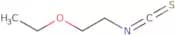
CAS:<p>Versatile small molecule scaffold</p>Formula:C9H12O2Purity:Min. 95%Molecular weight:152.19 g/mol1-Ethoxy-2-isothiocyanatoethane
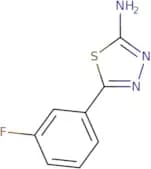
CAS:<p>Versatile small molecule scaffold</p>Formula:C5H9NOSPurity:Min. 95%Molecular weight:131.2 g/mol5-(3-Fluorophenyl)-1,3,4-thiadiazol-2-amine
CAS:<p>5-(3-Fluorophenyl)-1,3,4-thiadiazol-2-amine is a white crystalline solid that is soluble in water. It reacts with hydrogen chloride to form 5-(3-chlorophenyl)-1,3,4-thiadiazol-2-amine and 5-(3-fluorobenzene)-1,3,4-thiadiazol-2-amine. The two dimers are centrosymmetric.</p>Formula:C8H6FN3SPurity:Min. 95%Molecular weight:195.22 g/mol4-(5-Amino-[1,3,4]thiadiazol-2-yl)-phenol
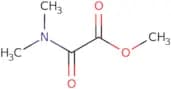
CAS:<p>4-(5-Amino-[1,3,4]thiadiazol-2-yl)-phenol is a fluorescent probe that has been shown to be active against the transcription-polymerase chain of various plant viruses. It is also capable of inhibiting the replication of human immunodeficiency virus type 1 (HIV-1) and murine leukemia virus (MLV). 4-(5-Amino-[1,3,4]thiadiazol-2-yl)-phenol has been used to detect signal in living cells and tissues by fluorescence microscopy. This probe can also be used to detect protein ubiquitination and proteasomal degradation in a variety of organisms, including humans and mice.</p>Formula:C8H7N3OSPurity:Min. 95%Molecular weight:193.23 g/molMethyl (dimethylcarbamoyl)formate
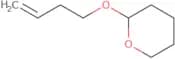
CAS:<p>Versatile small molecule scaffold</p>Formula:C5H9NO3Purity:Min. 95%Molecular weight:131.13 g/mol2-(But-3-en-1-yloxy)oxane
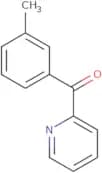
CAS:<p>Versatile small molecule scaffold</p>Formula:C9H16O2Purity:Min. 95%Molecular weight:156.22 g/mol2-(3-Methylbenzoyl)pyridine
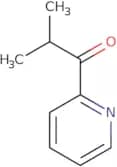
CAS:<p>Versatile small molecule scaffold</p>Formula:C13H11NOPurity:Min. 95%Molecular weight:197.23 g/molIsopropyl 2-pyridyl ketone
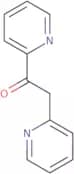
CAS:<p>Isopropyl 2-pyridyl ketone is an oxime that can be obtained from the reaction of pyridine and acetone. This compound is known for its diastereoselectivity, which is the preference of one stereoisomer over another. Isopropyl 2-pyridyl ketone has been shown to react with ammonium salts to form quaternary salt. The quaternary salt can then react with amines to form optically active products. Isopropyl 2-pyridyl ketone also reacts with hydrocarbons to form cyclic compounds.</p>Formula:C9H11NOPurity:Min. 95%Molecular weight:149.19 g/mol1,2-Bis(pyridin-2-yl)ethan-1-one
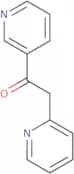
CAS:<p>1,2-Bis(pyridin-2-yl)ethan-1-one is a ligand that has an enolate form. It is a ferromagnetic compound with a solvothermal synthesis and trinuclear crystal structure. This ligand can be used as a catalyst in organic reactions and as a magnet to study magnetic properties.</p>Formula:C12H10N2OPurity:Min. 95%Molecular weight:198.22 g/mol2-(Pyridin-2-yl)-1-(pyridin-3-yl)ethan-1-one
CAS:<p>Versatile small molecule scaffold</p>Formula:C12H10N2OPurity:Min. 95%Molecular weight:198.22 g/mol2-Chloro-4-[(dimethylcarbamoyl)amino]benzoic acid
CAS:<p>2-Chloro-4-[(dimethylcarbamoyl)amino]benzoic acid is an anticancer agent that inhibits the growth of cancer cells by inhibiting the enzyme catalysis that is required for the synthesis of DNA. This drug is a synthetic compound with an active methylene group and an ester hydrochloride group. 2-Chloro-4-[(dimethylcarbamoyl)amino]benzoic acid also has a hydroxy group, which can be activated by enzymes such as enamine to form a reactive methylene, which reacts with other molecules to form reaction products. The mechanism of 2-chloro-4-[(dimethylcarbamoyl)amino]benzoic acid is similar to that of other anticancer drugs such as amine and amide.</p>Formula:C10H11ClN2O3Purity:Min. 95%Molecular weight:242.66 g/mol2-Chloro-4-[(methylcarbamoyl)amino]benzoic acid
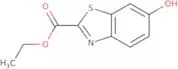
CAS:<p>Versatile small molecule scaffold</p>Formula:C9H9ClN2O3Purity:Min. 95%Molecular weight:228.63 g/molEthyl 6-hydroxy-1,3-benzothiazole-2-carboxylate
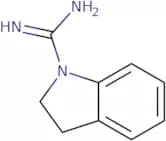
CAS:<p>Ethyl 6-hydroxy-1,3-benzothiazole-2-carboxylate (EHTBC) is a heterocyclic compound that belongs to the class of fluorinated benzothiazoles. It is used in analytical chemistry as a fluorescent probe for detection of ammonium ions. The fluorescence intensity of EHTBC is proportional to the concentration of ammonium ion and can be detected by a spectrophotometer with an excitation wavelength at 360 nm and emission wavelength at 450 nm. The detection time is typically less than 30 seconds. EHTBC has also been shown to have analytical applications in detecting fluoride ion and other halide ions in water samples. Fluoride ions react with EHTBC to form the fluorescent product ethyl 2-[6-(diethylamino)hexyloxy]benzoate, which can be detected by a fluorimeter with an excitation wavelength at 365 nm and emission wavelength at 480 nm.</p>Formula:C10H9NO3SPurity:Min. 95%Molecular weight:223.25 g/mol2,3-Dihydro-1H-indole-1-carboximidamide
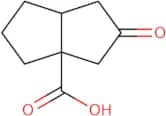
CAS:<p>2,3-Dihydro-1H-indole-1-carboximidamide is a heterocyclic compound that features a 6alkyl, nitro or heteroaromatic ring. It is an intermediate for pharmaceutical formulations and it has been shown to be active against various bacterial strains. 2,3-Dihydro-1H-indole-1-carboximidamide also has nitrogen and halogen atoms, as well as heteroatoms such as oxygen, sulfur and phosphorus. It can have a 6membered or a 5membered ring with one or two heteroatoms.</p>Formula:C9H11N3Purity:Min. 95%Molecular weight:161.2 g/molrac-(3aR,6aR)-2-Oxo-octahydropentalene-3a-carboxylic acid
CAS:<p>Versatile small molecule scaffold</p>Formula:C9H12O3Purity:Min. 95%Molecular weight:168.2 g/molSpiro[adamantane-2,2'-azetidine]
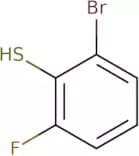
CAS:<p>Versatile small molecule scaffold</p>Formula:C12H19NPurity:Min. 95%Molecular weight:177.29 g/mol2-Bromo-6-fluorobenzene-1-thiol
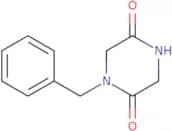
CAS:<p>Versatile small molecule scaffold</p>Formula:C6H4BrFSPurity:Min. 95%Molecular weight:207.07 g/mol1-Benzylpiperazine-2,5-dione
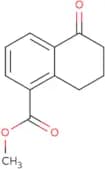
CAS:Versatile small molecule scaffoldFormula:C11H12N2O2Purity:Min. 95%Molecular weight:204.22 g/molMethyl 5-oxo-5,6,7,8-tetrahydronaphthalene-1-carboxylate
CAS:<p>Versatile small molecule scaffold</p>Formula:C12H12O3Purity:Min. 95%Molecular weight:204.22 g/mol


![1-[5-(Propan-2-yl)furan-2-yl]ethan-1-one](/_next/image/?url=https%3A%2Fstatic.cymitquimica.com%2Fproducts%2F3D%2Fthumb-webp%2FJCA55853.webp&w=3840&q=75)
![4-(5-Amino-[1,3,4]thiadiazol-2-yl)-phenol](/_next/image/?url=https%3A%2Fstatic.cymitquimica.com%2Fproducts%2F3D%2Fthumb-webp%2FJCA56553.webp&w=3840&q=75)
![2-Chloro-4-[(dimethylcarbamoyl)amino]benzoic acid](/_next/image/?url=https%3A%2Fstatic.cymitquimica.com%2Fproducts%2F3D%2Fthumb-webp%2FJCA58701.webp&w=3840&q=75)
![2-Chloro-4-[(methylcarbamoyl)amino]benzoic acid](/_next/image/?url=https%3A%2Fstatic.cymitquimica.com%2Fproducts%2F3D%2Fthumb-webp%2FJCA58702.webp&w=3840&q=75)
![Spiro[adamantane-2,2'-azetidine]](/_next/image/?url=https%3A%2Fstatic.cymitquimica.com%2Fproducts%2F3D%2Fthumb-webp%2FJCA59193.webp&w=3840&q=75)