Building Blocks
This section contains fundamental products for the synthesis of organic and biological compounds. Building blocks are the essential starting materials used to construct complex molecules through various chemical reactions. They play a critical role in drug discovery, material science, and chemical research. At CymitQuimica, we offer a diverse range of high-quality building blocks to support your innovative research and industrial projects, ensuring you have the essential components for successful synthesis.
Subcategories of "Building Blocks"
- Boronic Acids & Boronic Acid Derivatives(5,778 products)
- Chiral Building Blocks(1,242 products)
- Hydrocarbon Building Blocks(6,098 products)
- Organic Building Blocks(61,034 products)
Found 199601 products of "Building Blocks"
Sort by
Purity (%)
0
100
|
0
|
50
|
90
|
95
|
100
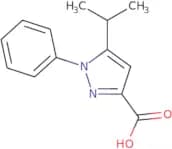
1-Phenyl-5-(propan-2-yl)-1H-pyrazole-3-carboxylic acid
CAS:<p>Versatile small molecule scaffold</p>Formula:C13H14N2O2Purity:Min. 95%Molecular weight:230.26 g/mol3-(Aminomethyl)tetrahydrothiophene 1,1-dioxide hydrochloride
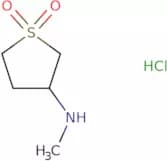
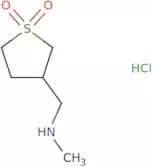
CAS:<p>Versatile small molecule scaffold</p>Formula:C5H12ClNO2SPurity:Min. 95%Molecular weight:185.67 g/mol1-(1,1-dioxothiolan-3-yl)-N-methylmethanamine hydrochloride
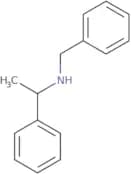
CAS:Versatile small molecule scaffoldFormula:C6H14ClNO2SPurity:Min. 95%Molecular weight:199.7 g/molN-Benzyl-1-phenylethylamine
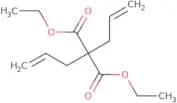
CAS:<p>N-Benzyl-1-phenylethylamine is a synthetic chemical. It is used as a ligand for the hydrogenation reduction of beta-cyclodextrin to form 1,4-dideoxygalactose from glucose. In order to desorb the N-benzylphenethylamine from the beta-cyclodextrin, it must be dehydrated with methanol and cyclopropylamine. N-Benzylphenethylamine can also be synthesized by reacting butyric acid with beta-cyclodextrin in an amide bond. The synthesis of N-benzylphenethylamine is facilitated by the mesoporous nature of the beta-cyclodextrin, which is capable of stabilizing this molecule.</p>Formula:C15H17NPurity:Min. 95%Molecular weight:211.3 g/molDiethyl Diallylmalonate
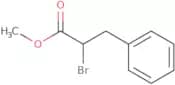
CAS:<p>Diethyl diallylmalonate is a hydroxyl-containing compound that can be used as a solid catalyst for the metathesis reaction. It has been shown to have high activity in catalyzing the formation of amides from carboxylic acids and amines, which is an important chemical reaction in organic synthesis. Furthermore, it can be regenerated by oxidation or reduction, making it an efficient catalyst. This product also has a high redox potential and can be activated by a variety of catalysts. Diethyl diallylmalonate is often used as a model system for fatty acid metathesis reactions.</p>Formula:C13H20O4Purity:Min. 95%Molecular weight:240.3 g/molMethyl 2-bromo-3-phenylpropanoate
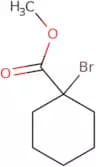
CAS:<p>Methyl 2-bromo-3-phenylpropanoate is a chemical compound with the molecular formula CHBrCH(CO)C6H5. It has three asymmetric carbon atoms and two stereoisomers. The methyl group, the bromine atom, and the phenyl group are all in one plane. The molecule can rotate around its axis, which is known as optical activity. This configuration of the molecule allows it to be used as a surrogate for other compounds in biological research, such as pharmaceuticals or pesticides. Methyl 2-bromo-3-phenylpropanoate can be synthesized by biotechnology methods from natural products like lettuce and clostridium.</p>Formula:C10H11BrO2Purity:Min. 95%Molecular weight:243.1 g/molMethyl 1-bromocyclohexanecarboxylate
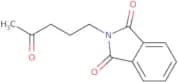
CAS:<p>Methyl 1-bromocyclohexanecarboxylate is an enolate and amide that is used as a dehydrogenase inhibitor. The reaction mechanism of methyl 1-bromocyclohexanecarboxylate has been elucidated. It exists in the form of a crystal with a molecular formula of CHBrO. This compound inhibits the activity of dehydrogenases, which are enzymes that catalyze the oxidation of alcohols to aldehydes or ketones, by reacting with the chloride ion and forming a chalcone. The chalcone then reacts with nucleophilic molecules such as water or hydroxide ions, which leads to the production of an inhibitory product. Methyl 1-bromocyclohexanecarboxylate also has antinociceptive effects, which may be due to its inhibition of prostaglandin synthesis.</p>Formula:C8H13BrO2Purity:Min. 95%Molecular weight:221.09 g/mol2-(4-Oxopentyl)-1H-isoindole-1,3(2H)-dione
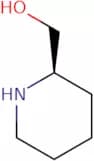
CAS:<p>Versatile small molecule scaffold</p>Formula:C13H13NO3Purity:Min. 95%Molecular weight:231.25 g/mol(2R)-piperidin-2-ylmethanol
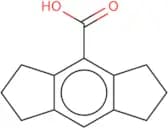
CAS:<p>(2R)-Piperidin-2-ylmethanol is a chiral, enantioselective olefin with an aziridine ring. The synthesis of this compound is by a Wittig reaction, which is a type of olefination. This reaction involves the use of an organometallic reagent and a phosphonium salt to form a new carbon-carbon bond between two unactivated alkenes.<br>INTERNATIONAL CLASSIFICATION</p>Formula:C6H13NOPurity:Min. 95%Molecular weight:115.17 g/mol1,2,3,5,6,7-Hexahydro-S-indacene-4-carboxylic acid
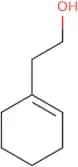
CAS:<p>Versatile small molecule scaffold</p>Formula:C13H14O2Purity:Min. 95%Molecular weight:202.2 g/mol2-(Cyclohex-1-en-1-yl)ethan-1-ol
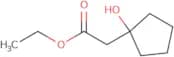
CAS:<p>Versatile small molecule scaffold</p>Formula:C8H14OPurity:Min. 95%Molecular weight:126.2 g/molEthyl 2-(1-hydroxycyclopentyl)acetate
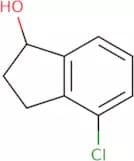
CAS:<p>Versatile small molecule scaffold</p>Formula:C9H16O3Purity:Min. 95%Molecular weight:172.22 g/mol4-Chloro-2,3-dihydro-1H-inden-1-ol
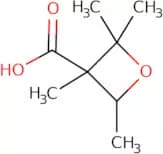
CAS:Versatile small molecule scaffoldFormula:C9H9ClOPurity:Min. 95%Molecular weight:168.62 g/molTetramethyloxetane-3-carboxylic acid
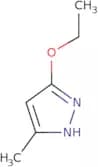
CAS:Versatile small molecule scaffoldFormula:C8H14O3Purity:Min. 95%Molecular weight:158.19 g/mol3-Ethoxy-5-methyl-1H-pyrazole
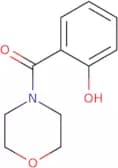
CAS:<p>Versatile small molecule scaffold</p>Formula:C6H10N2OPurity:Min. 95%Molecular weight:126.16 g/mol2-(Morpholine-4-carbonyl)phenol
CAS:<p>2-(Morpholine-4-carbonyl)phenol is a rotenoid compound that has been shown to be a potent dehydrating agent. It readily reacts with amide and alkoxy radicals, cyclic alkali metal ions, and peptides. 2-(Morpholine-4-carbonyl)phenol can also react with chloride ions to form an unstable chloro radical. This reaction releases hydrogen chloride in the process and may result in the formation of carcinogenic nitro compounds. 2-(Morpholine-4-carbonyl)phenol has antiinflammatory activity and is used as an antimicrobial agent.</p>Formula:C11H13NO3Purity:Min. 95%Molecular weight:207.23 g/mol4-Iodobutan-1-ol
CAS:<p>4-Iodobutan-1-ol is an acylation agent that is used in the synthesis of amines and alcohols. It can be synthesized by reacting a Grignard reagent with iodine or an alkyl halide. 4-Iodobutan-1-ol is also used for the production of other organometallic compounds, such as azacycles, which are important intermediates in organic synthesis. The use of 4-iodobutan-1-ol is limited because it reacts with nucleophiles such as amines, hydroxides, and alkoxides to form adducts that are not useful. However, this compound has been shown to be effective in the synthesis of fatty esters and low density lipoproteins (LDL).</p>Formula:C4H9IOPurity:Min. 95%Molecular weight:200.02 g/mol7-Chloro-[1,2,3,4]tetrazolo[1,5-c]pyrimidin-8-amine
CAS:<p>Versatile small molecule scaffold</p>Formula:C4H3ClN6Purity:Min. 95%Molecular weight:170.56 g/molrac-[(1R,2R,4R)-Bicyclo[2.2.1]hept-5-en-2-yl]methanamine
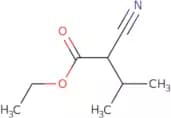
CAS:Versatile small molecule scaffoldFormula:C8H13NPurity:Min. 95%Molecular weight:123.2 g/molEthyl 2-cyano-3-methyl-butanoate
CAS:<p>Ethyl 2-cyano-3-methyl-butanoate is a nitrile that has a pyridine ring and two carbon atoms. It is an ester of ethyl cyanoacetic acid, which has a methyl group attached to the carbon atom at the 3 position. The other carbon atom is attached to two hydrogen atoms and one oxygen atom. This substance also contains a cyano group with one hydrogen atom. Ethyl 2-cyano-3-methyl-butanoate can be used as an alkyl ester, which is made up of an alkyl group and an alkyl ester group, in the production of polymers. The monoxide can be released from this substance during the process of polymerization, which will result in unsaturated polymers.</p>Formula:C8H13NO2Purity:Min. 95%Molecular weight:155.19 g/mol


![7-Chloro-[1,2,3,4]tetrazolo[1,5-c]pyrimidin-8-amine](/_next/image/?url=https%3A%2Fstatic.cymitquimica.com%2Fproducts%2F3D%2Fthumb-webp%2FDAA21038.webp&w=3840&q=75)
![rac-[(1R,2R,4R)-Bicyclo[2.2.1]hept-5-en-2-yl]methanamine](/_next/image/?url=https%3A%2Fstatic.cymitquimica.com%2Fproducts%2F3D%2Fthumb-webp%2FDAA21186.webp&w=3840&q=75)