Building Blocks
This section contains fundamental products for the synthesis of organic and biological compounds. Building blocks are the essential starting materials used to construct complex molecules through various chemical reactions. They play a critical role in drug discovery, material science, and chemical research. At CymitQuimica, we offer a diverse range of high-quality building blocks to support your innovative research and industrial projects, ensuring you have the essential components for successful synthesis.
Subcategories of "Building Blocks"
- Boronic Acids & Boronic Acid Derivatives(5,778 products)
- Chiral Building Blocks(1,242 products)
- Hydrocarbon Building Blocks(6,098 products)
- Organic Building Blocks(61,092 products)
Found 199296 products of "Building Blocks"
Sort by
Purity (%)
0
100
|
0
|
50
|
90
|
95
|
100
(R)-2-[(9H-Fluoren-9-ylmethoxycarbonylamino)-methyl]-butyric acid
CAS:<p>Versatile small molecule scaffold</p>Formula:C20H21NO4Purity:Min. 95%Color and Shape:PowderMolecular weight:339.4 g/molmethyl 4-bromo-3-formylbenzoate
CAS:<p>Versatile small molecule scaffold</p>Formula:C9H7BrO3Purity:Min. 95%Molecular weight:243.1 g/mol4-Methoxy-3-(methoxymethyl)butan-1-ol
CAS:<p>Versatile small molecule scaffold</p>Formula:C7H16O3Purity:Min. 95%Molecular weight:148.2 g/mol6-Bromo-1-methyl-2,3-dihydro-1H-indazol-3-one
CAS:<p>Versatile small molecule scaffold</p>Formula:C8H7BrN2OPurity:Min. 95%Molecular weight:227.06 g/molMethyl 2-(6-chloropyridin-3-yl)acetate
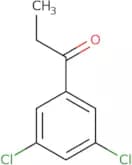
CAS:<p>Versatile small molecule scaffold</p>Formula:C8H8ClNO2Purity:Min. 95%Molecular weight:185.61 g/mol1-(3,5-Dichloro-phenyl)-propan-1-one
CAS:<p>Versatile small molecule scaffold</p>Formula:C9H8Cl2OPurity:Min. 95%Molecular weight:203.07 g/mol6-Chloro-2,8-dimethylimidazo[1,2-b]pyridazine
CAS:Versatile small molecule scaffoldFormula:C8H8ClN3Purity:Min. 95%Molecular weight:181.62 g/mol(1R,4R)-2-Oxa-5-azabicyclo[2.2.1]heptane hydrochloride
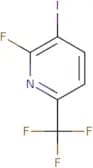
CAS:<p>Versatile small molecule scaffold</p>Formula:C5H9NO·HClPurity:Min. 95%Molecular weight:135.59 g/mol2-Fluoro-3-iodo-6-(trifluoromethyl)pyridine
CAS:<p>Versatile small molecule scaffold</p>Formula:C6H2F4INPurity:Min. 95%Molecular weight:290.98 g/molGSK'547
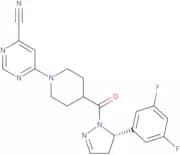
CAS:GSK'547 is a small molecule that can interact with the ferroptosis pathway, which is involved in both acute and chronic kidney injury. GSK'547 has been shown to inhibit ischemia reperfusion-induced renal dysfunction by suppressing inflammation and oxidative stress. GSK'547 also inhibits cancer cell proliferation and acts as an anti-inflammatory agent. In addition, GSK'547 has been shown to be beneficial for treating tuberculosis infections and cavity diseases. The mechanism of action of GSK'547 involves inhibiting bacterial cell wall synthesis by binding to the beta-subunit of DNA gyrase. This binding prevents the formation of an antibiotic-inhibitor complex with the enzyme cell wall synthesis that is required for cell wall biosynthesis, inhibiting protein synthesis and cell division.Formula:C20H18F2N6OPurity:Min. 95%Molecular weight:396.39 g/mol5-{2-Ethoxy-5-[(4-methylpiperazin-1-yl)sulfonyl]phenyl}-1-methyl-3-(2-methylpropyl)-1H,6H,7H-pyrazolo[4,3-d]pyrimidin-7-one
CAS:<p>Tadalafil is a synthetic drug that is used as a treatment for erectile dysfunction. It works by inhibiting the PDE5 enzyme, which is responsible for breaking down cGMP. Tadalafil has been shown to be effective in the treatment of male erectile dysfunction and pulmonary hypertension, with few side effects. This drug is taken orally, with a meal or without one, and can be administered with or without food. To improve absorption, tadalafil should be taken at least 30 minutes before sexual activity. The dosage of tadalafil ranges from 2.5 to 20 mg, and it should not exceed 40 mg per day.</p>Formula:C23H32N6O4SPurity:Min. 95%Molecular weight:488.6 g/mol6,6-difluoro-1,4-oxazepane hydrochloride
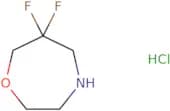
CAS:<p>Versatile small molecule scaffold</p>Formula:C5H10ClF2NOPurity:Min. 95%Molecular weight:173.6 g/mol5-bromo-3-methoxy-1h-pyrazole
CAS:<p>Versatile small molecule scaffold</p>Formula:C4H5BrN2OPurity:Min. 95%Molecular weight:177 g/mol(1S,3R,4R)-3-(Boc-amino)-4-hydroxy-cyclohexanecarboxylic acid ethyl ester
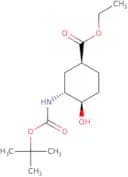
CAS:<p>Versatile small molecule scaffold</p>Formula:C14H25NO5Purity:Min. 95%Molecular weight:287.35 g/mol(4-Nitrophenyl)methanethiol
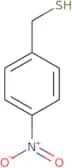
CAS:<p>4-Nitrophenylmethanethiol is a reactive molecule that reacts with dopamine D3, an important cytosolic protein, to form a stable covalent bond. This reaction was shown to be pH-dependent and the products were identified by x-ray diffraction data. The disulfide bond formed by this reaction is then reduced to the corresponding sulfhydryl group with sodium borohydride or hydroxide solution. 4-Nitrophenylmethanethiol also reacts with inorganic acid and sodium carbonate to form a molecule containing carbapenem, which is a model protein used in research on chemical reactions. 4-Nitrophenylmethanethiol reacts with chloride ions and phenyl groups to yield hydrochloric acid as the final product of the chemical reaction.</p>Formula:C7H7NO2SPurity:Min. 95%Molecular weight:169.2 g/molDimethyl pyridine-3,4-dicarboxylate
CAS:<p>Dimethyl pyridine-3,4-dicarboxylate is an organic compound that is used as a precursor to make other chemicals. It is a pyridinedicarboxylic acid and it can be synthesized from the reduction of pyridine with sodium borohydride in ethanol. Dimethyl pyridine-3,4-dicarboxylate is also used in the production of acetaldehyde by way of hydrosilylation with chloride and chloroform. This chemical has been found to be useful for the synthesis of various drugs such as antiepileptics, antihistamines, antipsychotics, and antidepressants.</p>Formula:C9H9NO4Purity:Min. 95%Molecular weight:195.17 g/molNerol oxide
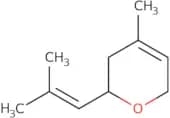
CAS:<p>Nerol oxide is a natural compound and fragrance ingredient that has been shown to have anti-aging effects. Nerol oxide is an ester of citronellal, nerolic acid and ethyl decanoate. It is found naturally in orange blossoms and other citrus plants, as well as in lavender oil. Nerol oxide can be extracted from the plant material using solid phase microextraction. The chemical analyses of this extract reveal the presence of various fatty acids, including ethyl esters, fatty acids and their corresponding alcohols. These compounds are used to produce nerol oxide by polymerization with an initiator such as potassium hydroxide or sodium hydroxide at a neutral pH.</p>Formula:C10H16OPurity:Min. 95%Molecular weight:152.23 g/mol3,6-Dichloropicolinonitrile
CAS:<p>3,6-Dichloropicolinonitrile is a peroxide that is used in the synthesis of organic compounds. It is produced by the reaction of sodium carbonate and hydrochloric acid with nitric acid as a catalyst. 3,6-Dichloropicolinonitrile has been shown to be more selective than other oxidizing agents such as hydrogen peroxide and potassium permanganate. The product can then be purified by adding diacetate, which selectively reacts with the chlorine to form acetyl chloride and glycolic acid. The resulting mixture can then be distilled to produce 3,6-dichloropicolinonitrile in high purity. 3,6-Dichloropicolinonitrile can also be used in electrochemical methods for the synthesis of cyanides or biochemically for virulent products such as pesticides and organic solvents.</p>Formula:C6H2Cl2N2Purity:Min. 95%Molecular weight:173 g/molN-Carbethoxy-4-hydroxypiperidine
CAS:<p>N-Carbethoxy-4-hydroxypiperidine is a drug substance that is a h1 receptor antagonist. It is used as an antihistamine to treat the symptoms of hay fever and other allergic reactions. N-Carbethoxy-4-hydroxypiperidine is available in two enantiomers, or mirror images, which are labelled S and R. The R enantiomer is more potent than the S enantiomer for inhibiting histamine h1 receptors. This drug has been shown to inhibit the growth of tuberculosis bacteria in cell culture and animal models, but not against Mycobacterium avium complex. N-Carbethoxy-4-hydroxypiperidine has also been shown to have significant antibacterial activity against Clostridium perfringens with minimal toxicity in mice.</p>Formula:C8H15NO3Purity:Min. 95%Molecular weight:173.21 g/molMethyl 4-chlorobenzenesulfonate
CAS:<p>Versatile small molecule scaffold</p>Formula:C7H7ClO3SPurity:Min. 95%Molecular weight:206.65 g/mol
![(R)-2-[(9H-Fluoren-9-ylmethoxycarbonylamino)-methyl]-butyric acid](/_next/image/?url=https%3A%2Fstatic.cymitquimica.com%2Fproducts%2F3D%2Fthumb-webp%2FSYB71157.webp&w=3840&q=75)


![6-Chloro-2,8-dimethylimidazo[1,2-b]pyridazine](/_next/image/?url=https%3A%2Fstatic.cymitquimica.com%2Fproducts%2F3D%2Fthumb-webp%2FSAA41223.webp&w=3840&q=75)
![(1R,4R)-2-Oxa-5-azabicyclo[2.2.1]heptane hydrochloride](/_next/image/?url=https%3A%2Fstatic.cymitquimica.com%2Fproducts%2F3D%2Fthumb-webp%2FBZA51579.webp&w=3840&q=75)
![5-{2-Ethoxy-5-[(4-methylpiperazin-1-yl)sulfonyl]phenyl}-1-methyl-3-(2-methylpropyl)-1H,6H,7H-pyraz…](/_next/image/?url=https%3A%2Fstatic.cymitquimica.com%2Fproducts%2F3D%2Fthumb-webp%2FRFC05395.webp&w=3840&q=75)