Building Blocks
This section contains fundamental products for the synthesis of organic and biological compounds. Building blocks are the essential starting materials used to construct complex molecules through various chemical reactions. They play a critical role in drug discovery, material science, and chemical research. At CymitQuimica, we offer a diverse range of high-quality building blocks to support your innovative research and industrial projects, ensuring you have the essential components for successful synthesis.
Subcategories of "Building Blocks"
- Boronic Acids & Boronic Acid Derivatives(5,756 products)
- Chiral Building Blocks(1,242 products)
- Hydrocarbon Building Blocks(6,095 products)
- Organic Building Blocks(61,051 products)
Found 199813 products of "Building Blocks"
Sort by
Purity (%)
0
100
|
0
|
50
|
90
|
95
|
100
5-Thia-6-azaspiro[2.4]heptane 5,5-dioxide
CAS:<p>Versatile small molecule scaffold</p>Formula:C5H9NO2SPurity:Min. 95%Molecular weight:147.2 g/mol1-(4-Ethynyl-2-fluorophenyl)methanamine hydrochloride
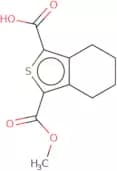
CAS:<p>Versatile small molecule scaffold</p>Formula:C9H9ClFNPurity:Min. 95%Molecular weight:185.6 g/mol3-(Methoxycarbonyl)-4,5,6,7-tetrahydro-2-benzothiophene-1-carboxylic acid
CAS:<p>Versatile small molecule scaffold</p>Formula:C11H12O4SPurity:Min. 95%Molecular weight:240.3 g/mol7-Chloro-6-fluoro-5-methyl-1H,2H,3H,4H,5H-pyrido[4,3-b]indole hydrochloride
CAS:<p>Versatile small molecule scaffold</p>Formula:C12H13Cl2FN2Purity:Min. 95%Molecular weight:275.1 g/moltert-Butyl N-{thieno[3,2-b]pyridin-2-yl}carbamate
CAS:<p>Versatile small molecule scaffold</p>Formula:C12H14N2O2SPurity:Min. 95%Molecular weight:250.3 g/mol4-{[Dimethyl(oxo)-λ⁶-sulfanylidene]amino}pyridine-2-carboxylic acid
CAS:Versatile small molecule scaffoldFormula:C8H10N2O3SPurity:Min. 95%Molecular weight:214.2 g/mol3-[2-Methyl-5-(2-methyl-1,3-thiazol-4-yl)benzenesulfonamido]benzoic acid
CAS:Versatile small molecule scaffoldFormula:C18H16N2O4S2Purity:Min. 95%Molecular weight:388.5 g/moltert-Butyl 2-sulfamoylpropanoate
CAS:<p>Versatile small molecule scaffold</p>Formula:C7H15NO4SPurity:Min. 95%Molecular weight:209.3 g/mol4-Methyl-2-[tris(propan-2-yl)silyl]-1,3-oxazole
CAS:Versatile small molecule scaffoldFormula:C13H25NOSiPurity:Min. 95%Molecular weight:239.4 g/mol2-(4-Methylpiperidin-4-yl)ethan-1-amine dihydrochloride
CAS:<p>Versatile small molecule scaffold</p>Formula:C8H20Cl2N2Purity:Min. 95%Molecular weight:215.2 g/mol4-(1,1-Dioxo-1λ⁶,2,6-thiadiazinan-2-yl)benzoic acid
CAS:<p>Versatile small molecule scaffold</p>Formula:C10H12N2O4SPurity:Min. 95%Molecular weight:256.3 g/molMethyl 2-methyl-2,3-dihydro-1H-indole-2-carboxylate hydrochloride
CAS:<p>Versatile small molecule scaffold</p>Formula:C11H14ClNO2Purity:Min. 95%Molecular weight:227.7 g/mol7-Chloro-4-hydrazinylquinazoline hydrochloride
CAS:<p>Versatile small molecule scaffold</p>Formula:C8H8Cl2N4Purity:Min. 95%Molecular weight:231.1 g/molEthyl 4-amino-2-fluoro-3-methylbutanoate hydrochloride
CAS:<p>Versatile small molecule scaffold</p>Formula:C7H15ClFNO2Purity:Min. 95%Molecular weight:199.7 g/mol3-(Dimethylphosphoryl)-5-ethynylaniline
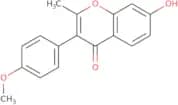
CAS:<p>Versatile small molecule scaffold</p>Formula:C10H12NOPPurity:Min. 95%Molecular weight:193.2 g/mol7-Hydroxy-3-(4-methoxyphenyl)-2-methyl-4H-chromen-4-one
CAS:<p>Versatile small molecule scaffold</p>Formula:C17H14O4Purity:Min. 95%Molecular weight:282.29 g/mol1-Chloro-3-(methylsulfanyl)propane
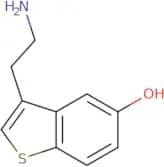
CAS:<p>1-Chloro-3-(methylsulfanyl)propane is a chiral molecule that has been shown to be present in humans, plants, and nature. It can be synthesized from isothiocyanates, which are compounds that are found in tissues of animals and plants. 1-Chloro-3-(methylsulfanyl)propane has been shown to be toxic to cancer cells by inhibiting the synthesis of DNA and RNA. This compound also activates sulforaphane, welwitindolinone, and other natural products.</p>Formula:C4H9ClSPurity:Min. 95%Molecular weight:124.63 g/mol3-(2-Aminoethyl)-1-benzothiophen-5-ol
CAS:<p>Versatile small molecule scaffold</p>Formula:C10H11NOSPurity:Min. 95%Molecular weight:193.27 g/mol4-Nitrobutyric Acid Methyl Ester
CAS:<p>4-Nitrobutyric Acid Methyl Ester is a compound that belongs to the group of nitro compounds. It is an antimycobacterial agent that inhibits the growth of Mycobacterium tuberculosis by inhibiting the synthesis of mycolic acids and cell wall components. 4-Nitrobutyric Acid Methyl Ester has been shown to be effective in vitro against Mycobacterium avium complex and in animal models against Mycobacterium bovis. This molecule was synthesized by means of a solid-phase synthesis, with a stereoselective process yielding 98% ee.</p>Formula:C5H9NO4Purity:Min. 95%Molecular weight:147.13 g/mol9-Decen-1-ol
CAS:<p>9-Decen-1-ol is an acyl chain that contains a hydroxyl group. It is a chemical precursor to the synthesis of long-chain fatty acids and other biologically important lipids. 9-Decen-1-ol is also used as a solid catalyst in organic synthesis reactions, such as the reaction mechanism for hydrochloric acid and fatty acids. The expression plasmid containing the gene for 9-decen-1-ol was introduced into Escherichia coli cells using cationic surfactant to create an E. coli strain that produces this chemical compound. This synthetic pathway has been shown to be stable in both water vapor and cell culture conditions. It also binds odorants, which may contribute its odorant binding properties. Intracellular calcium concentration increases when 9-decen-1-ol binds with G protein coupled receptors, leading to cellular activation of phospholipase A2 and increased free arachidonic acid release from membrane phosph</p>Formula:C10H20OPurity:Min. 95%Molecular weight:156.27 g/mol
![5-Thia-6-azaspiro[2.4]heptane 5,5-dioxide](/_next/image/?url=https%3A%2Fstatic.cymitquimica.com%2Fproducts%2F3D%2Fthumb-webp%2FMRD28973.webp&w=3840&q=75)


![7-Chloro-6-fluoro-5-methyl-1H,2H,3H,4H,5H-pyrido[4,3-b]indole hydrochloride](/_next/image/?url=https%3A%2Fstatic.cymitquimica.com%2Fproducts%2F3D%2Fthumb-webp%2FMRD29002.webp&w=3840&q=75)
![tert-Butyl N-{thieno[3,2-b]pyridin-2-yl}carbamate](/_next/image/?url=https%3A%2Fstatic.cymitquimica.com%2Fproducts%2F3D%2Fthumb-webp%2FMRD29817.webp&w=3840&q=75)
![4-{[Dimethyl(oxo)-λ⁶-sulfanylidene]amino}pyridine-2-carboxylic acid](/_next/image/?url=https%3A%2Fstatic.cymitquimica.com%2Fproducts%2F3D%2Fthumb-webp%2FMRD29843.webp&w=3840&q=75)
![3-[2-Methyl-5-(2-methyl-1,3-thiazol-4-yl)benzenesulfonamido]benzoic acid](/_next/image/?url=https%3A%2Fstatic.cymitquimica.com%2Fproducts%2F3D%2Fthumb-webp%2FMRD29866.webp&w=3840&q=75)
![4-Methyl-2-[tris(propan-2-yl)silyl]-1,3-oxazole](/_next/image/?url=https%3A%2Fstatic.cymitquimica.com%2Fproducts%2F3D%2Fthumb-webp%2FMRD29885.webp&w=3840&q=75)