Building Blocks
This section contains fundamental products for the synthesis of organic and biological compounds. Building blocks are the essential starting materials used to construct complex molecules through various chemical reactions. They play a critical role in drug discovery, material science, and chemical research. At CymitQuimica, we offer a diverse range of high-quality building blocks to support your innovative research and industrial projects, ensuring you have the essential components for successful synthesis.
Subcategories of "Building Blocks"
- Boronic Acids & Boronic Acid Derivatives(5,756 products)
- Chiral Building Blocks(1,242 products)
- Hydrocarbon Building Blocks(6,095 products)
- Organic Building Blocks(61,055 products)
Found 199650 products of "Building Blocks"
Sort by
Purity (%)
0
100
|
0
|
50
|
90
|
95
|
100
1-Ethyl-1H,4H,5H-pyrazolo[3,4-d]pyrimidin-4-one
CAS:<p>Versatile small molecule scaffold</p>Formula:C7H8N4OPurity:Min. 95%Molecular weight:164.16 g/molMethyl 6-hydrazinylpyridine-3-carboxylate
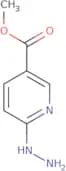
CAS:<p>Versatile small molecule scaffold</p>Formula:C7H9N3O2Purity:Min. 95%Molecular weight:167.17 g/molEthyl 2-(dihydroxy-1,3,5-triazin-2-yl)acetate
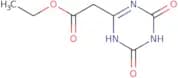
CAS:<p>Versatile small molecule scaffold</p>Formula:C7H9N3O4Purity:Min. 95%Molecular weight:199.16 g/molN,1-Dimethylcyclopentan-1-amine hydrochloride
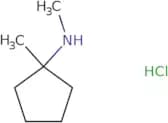
CAS:<p>Versatile small molecule scaffold</p>Formula:C7H16ClNPurity:Min. 95%Molecular weight:149.66 g/mol(2-Aminocyclohexyl)methanol
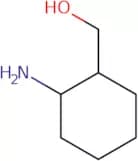
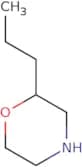
CAS:<p>Versatile small molecule scaffold</p>Formula:C7H15NOPurity:Min. 95%Molecular weight:129.2 g/mol2-Propylmorpholine
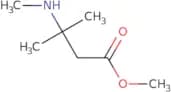
CAS:<p>Versatile small molecule scaffold</p>Formula:C7H15NOPurity:Min. 95%Molecular weight:129.2 g/molMethyl 3-methyl-3-(methylamino)butanoate
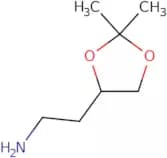
CAS:<p>Versatile small molecule scaffold</p>Formula:C7H15NO2Purity:Min. 95%Molecular weight:145.2 g/mol2-(2,2-Dimethyl-1,3-dioxolan-4-yl)ethan-1-amine
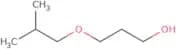
CAS:<p>Versatile small molecule scaffold</p>Formula:C7H15NO2Purity:Min. 95%Molecular weight:145.2 g/mol3-(2-Methylpropoxy)propan-1-ol
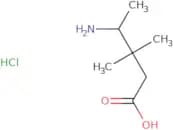
CAS:<p>3-(2-Methylpropoxy)propan-1-ol is a volatile organic chemical that can be used as a solvent in the production of paints and coatings. It is also used as an intermediate in the manufacture of other chemicals, such as trichloroethane and ethylene dichloride. 3-(2-Methylpropoxy)propan-1-ol has been detected by gas chromatography using a flame ionization detector (GC/FID) in oleoresin samples from oranges and pineapples. Recoveries of 3-(2-methylpropoxy)propan-1-ol from orange oleoresin were found to be 87%.</p>Formula:C7H16O2Purity:Min. 95%Molecular weight:132.2 g/mol4-Amino-3,3-dimethylpentanoic acid hydrochloride
CAS:<p>Versatile small molecule scaffold</p>Formula:C7H16ClNO2Purity:Min. 95%Molecular weight:181.7 g/mol5H,6H,6aH,7H,8H,9H,10H-Pyrido[1,2-a]quinoxalin-6-one
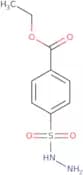
CAS:<p>Versatile small molecule scaffold</p>Formula:C12H14N2OPurity:Min. 95%Molecular weight:202.25 g/molEthyl 4-(hydrazinesulfonyl)benzoate
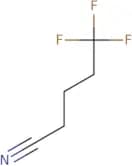
CAS:<p>Versatile small molecule scaffold</p>Formula:C9H12N2O4SPurity:Min. 95%Molecular weight:244.27 g/mol5,5,5-Trifluoropentanonitrile
CAS:<p>5,5,5-Trifluoropentanonitrile is a heterocyclic compound that can be used as an intermediate in the synthesis of other chemicals. It is a versatile chemical that has been successful in the discovery and development of new drugs for use as anti-inflammatory or anti-cancer agents. 5,5,5-Trifluoropentanonitrile is also useful for the production of ketones and functional groups.</p>Formula:C5H6F3NPurity:Min. 95%Molecular weight:137.1 g/mol2-(Hydroxyamino)-2-oxoethylphosphonic acid
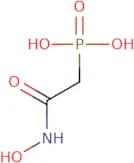
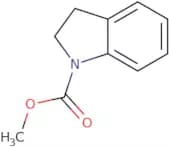
CAS:<p>2-(Hydroxyamino)-2-oxoethylphosphonic acid is an inhibitor of the enzyme senescent and is used to treat cancer. It inhibits the enzymatic reaction of the enzyme by binding to a hydrogen bond in the active site, thereby preventing its function. The compound has been shown to inhibit tumor growth in vitro and in vivo models. 2-(Hydroxyamino)-2-oxoethylphosphonic acid is also used for diagnostic purposes, as it can be detected in urine samples. This inhibitor binds to a water molecule that reacts with the phosphate group on the phosphonate backbone, which prevents it from binding to other phosphate groups on other molecules. This inhibition leads to a decrease in ATP production, which is essential for cell division.</p>Formula:C2H6NO5PPurity:Min. 95%Molecular weight:155.05 g/molMethyl 2,3-dihydro-1H-indole-1-carboxylate
CAS:<p>Methyl 2,3-dihydro-1H-indole-1-carboxylate (MDIC) is a nitro compound that is used as an ingredient in pharmaceutical preparations. It is a non-selective competitive inhibitor of the enzyme active oxygen species and has been shown to have reactive effects on amines and carboxylic acids. MDIC also inhibits the production of active oxygen species by reacting with heterocycles, such as tetrahydropyran, heterocycloalkyls, or amines. This chemical has shown activity against osteopathic, porcine, and other animal models of inflammation. MDIC also reacts with heme, which can inhibit the formation of free radicals that play a role in inflammation.</p>Formula:C10H11NO2Purity:Min. 95%Molecular weight:177.2 g/mol1-Bromo-4-oxo-3-oxabicyclo[3.1.0]hexane-6-carboxylic acid
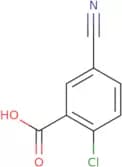
CAS:<p>Versatile small molecule scaffold</p>Formula:C6H5BrO4Purity:Min. 95%Molecular weight:221.01 g/mol2-Chloro-5-cyanobenzoic acid
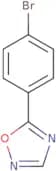
CAS:<p>2-Chloro-5-cyanobenzoic acid is a sclerotinia inhibitor that is used in the chemical synthesis of benzamide. It has been shown to inhibit the growth rate of sclerotinia by binding to the mycelium, spores, and other structures with methyl esters. The compound has also been shown to be magnetic and have a high hydrogen spectrum. 2-Chloro-5-cyanobenzoic acid can be synthesized from hydroxylamine and benzoyl chloride in the presence of cuprous cyanide. This chemical has also been shown to be effective at inhibiting sclerotinia growth on cotton plants.</p>Formula:C8H4ClNO2Purity:Min. 95%Molecular weight:181.58 g/mol5-(4-Bromophenyl)-1,2,4-oxadiazole
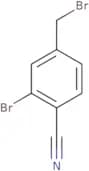
CAS:<p>Versatile small molecule scaffold</p>Formula:C8H5BrN2OPurity:Min. 95%Molecular weight:225.04 g/mol2-bromo-4-(bromomethyl)benzonitrile
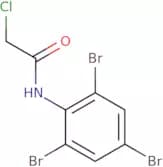
CAS:<p>Versatile small molecule scaffold</p>Formula:C8H5Br2NPurity:Min. 95%Molecular weight:274.94 g/mol2-Chloro-N-(2,4,6-tribromophenyl)acetamide
CAS:<p>Versatile small molecule scaffold</p>Formula:C8H5Br3ClNOPurity:Min. 95%Molecular weight:406.29 g/mol
![1-Ethyl-1H,4H,5H-pyrazolo[3,4-d]pyrimidin-4-one](/_next/image/?url=https%3A%2Fstatic.cymitquimica.com%2Fproducts%2F3D%2Fthumb-webp%2FPDA85292.webp&w=3840&q=75)

![5H,6H,6aH,7H,8H,9H,10H-Pyrido[1,2-a]quinoxalin-6-one](/_next/image/?url=https%3A%2Fstatic.cymitquimica.com%2Fproducts%2F3D%2Fthumb-webp%2FPDA86074.webp&w=3840&q=75)
![1-Bromo-4-oxo-3-oxabicyclo[3.1.0]hexane-6-carboxylic acid](/_next/image/?url=https%3A%2Fstatic.cymitquimica.com%2Fproducts%2F3D%2Fthumb-webp%2FPDA89130.webp&w=3840&q=75)