Building Blocks
This section contains fundamental products for the synthesis of organic and biological compounds. Building blocks are the essential starting materials used to construct complex molecules through various chemical reactions. They play a critical role in drug discovery, material science, and chemical research. At CymitQuimica, we offer a diverse range of high-quality building blocks to support your innovative research and industrial projects, ensuring you have the essential components for successful synthesis.
Subcategories of "Building Blocks"
- Boronic Acids & Boronic Acid Derivatives(5,756 products)
- Chiral Building Blocks(1,242 products)
- Hydrocarbon Building Blocks(6,095 products)
- Organic Building Blocks(61,055 products)
Found 199650 products of "Building Blocks"
Sort by
Purity (%)
0
100
|
0
|
50
|
90
|
95
|
100
5-[(Oxiran-2-yl)methoxy]-1,3-dioxaindane
CAS:<p>Versatile small molecule scaffold</p>Formula:C10H10O4Purity:Min. 95%Molecular weight:194.18 g/molN-(4-Bromophenyl)-3-oxobutanamide
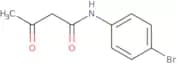
CAS:<p>N-(4-Bromophenyl)-3-oxobutanamide is a complex molecule that belongs to the class of organocatalysts. It has been shown to show antitubercular activity in vitro, with an MIC of 2.5 µg/mL against Mycobacterium tuberculosis and a MIC of 0.05 µg/mL against Mycobacterium avium complex. It also has been shown to be active as an organocatalyst for the carbonylative synthesis of cyclic carbonate esters from simple alkyl dicarbonates and lithium diisopropylamide, which can be used in organic synthesis. The chemical name for this product is N-(4-bromophenyl)-3-oxobutanamide (NBPBA).</p>Formula:C10H10BrNO2Purity:Min. 95%Molecular weight:256.1 g/molN-(4-Iodophenyl)-3-oxobutanamide
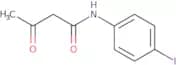
CAS:<p>Versatile small molecule scaffold</p>Formula:C10H10INO2Purity:Min. 95%Molecular weight:303.1 g/mol5-tert-Butyl-2-methyl-3-furoic acid
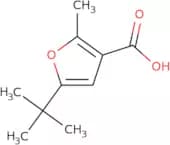
CAS:<p>Versatile small molecule scaffold</p>Formula:C10H14O3Purity:Min. 95%Molecular weight:182.22 g/mol2-(2,3-Dihydro-1H-inden-1-yl)acetic acid
CAS:<p>2-(2,3-Dihydro-1H-inden-1-yl)acetic acid (DHIAA) is an organic compound that belongs to the group of heterocyclic compounds. It is a plant cell growth regulator and has been shown to inhibit inflammatory diseases in animal models. DHIAA has a stepwise mechanism that starts with the formation of an alkoxy radical by hydrogen bond between the hydroxyl group and the double bond. This mechanism leads to the production of a reactive oxygen species, which causes oxidative damage in cells. DHIAA also inhibits fatty acid synthesis, which may be due to its interaction with peroxisome proliferator-activated receptor alpha (PPAR-α).</p>Formula:C11H12O2Purity:Min. 95%Molecular weight:176.21 g/mol2-(2,3-Dihydro-1H-inden-1-yl)ethan-1-ol
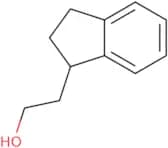
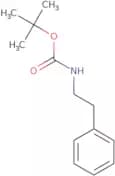
CAS:Versatile small molecule scaffoldFormula:C11H14OPurity:Min. 95%Molecular weight:162.23 g/moltert-Butyl N-(2-phenylethyl)carbamate
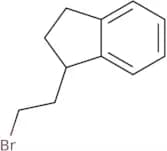
CAS:<p>tert-Butyl N-(2-phenylethyl)carbamate is a reagent for the synthesis of amines and amine salts. It is prepared by treating benzonitrile with primary amines in the presence of hydrogen, which mediates the reaction. This tert-butyl carbamate can be isolated in high yield when a solvent such as diethyl ether or tetrahydrofuran is used. The tert-butyl carbamate can be hydrogenated to form an acid chloride, which is then reacted with an alcohol to form an ester. This method has been used in synthesizing many functionalized compounds, including anti-inflammatory drugs. Tert-butyl N-(2-phenylethyl)carbamate also has a conformational effect on solvents, where it causes immiscible solvents to become miscible due to its acidic nature.</p>Formula:C13H19NO2Purity:Min. 95%Molecular weight:221.29 g/mol1-(2-Bromoethyl)-2,3-dihydro-1H-indene
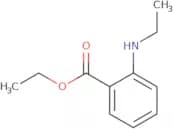
CAS:<p>Versatile small molecule scaffold</p>Formula:C11H13BrPurity:Min. 95%Molecular weight:225.12 g/molEthyl 2-(ethylamino)benzoate
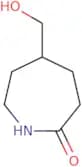
CAS:<p>Ethyl 2-(ethylamino)benzoate is an organic compound that is classified as a hydrocarbon. It has a chemical formula of C6H11NO2 and it is colorless and odorless. This substance can be ingested orally or applied topically. Ethyl 2-(ethylamino)benzoate has been shown to have antifungal, antibacterial, antidiabetic, anti-inflammatory, and antipyretic properties. The metal chelate of ethyl 2-(ethylamino)benzoate has been shown to cause cardiotoxicity in rats by inhibiting the synthesis of myocardial contractile proteins. This compound also inhibits the synthesis of collagen, which can lead to inflammatory diseases such as arthritis.</p>Formula:C11H15NO2Purity:Min. 95%Molecular weight:193.24 g/mol5-(Hydroxymethyl)azepan-2-one
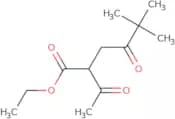
CAS:<p>Versatile small molecule scaffold</p>Formula:C7H13NO2Purity:Min. 95%Molecular weight:143.18 g/molEthyl 2-acetyl-5,5-dimethyl-4-oxohexanoate
CAS:<p>Versatile small molecule scaffold</p>Formula:C12H20O4Purity:Min. 95%Molecular weight:228.28 g/mol10-Undecenoyl chloride
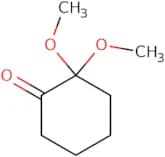
CAS:<p>10-Undecenoyl chloride is a fatty acid that is used as a chemical modifier. It has been shown to increase the efficiency of borohydride reduction, which can be used for the synthesis of pharmaceuticals, such as morphine and codeine. 10-Undecenoyl chloride is also stable in basic conditions, making it suitable for use in reactive environments. In addition, 10-undecenoyl chloride has been shown to be effective against HIV and other viruses by interfering with the virus's ability to bind to cells.</p>Formula:C11H19ClOPurity:Min. 95%Molecular weight:202.72 g/mol2,2-Dimethoxycyclohexan-1-one
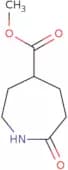
CAS:<p>2,2-Dimethoxycyclohexan-1-one is a ketoxime used as an intermediate in the synthesis of lysine. It can be used to chlorinate and oxime, or halogenate aromatic compounds.</p>Formula:C8H14O3Purity:Min. 95%Molecular weight:158.19 g/molMethyl 7-oxoazepane-4-carboxylate
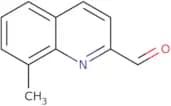
CAS:<p>Versatile small molecule scaffold</p>Formula:C8H13NO3Purity:Min. 95%Molecular weight:171.19 g/mol8-Methylquinoline-2-carbaldehyde
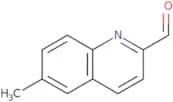
CAS:<p>Versatile small molecule scaffold</p>Formula:C11H9NOPurity:Min. 95%Molecular weight:171.19 g/mol6-Methyl-2-quinolinecarboxaldehyde
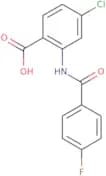
CAS:<p>Versatile small molecule scaffold</p>Formula:C11H9NOPurity:Min. 95%Molecular weight:171.19 g/mol4-Chloro-2-(4-fluorobenzamido)benzoic acid
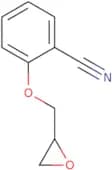
CAS:<p>Versatile small molecule scaffold</p>Formula:C14H9ClFNO3Purity:Min. 95%Molecular weight:293.68 g/mol2-(Oxiran-2-ylmethoxy)benzonitrile
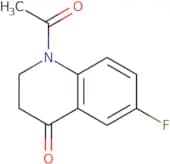
CAS:<p>Versatile small molecule scaffold</p>Formula:C10H9NO2Purity:Min. 95%Molecular weight:175.18 g/mol1-Acetyl-6-fluoro-1,2,3,4-tetrahydroquinolin-4-one
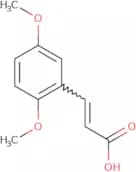
CAS:<p>Versatile small molecule scaffold</p>Formula:C11H10FNO2Purity:Min. 95%Molecular weight:207.2 g/mol(2E)-3-(2,5-Dimethoxyphenyl)acrylic acid
CAS:<p>2E-3-(2,5-Dimethoxyphenyl)acrylic acid is a molecule that has been synthesised. It has an unsymmetrical carboxylic acid group, and is not a natural product. 2E-3-(2,5-Dimethoxyphenyl)acrylic acid can be made by irradiation of vanillic acid and epigallocatechin. The molecule is the chromophore in the profile of irradiated (2E)-3-(2,5-dimethoxyphenyl)acrylic acid. The compound was synthesised using nitrogen atoms and uv irradiation to break down the vanillic acid and epigallocatechin molecules into smaller fragments of molecules. This process takes around 24 hours to complete.</p>Formula:C11H12O4Purity:Min. 95%Molecular weight:208.21 g/mol
![5-[(Oxiran-2-yl)methoxy]-1,3-dioxaindane](/_next/image/?url=https%3A%2Fstatic.cymitquimica.com%2Fproducts%2F3D%2Fthumb-webp%2FNBA41765.webp&w=3840&q=75)