Building Blocks
This section contains fundamental products for the synthesis of organic and biological compounds. Building blocks are the essential starting materials used to construct complex molecules through various chemical reactions. They play a critical role in drug discovery, material science, and chemical research. At CymitQuimica, we offer a diverse range of high-quality building blocks to support your innovative research and industrial projects, ensuring you have the essential components for successful synthesis.
Subcategories of "Building Blocks"
- Boronic Acids & Boronic Acid Derivatives(5,756 products)
- Chiral Building Blocks(1,242 products)
- Hydrocarbon Building Blocks(6,095 products)
- Organic Building Blocks(61,055 products)
Found 199650 products of "Building Blocks"
Sort by
Purity (%)
0
100
|
0
|
50
|
90
|
95
|
100
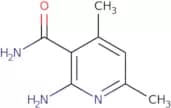
2-Amino-4,6-dimethylnicotinamide
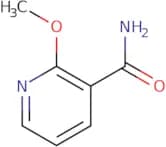
CAS:<p>Versatile small molecule scaffold</p>Formula:C8H11N3OPurity:Min. 95%Molecular weight:165.19 g/mol2-Methoxypyridine-3-carboxamide
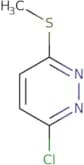
CAS:<p>2-Methoxypyridine-3-carboxamide (2MP) is a novel antitumor agent that inhibits cell growth and induces rapid apoptosis in different types of cancer cells. 2MP inhibits tumor growth by inhibiting the synthesis of nicotinamide adenine dinucleotide (NAD), which is important for energy production in cells. 2MP also inhibits the activity of the enzyme, DNA topoisomerase II, which is involved in DNA replication and repair. This drug has been shown to be effective against lung cancer, colon cancer, breast cancer and MCF-7 human breast carcinoma cells.</p>Formula:C7H8N2O2Purity:Min. 95%Molecular weight:152.15 g/mol3-Chloro-6-(methylsulfanyl)pyridazine
CAS:<p>3-Chloro-6-(methylsulfanyl)pyridazine is a nucleophilic compound that is used as a reagent in organic synthesis. It can be used to form thiourea derivatives, which are nucleophilic and react with potassium to form potassium thiocyanate. 3-Chloro-6-(methylsulfanyl)pyridazine reacts with methanethiolate in the presence of nitrogen nucleophile to form 3-(methylthio)pyridine. This reaction can also be carried out with ethanethiolate, phenylmethanethiolate, or benzylmethanethiolate.>>END>></p>Formula:C5H5ClN2SPurity:Min. 95%Molecular weight:160.63 g/molN-(1H-Indol-5-yl)acetamide
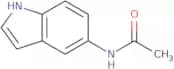
CAS:<p>Versatile small molecule scaffold</p>Formula:C10H10N2OPurity:Min. 95%Molecular weight:174.2 g/molN-Methylnaphthalene-2-sulfonamide
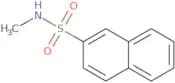
CAS:<p>N-Methylnaphthalene-2-sulfonamide is an inhibitor of transcription-polymerase chain reaction (PCR) that binds to the enzyme DNA polymerase. It also inhibits transport and flavonoid biosynthesis. N-Methylnaphthalene-2-sulfonamide has been shown to upregulate the expression of genes that are involved in regulatory, saturating, and tissue modifications. This drug has no effect on hormones or linear model of biosynthesis, and has a phenotype of apical.</p>Formula:C11H11NO2SPurity:Min. 95%Molecular weight:221.28 g/mol2-Amino-1-(2-methylphenyl)ethan-1-one hydrochloride
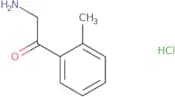
CAS:Controlled Product<p>Versatile small molecule scaffold</p>Formula:C9H12ClNOPurity:Min. 95%Molecular weight:185.65 g/mol5-Methyl-5-phenylpiperidin-2-one
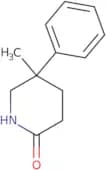
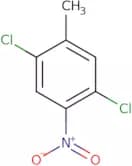
CAS:<p>Versatile small molecule scaffold</p>Formula:C12H15NOPurity:Min. 95%Molecular weight:189.25 g/mol1,4-Dichloro-2-methyl-5-nitrobenzene
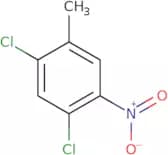
CAS:<p>1,4-Dichloro-2-methyl-5-nitrobenzene is an antipsychotic drug that belongs to the class of phenylpiperazine derivatives. It is a potent serotonin receptor antagonist with actions at dopamine D2 and D3 receptors. This drug has shown to have high affinity for the 5HT2A receptor and moderate affinity for the 5HT1A receptor. 1,4-Dichloro-2-methyl-5-nitrobenzene also has moderate affinity for the alpha1 adrenergic receptor and low affinity for the histamine H1 receptor. Ziprasidone prevents activation of these receptors by binding to them and blocking their ability to activate downstream effects on other cells. 1,4-Dichloro-2-methyl-5-nitrobenzene has been shown to be effective in treating schizophrenia, bipolar disorder, major depressive disorder and other psychotic disorders.</p>Formula:C7H5Cl2NO2Purity:Min. 95%Molecular weight:206.02 g/mol1,5-Dichloro-2-methyl-4-nitrobenzene
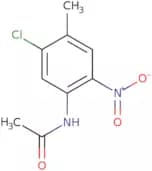
CAS:<p>1,5-Dichloro-2-methyl-4-nitrobenzene is a chemical compound with the molecular formula C6H4Cl2NO. It has a molecular weight of 140.97 g/mol and a density of 1.25 g/cm3 at 20 °C. This compound is an organic solvent that is used as an intermediate in the production of other chemicals such as antifreeze, polyurethane, and nylon. The evaporation rate for this compound is low, making it ideal for use as a coating agent on plastics. 1,5-Dichloro-2-methyl-4-nitrobenzene can also be used to produce polyurethane foam insulation or in the manufacture of rubber products such as tires or hoses.<br>1,5-Dichloro-2-methyl-4-nitrobenzene can be synthesized by heating calcium carbonate with phosphorus oxychlor</p>Formula:C7H5Cl2NO2Purity:Min. 95%Molecular weight:206.03 g/mol4-Acetamido-2-chloro-5-nitrotoluene
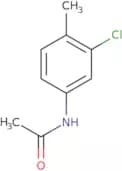
CAS:<p>Versatile small molecule scaffold</p>Formula:C9H9ClN2O3Purity:Min. 95%Molecular weight:228.63 g/molN-(3-Chloro-4-methylphenyl)acetamide
CAS:<p>N-(3-Chloro-4-methylphenyl)acetamide is a pesticide that has been used to control populations of insects, such as cockroaches and ants. It is a member of the amide class of insecticides. N-(3-Chloro-4-methylphenyl)acetamide was first introduced in 1948 and was used until the early 1970s when it was found to be carcinogenic. The chemical is released into the environment through industrial processes, such as coal mining, oil refining, and natural gas production. It can also contaminate drinking water sources through leaching from landfills or through spraying. The chemical has been found in untreated foods and beverages, such as coffee beans and beer. Ingestion can lead to damage to the liver and kidneys, anemia, bone marrow suppression, and damage to red blood cells. Damage can also occur if it comes into contact with unprotected skin or is inhaled.</p>Formula:C9H10ClNOPurity:Min. 95%Molecular weight:183.64 g/molEthyl 2-{[(2-ethoxy-2-oxoethyl)carbamoyl]amino}acetate
CAS:<p>Versatile small molecule scaffold</p>Formula:C9H16N2O5Purity:Min. 95%Molecular weight:232.23 g/mol[(4-Hydroxy-6-methylpyrimidin-2-yl)amino]formonitrile
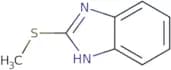
CAS:<p>[(4-Hydroxy-6-methylpyrimidin-2-yl)amino]formonitrile is a pyrimidine antagonist. It inhibits the activity of guanidines, which are compounds that play a role in the metabolism of nucleotides. This drug also has metabolic stability and in vitro metabolic activity. It is an important tool for studying the structure activity relationship of guanidines.</p>Formula:C6H6N4OPurity:Min. 95%Molecular weight:150.14 g/mol2-(Methylthio)benzimidazole
CAS:<p>2-(Methylthio)benzimidazole (MTBZ) is a diazonium salt that is used as a reagent for the introduction of the methylthio group into organic compounds. This reagent can be prepared by reacting sodium carbonate with trifluoroacetic acid in the presence of metal carbonyls to yield a reactive intermediate, which then reacts with diazonium salts. MTBZ is also known to inhibit cytochrome P450 enzymes and to inhibit bacterial growth in vitro. One application for MTBZ is in the synthesis of sulfoxides, benzimidazole compounds, and other heterocyclic compounds.</p>Formula:C8H8N2SPurity:Min. 95%Molecular weight:164.23 g/mol{[4-(Dimethylamino)phenyl]sulfanyl}formonitrile
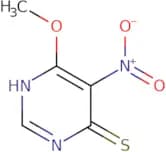
CAS:<p>Versatile small molecule scaffold</p>Formula:C9H10N2SPurity:Min. 95%Molecular weight:178.26 g/mol6-Methoxy-5-nitropyrimidine-4-thiol
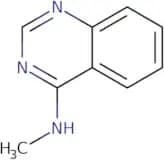
CAS:<p>Versatile small molecule scaffold</p>Formula:C5H5N3O3SPurity:Min. 95%Molecular weight:187.18 g/molN-Methylquinazolin-4-amine
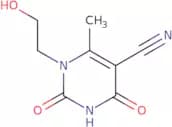
CAS:<p>Versatile small molecule scaffold</p>Formula:C9H9N3Purity:Min. 95%Molecular weight:159.19 g/mol1-(2-Hydroxyethyl)-6-methyl-2,4-dioxo-1,2,3,4-tetrahydropyrimidine-5-carbonitrile
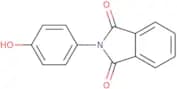
CAS:Versatile small molecule scaffoldFormula:C8H9N3O3Purity:Min. 95%Molecular weight:195.2 g/molN-(4-Hydroxyphenyl)phthalimide
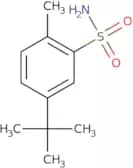
CAS:<p>N-(4-Hydroxyphenyl)phthalimide is a white powder that has a melting point of 140.5°C, and is soluble in chloroform, acetone, and ethanol. It has the chemical formula C6H4N(OH)C6H3(OCH2CH2)2 and is used as a reagent for the synthesis of phthalic anhydride. It reacts with ammonia to form phthalamide. This compound belongs to the family of compounds called phthalimides. The molecule consists of two benzene rings connected by a single bond, which contains two hydroxyl groups on opposite sides of the ring system. Hydrogen bonds are formed between these hydroxyl groups and other atoms in the molecule. These hydrogen bonds contribute to the dihedral angle of this molecule (104°).</p>Formula:C14H9NO3Purity:Min. 95%Molecular weight:239.23 g/mol5-tert-Butyl-2-methylbenzene-1-sulfonamide
CAS:<p>Versatile small molecule scaffold</p>Formula:C11H17NO2SPurity:Min. 95%Molecular weight:227.33 g/mol

![Ethyl 2-{[(2-ethoxy-2-oxoethyl)carbamoyl]amino}acetate](/_next/image/?url=https%3A%2Fstatic.cymitquimica.com%2Fproducts%2F3D%2Fthumb-webp%2FHAA15063.webp&w=3840&q=75)
![[(4-Hydroxy-6-methylpyrimidin-2-yl)amino]formonitrile](/_next/image/?url=https%3A%2Fstatic.cymitquimica.com%2Fproducts%2F3D%2Fthumb-webp%2FHAA15219.webp&w=3840&q=75)
![{[4-(Dimethylamino)phenyl]sulfanyl}formonitrile](/_next/image/?url=https%3A%2Fstatic.cymitquimica.com%2Fproducts%2F3D%2Fthumb-webp%2FHAA15280.webp&w=3840&q=75)