Building Blocks
This section contains fundamental products for the synthesis of organic and biological compounds. Building blocks are the essential starting materials used to construct complex molecules through various chemical reactions. They play a critical role in drug discovery, material science, and chemical research. At CymitQuimica, we offer a diverse range of high-quality building blocks to support your innovative research and industrial projects, ensuring you have the essential components for successful synthesis.
Subcategories of "Building Blocks"
- Boronic Acids & Boronic Acid Derivatives(5,756 products)
- Chiral Building Blocks(1,242 products)
- Hydrocarbon Building Blocks(6,095 products)
- Organic Building Blocks(61,051 products)
Found 199813 products of "Building Blocks"
Sort by
Purity (%)
0
100
|
0
|
50
|
90
|
95
|
100
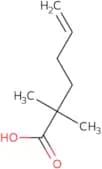
2,2-dimethylhex-5-enoic acid
CAS:<p>2,2-dimethylhex-5-enoic acid is an organic compound that belongs to the class of aldehydes. It can be synthesized by decarboxylation of 2,2-dimethylhexane. The selectivity is high and the functional groups are already present in the molecule. This reaction is a decarboxylative annulation and it requires a catalyst. This synthesis has been shown in chemistry textbooks as an example of a functional group transformation.</p>Formula:C8H14O2Purity:Min. 95%Molecular weight:142.2 g/mol4-Hydrazino-1,3,5-triazin-2-amine
CAS:<p>Versatile small molecule scaffold</p>Formula:C3H6N6Purity:Min. 95%Molecular weight:126.12 g/molSpiro[1,3-dioxolane-2,8'-pentacyclo[5.4.0.0²,⁶.0³,¹⁰.0⁵,⁹]undecan]-11'-one
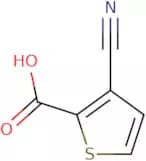
CAS:<p>Spiro[1,3-dioxolane-2,8'-pentacyclo[5.4.0.0²,⁶.0³,¹⁰.0⁵,⁹]undecan]-11'-one is an organic compound that has a ketal group in its structure. It is also a hydrogen bond donor and a reductive coupling agent with properties of intramolecular hydrogen bonding and dimerization. The intramolecular hydrogen can be found in the ring of the spiro[1,3-dioxolane-2,8'-pentacyclo[5.4.0.0²,⁶.0³,¹⁰.0⁵,⁹]undecan]-11'-one that is bonded to the ketal group as well as on the benzene ring on the other side of the molecule when it is bound to another spiro[1</p>Formula:C13H14O3Purity:Min. 95%Molecular weight:218.25 g/mol3-Cyanothiophene-2-carboxylic acid
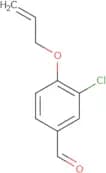
CAS:<p>Versatile small molecule scaffold</p>Formula:C6H3NO2SPurity:Min. 95%Molecular weight:153.16 g/mol3-chloro-4-(prop-2-en-1-yloxy)benzaldehyde
CAS:<p>Versatile small molecule scaffold</p>Formula:C10H9ClO2Purity:Min. 95%Molecular weight:196.63 g/mol2-{[(tert-butoxy)carbonyl]amino}-2-(1H-indol-3-yl)acetic acid
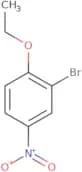
CAS:<p>Versatile small molecule scaffold</p>Formula:C15H18N2O4Purity:Min. 95%Molecular weight:290.3 g/mol2-Bromo-1-ethoxy-4-nitrobenzene
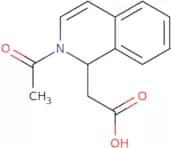
CAS:<p>Versatile small molecule scaffold</p>Formula:C8H8BrNO3Purity:Min. 95%Molecular weight:246.06 g/mol2-(2-Acetyl-1,2-dihydroisoquinolin-1-yl)acetic acid
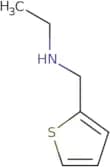
CAS:<p>Versatile small molecule scaffold</p>Formula:C13H13NO3Purity:Min. 95%Molecular weight:231.25 g/molN-Ethyl-(2-thienylmethyl)amine
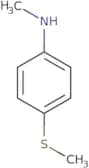
CAS:<p>Versatile small molecule scaffold</p>Formula:C7H11NSPurity:Min. 95%Molecular weight:141.24 g/molN-Methyl-4-(methylsulfanyl)aniline
CAS:<p>Versatile small molecule scaffold</p>Formula:C8H11NSPurity:Min. 95%Molecular weight:153.25 g/molDepramine
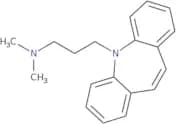
CAS:<p>Depramine is a monoamine reuptake inhibitor that inhibits the reuptake of norepinephrine, dopamine and serotonin by blocking their respective transporters. Depramine has been shown to have therapeutic potential in the treatment of cancer. It has also been shown to be effective in the prevention of symptoms of depression. Depramine is not active against iontophoresis, which may be due to its insoluble nature and lack of film-forming properties.</p>Formula:C19H22N2·HClPurity:Min. 95%Molecular weight:314.85 g/mol2-(4-Bromothien-2-yl)-1,3-dioxolane
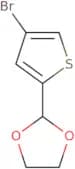
CAS:<p>Versatile small molecule scaffold</p>Formula:C7H7BrO2SPurity:Min. 95%Molecular weight:235.1 g/mol(E)-3-(5-Phenylthiophen-2-yl)acrylic acid
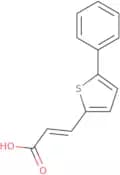
CAS:<p>Versatile small molecule scaffold</p>Formula:C13H10O2SPurity:Min. 95%Molecular weight:230.28 g/molN,N'-Bis(2,4-dimethylphenyl)propanediamide
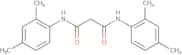
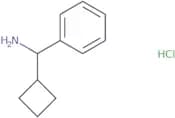
CAS:<p>Versatile small molecule scaffold</p>Formula:C19H22N2O2Purity:Min. 95%Molecular weight:310.4 g/molalpha-Cyclobutylbenzylamine hydrochloride
CAS:<p>Versatile small molecule scaffold</p>Formula:C11H15N·HClPurity:Min. 95%Molecular weight:197.71 g/molCyclohexyl(phenyl)methanamine hydrochloride
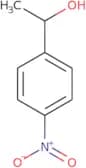
CAS:Versatile small molecule scaffoldFormula:C13H20ClNPurity:Min. 95%Molecular weight:225.76 g/mol(1R)-1-(4-Nitrophenyl)ethan-1-ol
CAS:<p>Versatile small molecule scaffold</p>Formula:C8H9NO3Purity:Min. 95%Molecular weight:167.16 g/mol4-Formyl-N,N-dimethyl-benzamide
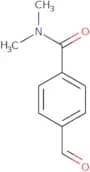
CAS:<p>4-Formyl-N,N-dimethyl-benzamide is a potent tyrosine kinase inhibitor. It is a pyridine derivative that binds to the ATP binding site of the enzyme and inhibits its activity. This results in decreased cellular proliferation and lower levels of protein synthesis. 4-Formyl-N,N-dimethyl-benzamide has shown to be effective at inhibiting the growth of tumour cells when combined with chemotherapy, but has not been evaluated for efficacy in treating other diseases. The pharmacokinetic profile of this drug is not well known, as it has not been studied in humans.br></p>Formula:C10H11NO2Purity:Min. 95%Molecular weight:177.2 g/molN,N-Diethyl-4-formylbenzamide
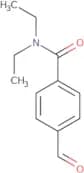
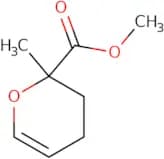
CAS:<p>Versatile small molecule scaffold</p>Formula:C12H15NO2Purity:Min. 95%Molecular weight:205.25 g/molMethyl 2-methyl-3,4-dihydro-2H-pyran-2-carboxylate
CAS:<p>Versatile small molecule scaffold</p>Formula:C8H12O3Purity:Min. 95%Molecular weight:156.18 g/mol


![Spiro[1,3-dioxolane-2,8'-pentacyclo[5.4.0.0²,⁶.0³,¹⁰.0⁵,⁹]undecan]-11'-one](/_next/image/?url=https%3A%2Fstatic.cymitquimica.com%2Fproducts%2F3D%2Fthumb-webp%2FICA22893.webp&w=3840&q=75)
![2-{[(tert-butoxy)carbonyl]amino}-2-(1H-indol-3-yl)acetic acid](/_next/image/?url=https%3A%2Fstatic.cymitquimica.com%2Fproducts%2F3D%2Fthumb-webp%2FICA23794.webp&w=3840&q=75)