


Building Blocks
This section contains fundamental products for the synthesis of organic and biological compounds. Building blocks are the essential starting materials used to construct complex molecules through various chemical reactions. They play a critical role in drug discovery, material science, and chemical research. At CymitQuimica, we offer a diverse range of high-quality building blocks to support your innovative research and industrial projects, ensuring you have the essential components for successful synthesis.
Subcategories of "Building Blocks"
- Boronic Acids & Boronic Acid Derivatives(5,756 products)
- Chiral Building Blocks(1,242 products)
- Hydrocarbon Building Blocks(6,095 products)
- Organic Building Blocks(61,055 products)
Found 199650 products of "Building Blocks"
Sort by
Purity (%)
0
100
|
0
|
50
|
90
|
95
|
100
5-[(3-Fluorophenyl)methyl]-1,3,4-thiadiazol-2-amine
CAS:<p>Versatile small molecule scaffold</p>Formula:C9H8FN3SPurity:Min. 95%Molecular weight:209.25 g/mol4-Phenylbutanehydrazide
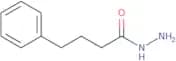
CAS:<p>4-Phenylbutanehydrazide is a nitro, carbonyl group and hydrogen bond donor. It has an interaction with the benzyl group of 4-phenylbutanoylhydrazide through hydrogen bonds. The conformation of 4-phenylbutanehydrazide is agonistic and its secondary structure is mainly determined by the carbonyl group. The carbonyl group interacts with the hydrazide nucleus through a hydrogen bond, while its acylhomoserine residue interacts with the carbonyl group through a thiocarbamate interaction. This compound may be classified as an agonist or antagonist depending on the receptor it binds to.</p>Formula:C10H14N2OPurity:Min. 95%Molecular weight:178.23 g/molethyl (cyclopentylcarbamoyl)formate
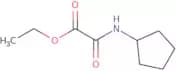
CAS:<p>Versatile small molecule scaffold</p>Formula:C9H15NO3Purity:Min. 95%Molecular weight:185.22 g/molN-Ethyl-3-methylcyclohexan-1-amines
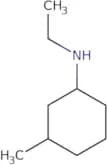
CAS:<p>Versatile small molecule scaffold</p>Formula:C9H19NPurity:Min. 95%Molecular weight:141.3 g/molN-Ethyl-4-methylcyclohexan-1-amines
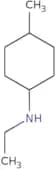
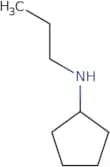
CAS:<p>Versatile small molecule scaffold</p>Formula:C9H19NPurity:Min. 95%Molecular weight:141.3 g/molN-Cyclopentyl-N-propylamine
CAS:<p>N-Cyclopentyl-N-propylamine is a functional compound that belongs to the class of organic compounds. It is used as an intermediate in the synthesis of other drugs and pharmaceuticals. This compound has been shown to have a high reactivity, which makes it useful in polymerization and polymerization initiator applications. N-Cyclopentyl-N-propylamine has been shown to be reactive with polarizers, alkylthio groups, and trifluoromethyl groups.</p>Formula:C8H17NPurity:Min. 95%Molecular weight:127.23 g/molN-(4-Methylbenzyl)propan-1-amine
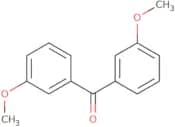
CAS:<p>Versatile small molecule scaffold</p>Formula:C11H17NPurity:Min. 95%Molecular weight:163.26 g/molBis(3-methoxyphenyl)methanone
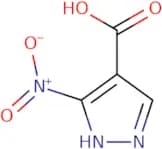
CAS:<p>Bis(3-methoxyphenyl)methanone is a palladium catalyst that selectively activates olefins. It has been shown to be useful in the synthesis of dihydrobenzofurans and oxonium derivatives, which are used as pharmaceuticals. This compound also catalyzes the transformation of various functional groups, such as diazo, alkenes, and intramolecular aldol condensation. Bis(3-methoxyphenyl)methanone is used as a catalyst for the production of dibenzofuran compounds with high selectivity. The diastereoselectivity of this compound is due to its ability to activate substrates with electron-donating groups at positions ortho to the phenyl group.</p>Formula:C15H14O3Purity:Min. 95%Molecular weight:242.27 g/mol3-Nitro-1H-pyrazole-4-carboxylic acid
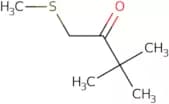
CAS:<p>Versatile small molecule scaffold</p>Formula:C4H3N3O4Purity:Min. 95%Molecular weight:157.09 g/mol3,3-Dimethyl-1-(methylsulfanyl)butan-2-one
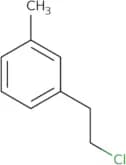
CAS:<p>3,3-Dimethyl-1-(methylsulfanyl)butan-2-one is an enolate that is used as a pesticide. It is typically applied to the soil or sprayed on plants. It can be modified to increase its insecticidal activity by adding other chemicals such as carbaryl, acetonitrile, or hydroxymethylphenyl. 3,3-Dimethyl-1-(methylsulfanyl)butan-2-one is metabolized by hydrolysis and methylcarbamates are formed. The sulfide group in the molecule reacts with oxygen to form sulfoxides and carbofuran, which are toxic to mammals and birds.</p>Formula:C7H14OSPurity:Min. 95%Molecular weight:146.25 g/mol1-(2-Chloroethyl)-3-methylbenzene
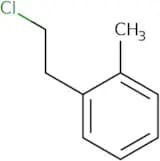
CAS:<p>Versatile small molecule scaffold</p>Formula:C9H11ClPurity:Min. 95%Molecular weight:154.64 g/mol1-(2-Chloroethyl)-2-methylbenzene
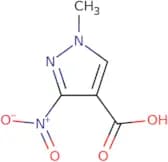
CAS:<p>Versatile small molecule scaffold</p>Formula:C9H11ClPurity:Min. 95%Molecular weight:154.63 g/mol1-Methyl-3-nitro-1H-pyrazole-4-carboxylic acid
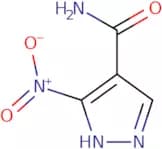
CAS:<p>Versatile small molecule scaffold</p>Formula:C5H5N3O4Purity:Min. 95%Molecular weight:171.11 g/mol3-Nitro-1H-pyrazole-4-carboxamide
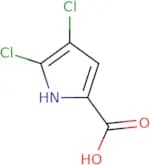
CAS:<p>Versatile small molecule scaffold</p>Formula:C4H4N4O3Purity:Min. 95%Molecular weight:156.1 g/mol4,5-dichloro-1H-pyrrole-2-carboxylic acid
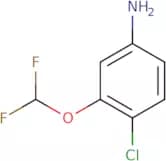
CAS:<p>Versatile small molecule scaffold</p>Formula:C5H3Cl2NO2Purity:Min. 95%Molecular weight:179.98 g/mol4-Chloro-3-(difluoromethoxy)aniline
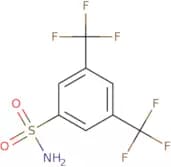
CAS:<p>Versatile small molecule scaffold</p>Formula:C7H6ClF2NOPurity:Min. 95%Molecular weight:193.58 g/mol3,5-Bis(trifluoromethyl)benzenesulfonamide
CAS:<p>Versatile small molecule scaffold</p>Formula:C8H5F6NO2SPurity:Min. 95%Molecular weight:293.19 g/mol1-Propyl-1,2,3,4-tetrahydroisoquinoline
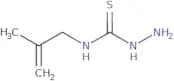
CAS:<p>Versatile small molecule scaffold</p>Formula:C12H17NPurity:Min. 95%Molecular weight:175.27 g/mol3-Amino-1-(2-methylprop-2-en-1-yl)thiourea
CAS:<p>Versatile small molecule scaffold</p>Formula:C5H11N3SPurity:Min. 95%Molecular weight:145.23 g/mol2-[(3-Methoxypropyl)amino]ethan-1-ol
CAS:Versatile small molecule scaffoldFormula:C6H15NO2Purity:Min. 95%Molecular weight:133.19 g/mol
![5-[(3-Fluorophenyl)methyl]-1,3,4-thiadiazol-2-amine](/_next/image/?url=https%3A%2Fstatic.cymitquimica.com%2Fproducts%2F3D%2Fthumb-webp%2FPBA18154.webp&w=3840&q=75)



![2-[(3-Methoxypropyl)amino]ethan-1-ol](/_next/image/?url=https%3A%2Fstatic.cymitquimica.com%2Fproducts%2F3D%2Fthumb-webp%2FPBA21684.webp&w=3840&q=75)