Building Blocks
This section contains fundamental products for the synthesis of organic and biological compounds. Building blocks are the essential starting materials used to construct complex molecules through various chemical reactions. They play a critical role in drug discovery, material science, and chemical research. At CymitQuimica, we offer a diverse range of high-quality building blocks to support your innovative research and industrial projects, ensuring you have the essential components for successful synthesis.
Subcategories of "Building Blocks"
- Boronic Acids & Boronic Acid Derivatives(5,756 products)
- Chiral Building Blocks(1,242 products)
- Hydrocarbon Building Blocks(6,095 products)
- Organic Building Blocks(61,055 products)
Found 199650 products of "Building Blocks"
Sort by
Purity (%)
0
100
|
0
|
50
|
90
|
95
|
100
Amyl Acetate
CAS:<p>Amyl acetate is a reactive, volatile organic compound that is used in the manufacture of plasticizers, resins, and synthetic rubber. It is also used as a solvent for dyes and pigments, as well as a flavoring agent in food processing. Amyl acetate has been shown to have antimicrobial properties against human pathogens such as methicillin-resistant Staphylococcus aureus (MRSA), Escherichia coli, and Salmonella enterica. The antimicrobial activity of this molecule may be due to its ability to react with cellular components such as proteins and lipids. Amyl acetate also inhibits the growth of microorganisms by inhibiting their synthesis of essential biomolecules like amino acids and nucleic acids.</p>Formula:C7H14O2Purity:Min. 95%Molecular weight:130.19 g/molIsopentyl chloroformate
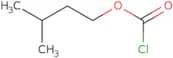
CAS:<p>Isopentyl chloroformate is an organic solvent which belongs to the group of chloroformates. It has a structure similar to that of spirodiclofen, a compound with antagonistic properties that can be used for the treatment of blood pressure and disorders in the central nervous system. The chloroformate functional group has been shown to have anti-inflammatory effects on tumor tissue. Isopentyl chloroformate can be used as a pharmaceutical preparation for the treatment of neurological diseases, such as Parkinson's disease, Alzheimer's disease, and multiple sclerosis.</p>Formula:C6H11ClO2Purity:Min. 95%Molecular weight:150.6 g/mol(3-Methylbutyl)urea
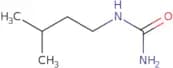
CAS:<p>(3-Methylbutyl)urea is a quinoline derivative that inhibits the growth of cancer cells by binding to and inhibiting the activity of the b-raf protein tyrosine kinase. This drug has been shown to inhibit the growth of muscle cells, which may be related to its ability to block programmed cell death. (3-Methylbutyl)urea also has been shown to exhibit strong anti-inflammatory properties in animal models. It is thought that this property is due to its ability to inhibit the production of TNF-α and other inflammatory mediators. (3-Methylbutyl)urea binds strongly with bile acids, forming an insoluble complex that prevents their reabsorption from the intestine. This effect can be exploited for treatment of certain autoimmune diseases by reducing bile acid levels in the intestine.</p>Formula:C6H14N2OPurity:Min. 95%Molecular weight:130.19 g/mol2-Methoxyethyl Chloroformate
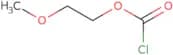
CAS:<p>2-Methoxyethyl chloroformate is an organic chemical compound that has a hydroxyl group. It is also known as 2-Methoxyethyl acetate or MEC. This substance can be used to produce other chemicals such as pharmaceuticals, pesticides, and herbicides. 2-Methoxyethyl chloroformate is used in the synthesis of peptides and proteins, which are important for cellular functions. The compound has been shown to have antimicrobial activity against gram positive bacteria such as Staphylococcus aureus and Streptococcus pyogenes, but is not active against gram negative bacteria such as Escherichia coli.<br>2-Methoxyethyl chloroformate has also been shown to be effective in the treatment of inflammatory pain caused by protease activity (e.g., inflammation) and trigeminal neuralgia (e.g., nerve pain).</p>Formula:C4H7ClO3Purity:Min. 85 Area-%Molecular weight:138.55 g/mol3-Chloropropyl Chloroformate
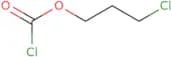
CAS:<p>3-Chloropropyl chloroformate is a chemical that is used in the laboratory to cleave C-H bonds. It has been shown to have an affinity for bromodomains, which are protein structures found in the cell nucleus. 3-Chloropropyl chloroformate has also been shown to have a high rate of reaction with carbonic anhydrase, leading to its use as a control experiment in kinetics studies. This compound reacts with chlorine gas to form chloroformates and ionizing solvents such as acetone and dichloromethane. 3-Chloropropyl chloroformate is also used in some pharmaceuticals and pesticides, including glaucoma drugs like acetazolamide and carbonic anhydrase inhibitors like ethoxzolamide.</p>Formula:C4H6Cl2O2Purity:Min. 95%Molecular weight:156.99 g/mol5-Methyl-2-hexanol
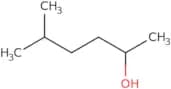
CAS:<p>5-Methyl-2-hexanol is a gas sensor that is used to detect hydrogen gas. It has been shown to be a potent inhibitor of the enzyme catalase, which is involved in the decomposition of hydrogen peroxide into water and oxygen. 5-Methyl-2-hexanol has also been found to be an effective solvent for the extraction of carotenoids from plant tissues and can be used as a chromatographic stationary phase with other solvents. 5-Methyl-2-hexanol reacts with primary alcohols, aldehydes, and ethyl esters to produce profiles that are characteristic of each substance.</p>Formula:C7H16OPurity:Min. 95%Molecular weight:116.2 g/mol3-Iodopropanol
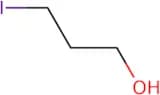
CAS:<p>3-Iodopropanol is an analog of flavonoids derivatives that can be degraded to 3-iodopropionic acid. It is used as a molecular building block in the synthesis of drugs, such as anti-influenza drugs and cancer therapeutics. The synthesis process produces a mixture of stereoisomers that can be separated by high-performance liquid chromatography. This compound has been shown to have high fluorescence properties and redox potentials. 3-Iodopropanol also has anti-inflammatory properties, which may be due to its ability to inhibit the production of prostaglandins in the prostate gland.</p>Formula:C3H7IOPurity:Min. 95%Molecular weight:185.99 g/molN-Propyl carbamate
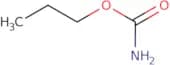
CAS:<p>N-Propyl carbamate is a fluorescent detector that is used to detect β-aminopropionic acid. It reacts with the 3-mercaptopropionic acid present in the skin tumor cells, causing them to fluoresce. This reaction can be detected by a fluorescence detector. The method of detection of anthelmintic drugs using N-propyl carbamate has been developed using chromatographic and spectrophotometric methods for the separation and identification of carboethoxy groups. The mutant strain was found to be resistant to this drug, so it is not considered to be an effective anthelmintic drug.</p>Formula:C4H9NO2Purity:Min. 95%Molecular weight:103.12 g/molValeramide
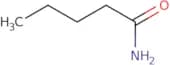
CAS:<p>Valeramide is a drug that has clinical relevance for the treatment of HIV infection. Valeramide is an intramolecular hydrogen transfer catalyst with metastable properties. It is found in hl-60 cells and red blood cells, where it may play a role in the metabolism of hydrochloric acid and acetate extract. The reaction solution can be described as follows: Valeramide + HCl → Valeric acid + Hydrochloric acid The kinetic constant for this reaction is 2.5 × 10 M/s, and the equilibrium constant can be calculated using simple kinetics equations.</p>Formula:C5H11NOPurity:Min. 95%Molecular weight:101.15 g/mol1-Bromo-4-methylpentane
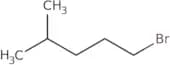
CAS:<p>1-Bromo-4-methylpentane is a long-chain, dehydrohalogenated pheromone that has been shown to inhibit the growth of Leishmania by binding to the topoisomerase enzyme. This compound is synthesized from heptadecane and chloroacetonitrile in the presence of cuprate and tetrahydrofuran. 1-Bromo-4-methylpentane has also been shown to be an alkylating agent. It reacts with chloride, converting it into chloroform. The bromine atom on the carbon adjacent to the double bond then attacks a fatty acid, adding it to the molecule. The resulting alkoxycarbonyl group then reacts with a second fatty acid molecule, yielding a new 1-bromoalkoxycarbonyl group.</p>Formula:C6H13BrPurity:Min. 95%Molecular weight:165.07 g/molIodocyclohexane
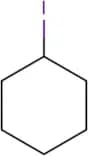
CAS:<p>Iodocyclohexane is an antimicrobial agent that has the chemical formula CHClI. It is a colorless, volatile liquid which has been shown to have some antibacterial properties. Iodocyclohexane is not toxic when applied externally to the skin and has been used in medical devices such as eye drops, ointments, and ear drops. Iodocyclohexane is also used in agriculture as a fungicide. The chemical structure of iodocyclohexane includes a hydroxyl group (-OH) and a nitrogen atom (N). These two groups make it more resistant to degradation by bacteria or fungi. The presence of these two groups also provides iodocyclohexane with biological properties such as the ability to inhibit bacterial growth and prevent the formation of resistant mutant strains.</p>Formula:C6H11IPurity:Min. 95%Molecular weight:210.06 g/molDi-sec-butylamine
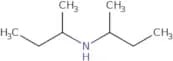
CAS:<p>Di-sec-butylamine is an organic compound that is used in the production of polyurethane. It is a colorless liquid with a fishy odor. Di-sec-butylamine can be used as an alternative to ethylene diamine for the production of polyurethanes, which are used in the manufacture of furniture, carpets and other materials. Di-sec-butylamine has been shown to have good chemical stability and is not susceptible to hydrolysis. It also has a low molecular weight and high solubility in water, which makes it suitable for use in vivo analysis of glucose levels. The synthesis of di-sec-butylamine involves the reaction between methyl chloride and ammonia, with the addition of hydrogen peroxide as a catalyst. This process yields a dibutyl amine molecule with two secondary amines and one tertiary amine group on either side of the molecule's central carbon atom.<br>The inter</p>Formula:C8H19NPurity:Min. 95%Molecular weight:129.24 g/mol1,3-Diiodobenzene
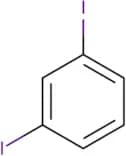
CAS:<p>1,3-Diiodobenzene is a chemical compound that is used in homogeneous catalysts. It has been shown to be an excellent catalyst for the synthesis of 1,2-diols from ketones and aldehydes. It also has asymmetric synthesis methods and can be used as a x-ray structure model system. 1,3-Diiodobenzene can be synthesized by the reaction of benzene with iodine in the presence of silver nitrate. The linear mechanism of this reaction is shown below:</p>Formula:C6H4I2Purity:Min. 95%Molecular weight:329.91 g/mol2-(Iodomethyl)oxirane
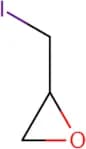
CAS:<p>2-(Iodomethyl)oxirane is a chemical compound that contains a hydroxyl group, two nitrogen atoms, and a single hydrochloric acid molecule. It is not soluble in water and is only slightly soluble in organic solvents. 2-(Iodomethyl)oxirane can be used to remove pollutants from wastewater. This chemical reacts with the carboxylic acid groups on the pollutant molecules to form an ester. The ester can then be broken down by enzymes or by heating it to produce the original hydroxy group and carboxylic acid. 2-(Iodomethyl)oxirane has been shown to react with aliphatic hydrocarbons, naphthalene, fatty acids, alkynyl groups, alkanoic acids, and carbonyl groups.</p>Formula:C3H5IOPurity:Min. 95%Molecular weight:183.98 g/mol1,4-Phenylenediamine dihydrochloride
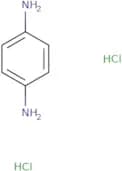
CAS:<p>1,4-Phenylenediamine dihydrochloride is a compound that is used as an excipient in pharmaceutical preparations and as a reactant in the production of biodiesel. It has been shown to have toxic effects on the respiratory system in animals and can cause mitochondrial dysfunction. In addition, 1,4-Phenylenediamine dihydrochloride has been found to be carcinogenic in animal tests and may affect protein synthesis. 1,4-Phenylenediamine dihydrochloride has also been shown to inhibit ATP levels in liver cells and increase the levels of an inorganic acid called lactic acid.</p>Formula:C6H4(NH2)2•(HCl)2Purity:Min. 95%Molecular weight:181.06 g/molEthyl isobutyl ketone
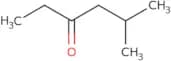
CAS:<p>Ethyl isobutyl ketone, also known as acetone, belongs to the group of aliphatic ketones. It is a colorless and volatile liquid that has a sweet odor. Ethyl isobutyl ketone can be used in the synthesis of pharmaceuticals, dyes, and perfumes. In addition to this, it has shown to have properties of a solvent in organic chemistry and as an active oxygen source in electrochemical impedance spectroscopy. This product also has functional groups such as hydroxy and carbonyl groups that are responsible for its solvency in water and its viscosity. Nitro and hydroxyl groups on the other hand are responsible for its solvency in water vapor.</p>Formula:C7H14OPurity:Min. 95%Molecular weight:114.19 g/mol1-Chloro-4-ethylbenzene
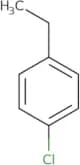
CAS:<p>1-Chloro-4-ethylbenzene is a naphthalene derivative that is used in the manufacture of dyes. It has been shown to be a potent inhibitor of hepatic enzymes, such as cytochrome P450, and can inhibit the activity of some bacterial enzymes, such as DNA gyrase. The reaction products from 1-chloro-4-ethylbenzene are chloride and energy (kinetic energy). In vitro assays have demonstrated that 1-chloro-4-ethylbenzene inhibits human liver microsomal cytochrome P450 and other enzyme activities. Clinical use includes treatment of hyperbilirubinemia in neonates with Crigler–Najjar syndrome.</p>Formula:C8H9ClPurity:Min. 95%Molecular weight:140.61 g/molN'-Phenylcarbohydrazide
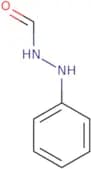
CAS:<p>N'-Phenylcarbohydrazide is an anion that binds to the nitrogen atom in the ammonium ion. It can be hydrolysed by a feedback inhibition mechanism. This compound has been used as a precursor for various analogues, often those of carbonyl compounds. N'-Phenylcarbohydrazide is also used as a reagent in organic synthesis and has been shown to inhibit bacterial growth when used at high concentrations.</p>Formula:C7H8N2OPurity:Min. 95%Molecular weight:136.15 g/mol1,3-Bis[(4-nitrophenyl)amino]urea
CAS:<p>Versatile small molecule scaffold</p>Formula:C13H12N6O5Purity:Min. 95%Molecular weight:332.27 g/mol4-Chlorophenetole
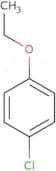
CAS:<p>4-Chlorophenetole is a colorless gas with a pungent odor that is soluble in water. It is used as an intermediate for organic synthesis, being converted to piperidine in the presence of sodium formate and hydrogen chloride. 4-Chlorophenetole can be prepared by reduction of naphthalene with sodium and ethylene or by treatment with sodium metal. 4-Chlorophenetole has been used as an insecticide but its toxicity to mammals has made it less desirable than other compounds. Its use as a fumigant has decreased due to its continued production of chlorides, which are toxic to humans.<br>4-Chlorophenetole also reacts with dipolar molecules such as chlorides and gaseous chlorine to produce a constant emission of light at visible wavelengths (λ=548 nm).</p>Formula:C8H9ClOPurity:Min. 95%Molecular weight:156.61 g/mol


![1,3-Bis[(4-nitrophenyl)amino]urea](/_next/image/?url=https%3A%2Fstatic.cymitquimica.com%2Fproducts%2F3D%2Fthumb-webp%2FAAA62269.webp&w=3840&q=75)