Building Blocks
This section contains fundamental products for the synthesis of organic and biological compounds. Building blocks are the essential starting materials used to construct complex molecules through various chemical reactions. They play a critical role in drug discovery, material science, and chemical research. At CymitQuimica, we offer a diverse range of high-quality building blocks to support your innovative research and industrial projects, ensuring you have the essential components for successful synthesis.
Subcategories of "Building Blocks"
- Boronic Acids & Boronic Acid Derivatives(5,756 products)
- Chiral Building Blocks(1,242 products)
- Hydrocarbon Building Blocks(6,095 products)
- Organic Building Blocks(61,051 products)
Found 199813 products of "Building Blocks"
Sort by
Purity (%)
0
100
|
0
|
50
|
90
|
95
|
100
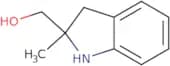
(2-Methyl-2,3-dihydro-1H-indol-2-yl)methanol
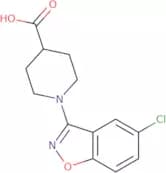
CAS:<p>Versatile small molecule scaffold</p>Formula:C10H13NOPurity:Min. 95%Molecular weight:163.22 g/mol1-(5-Chloro-1,2-benzoxazol-3-yl)piperidine-4-carboxylic acid
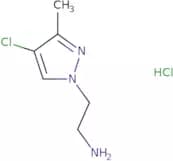
CAS:Versatile small molecule scaffoldFormula:C13H13ClN2O3Purity:Min. 95%Molecular weight:280.7 g/mol2-(4-Chloro-3-methyl-1H-pyrazol-1-yl)ethan-1-amine hydrochloride
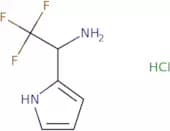
CAS:<p>Versatile small molecule scaffold</p>Formula:C6H11Cl2N3Purity:Min. 95%Molecular weight:196.07 g/mol2,2,2-Trifluoro-1-(1H-pyrrol-2-yl)ethan-1-amine hydrochloride
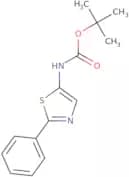
CAS:<p>Versatile small molecule scaffold</p>Formula:C6H8ClF3N2Purity:Min. 95%Molecular weight:200.59 g/moltert-Butyl N-(2-phenyl-1,3-thiazol-5-yl)carbamate
CAS:<p>Versatile small molecule scaffold</p>Formula:C14H16N2O2SPurity:Min. 95%Molecular weight:276.36 g/mol6-Methyl-1H,2H,3H-pyrrolo[3,2-b]pyridine dihydrochloride
CAS:Versatile small molecule scaffoldFormula:C8H12Cl2N2Purity:Min. 95%Molecular weight:207.1 g/molN-Methyl-8-oxatricyclo[7.4.0.0,2,7]trideca-1(9),2(7),3,5,10,12-hexaen-5-amine hydrochloride
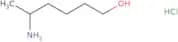
CAS:<p>Versatile small molecule scaffold</p>Formula:C13H12ClNOPurity:Min. 95%Molecular weight:233.69 g/mol5-Aminohexan-1-ol hydrochloride
CAS:<p>Versatile small molecule scaffold</p>Formula:C6H16ClNOPurity:Min. 95%Molecular weight:153.65 g/mol{2-Benzyl-8-oxa-2-azaspiro[4.5]decan-4-yl}methanamine
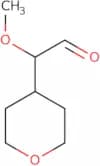
CAS:Versatile small molecule scaffoldFormula:C16H24N2OPurity:Min. 95%Molecular weight:260.37 g/mol2-Methoxy-2-(oxan-4-yl)acetaldehyde
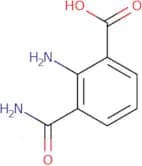
CAS:<p>Versatile small molecule scaffold</p>Formula:C8H14O3Purity:Min. 95%Molecular weight:158.19 g/mol2-Amino-3-carbamoylbenzoic acid
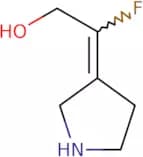
CAS:<p>Versatile small molecule scaffold</p>Formula:C8H8N2O3Purity:Min. 95%Molecular weight:180.16 g/mol2-Fluoro-2-(pyrrolidin-3-ylidene)ethan-1-ol
CAS:<p>Versatile small molecule scaffold</p>Formula:C6H10FNOPurity:Min. 95%Molecular weight:131.15 g/molAPhos Pd G3
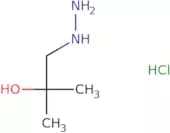
CAS:<p>APhos Pd G3 is a drug with a bicyclic structure. It is an inhibitor of ganglion cells and has been shown to have a positive effect on the symptoms of dementia, psychosis, and psychiatric disorders. It has also been shown to be beneficial in the treatment of Parkinson's disease, which is characterized by the loss of dopaminergic neurons. APhos Pd G3 prevents neuronal cell death by inhibiting monoamine oxidase-B (MAO-B), which breaks down dopamine. This leads to increased levels of dopamine in the striatum and improved motor function. APhos Pd G3 also blocks MAO-A, which breaks down serotonin, norepinephrine, and epinephrine. The inhibition of MAO-A leads to increased levels of serotonin and norepinephrine in the brainstem and spinal cord.</p>Formula:C29H41N2O3PPdSPurity:Min. 95%Molecular weight:635.11 g/mol1-Hydrazinyl-2-methylpropan-2-ol hydrochloride
CAS:<p>Versatile small molecule scaffold</p>Formula:C4H13ClN2OPurity:Min. 95%Molecular weight:140.61 g/mol6-(1H-1,2,4-Triazol-3-yl)pyridine-3-carboxylic acid
CAS:<p>Versatile small molecule scaffold</p>Formula:C8H6N4O2Purity:Min. 95%Molecular weight:190.16 g/mol6-aminospiro[3.3]heptan-2-ol hydrochloride
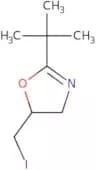
CAS:<p>Versatile small molecule scaffold</p>Formula:C7H14ClNOPurity:Min. 95%Molecular weight:163.65 g/mol2-tert-Butyl-5-(iodomethyl)-4,5-dihydro-1,3-oxazole
CAS:<p>Versatile small molecule scaffold</p>Formula:C8H14INOPurity:Min. 95%Molecular weight:267.11 g/mol3-Amino-1-benzyl-3-methylthiourea
CAS:<p>3-Amino-1-benzyl-3-methylthiourea (MBT) is a cationic organosulfur compound with a trifluoroacetic acid moiety. It is also known as 3-aminobenzyl methylthiocarbamate or 3,3'-diacetylbenzyl methylthiocarbamate. MBT is a cyclized product of trifluoroacetic acid and phenylglyoxal, which has been used in the synthesis of various organic compounds. The chemical properties of MBT are similar to those of diacetyl and acetaldehyde, but it does not have the unpleasant odor associated with these substances. In addition, MBT does not react with proteins and is less toxic than other carbonyl compounds.</p>Formula:C9H13N3SPurity:Min. 95%Molecular weight:195.29 g/mol(4-Methoxy-3-nitrophenyl)methanamine hydrochloride
CAS:<p>Versatile small molecule scaffold</p>Formula:C8H11ClN2O3Purity:Min. 95%Molecular weight:218.64 g/mol5-Cyclopropyl-1,2-oxazol-3-amine
CAS:<p>Versatile small molecule scaffold</p>Formula:C6H8N2OPurity:Min. 95%Molecular weight:124.14 g/mol

![6-Methyl-1H,2H,3H-pyrrolo[3,2-b]pyridine dihydrochloride](/_next/image/?url=https%3A%2Fstatic.cymitquimica.com%2Fproducts%2F3D%2Fthumb-webp%2FVXC74736.webp&w=3840&q=75)
![N-Methyl-8-oxatricyclo[7.4.0.0,2,7]trideca-1(9),2(7),3,5,10,12-hexaen-5-amine hydrochloride](/_next/image/?url=https%3A%2Fstatic.cymitquimica.com%2Fproducts%2F3D%2Fthumb-webp%2FVXC74737.webp&w=3840&q=75)
![{2-Benzyl-8-oxa-2-azaspiro[4.5]decan-4-yl}methanamine](/_next/image/?url=https%3A%2Fstatic.cymitquimica.com%2Fproducts%2F3D%2Fthumb-webp%2FVXC74760.webp&w=3840&q=75)


![6-aminospiro[3.3]heptan-2-ol hydrochloride](/_next/image/?url=https%3A%2Fstatic.cymitquimica.com%2Fproducts%2F3D%2Fthumb-webp%2FVXC97919.webp&w=3840&q=75)