Building Blocks
This section contains fundamental products for the synthesis of organic and biological compounds. Building blocks are the essential starting materials used to construct complex molecules through various chemical reactions. They play a critical role in drug discovery, material science, and chemical research. At CymitQuimica, we offer a diverse range of high-quality building blocks to support your innovative research and industrial projects, ensuring you have the essential components for successful synthesis.
Subcategories of "Building Blocks"
- Boronic Acids & Boronic Acid Derivatives(5,756 products)
- Chiral Building Blocks(1,242 products)
- Hydrocarbon Building Blocks(6,095 products)
- Organic Building Blocks(61,055 products)
Found 199650 products of "Building Blocks"
Sort by
Purity (%)
0
100
|
0
|
50
|
90
|
95
|
100
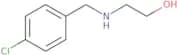
2-(4-Chloro-benzylamino)-ethanol
CAS:<p>Versatile small molecule scaffold</p>Formula:C9H12ClNOPurity:Min. 95%Molecular weight:185.65 g/mol2-{[(3,4-Dichlorophenyl)methyl]amino}ethan-1-ol
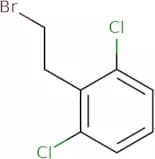
CAS:<p>Versatile small molecule scaffold</p>Formula:C9H11Cl2NOPurity:Min. 95%Molecular weight:220.09 g/mol2,6-Dichlorophenethyl bromide
CAS:<p>2,6-Dichlorophenethyl bromide is a heterocyclic compound that is an agonist of the farnesoid X receptor (FXR). It has been shown to be effective in treating metabolic diseases such as diabetes and obesity. 2,6-Dichlorophenethyl bromide has also been shown to reduce liver damage in experimental models of nonalcoholic steatohepatitis. This drug binds to FXR and activates the receptor, which then induces the production of bile acids. These bile acids are important for the digestion of fats and absorption of fat soluble vitamins. 2,6-Dichlorophenethyl bromide is metabolized by CYP3A4 enzyme and can cause drug interactions with other drugs that are metabolized by this enzyme.</p>Formula:C8H7BrCl2Purity:Min. 95%Molecular weight:253.95 g/mol2-(2-Bromoethyl)-1,4-dichlorobenzene
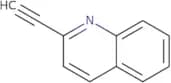
CAS:<p>Versatile small molecule scaffold</p>Formula:C8H7BrCl2Purity:Min. 95%Molecular weight:253.95 g/mol2-ethynylquinoline
CAS:<p>2-Ethynylquinoline is a molecule that has been found to be effective in the treatment of leukemia and other cancers. It inhibits protein synthesis in cells by binding to the molecule eIF4E, which prevents the production of proteins vital for cell division. 2-Ethynylquinoline has been shown to have anti-inflammatory properties, which may be due to its ability to inhibit prostaglandin synthesis. This drug also has a toxic effect on respiratory system cells, which may be due to its ability to induce apoptosis.<br>2-Ethynylquinoline is a potent cytotoxic agent that inhibits the growth of cancer cells by inhibiting protein synthesis and mitochondrial membrane potential. The drug also suppresses oxidative injury and cardiac dysfunction induced by fatty acid oxidation. In vivo studies have shown that 2-ethynylquinoline can cause regression of bronchial tumors in mice with pulmonary carcinomas, as well as regression of alveolar tumors in mice with metastatic lung</p>Formula:C11H7NPurity:Min. 95%Molecular weight:153.17 g/mol2-Ethynylbenzothiazole
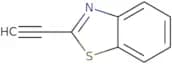
CAS:<p>2-Ethynylbenzothiazole is a synthetic chemical that can be used as a fluorescent probe. It has been shown to react with nucleophilic compounds, such as thiols and amines, in the presence of palladium complexes. The reaction is catalyzed by the addition of hydrogen chloride. 2-Ethynylbenzothiazole reacts with thiols and amines to form a new compound called 2-chlorobenzothiazole. This reaction also produces hydrogen gas and heat. When 2-ethynylbenzothiazole is combined with vitamin B1, it undergoes electrophilic attack by an electron-rich heterocycle, leading to the formation of an intermediate product that fluoresces brightly.</p>Formula:C9H5NSPurity:Min. 95%Molecular weight:159.21 g/mol1-(2,5-Dimethoxyphenyl)propan-2-ol
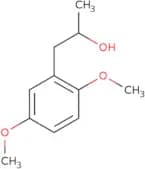
CAS:Controlled Product<p>Versatile small molecule scaffold</p>Formula:C11H16O3Purity:Min. 95%Molecular weight:196.24 g/mol2-Phenylbenzene-1-sulfonamide
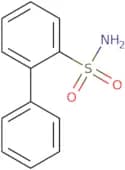
CAS:<p>2-Phenylbenzene-1-sulfonamide is a biphenyl compound that inhibits the production of endothelin, a peptide hormone that plays a role in regulating blood pressure and blood flow. It has been shown to be effective in vitro against experimental models of congestive heart disease and bowel disease. 2-Phenylbenzene-1-sulfonamide also inhibits the activity of x-ray crystal structures, which are proteins involved in apoptosis or programmed cell death. 2-Phenylbenzene-1-sulfonamide is not active against bacteria, but it has been shown to inhibit Mcl-1 protein, which regulates the process of apoptosis. This drug also has sodium salt forms that are used to treat metabolic disorders such as diabetes mellitus type II.</p>Formula:C12H11NO2SPurity:Min. 95%Molecular weight:233.29 g/molN-Methyl-2-phenylbenzene-1-sulfonamide
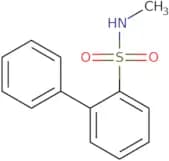
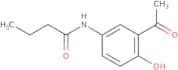
CAS:<p>Versatile small molecule scaffold</p>Formula:C13H13NO2SPurity:Min. 95%Molecular weight:247.31 g/molN-(3-Acetyl-4-hydroxyphenyl)butanamide
CAS:<p>N-(3-Acetyl-4-hydroxyphenyl)butanamide (NAAB) is a flavonoid that has been shown to be activated by the addition of urine samples. This activation leads to protein synthesis and exfoliation. NAAB fluoresces in the presence of an ultraviolet light, making it a useful fluorescent probe for the detection of human serum amide. NAAB is also low molecular weight and linear range, making it suitable for use as a reticulum deformation agent.</p>Formula:C12H15NO3Purity:Min. 95%Molecular weight:221.25 g/mol[(2,3-Dihydro-1H-inden-1-yl)methyl](methyl)amine
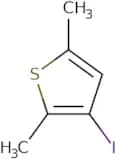
CAS:<p>Versatile small molecule scaffold</p>Formula:C11H15NPurity:Min. 95%Molecular weight:161.24 g/mol3-Iodo-2,5-dimethylthiophene
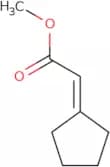
CAS:<p>3-Iodo-2,5-dimethylthiophene is an alkenylation agent. It can be synthesized by reacting 3-iodo-2,4,6-trimethylphenol with boronic acid in the presence of ethylene at high temperatures. The reaction is irreversible and can be used to form substituted derivatives that are irreversibly alkenylated. 3-Iodo-2,5-dimethylthiophene has a number of optical properties including photochromism and diffraction. It has been shown to be useful for the synthesis of novel materials with optical properties such as photochromism and diffraction.</p>Formula:C6H7ISPurity:Min. 95%Molecular weight:238.09 g/molMethyl 2-cyclopentylideneacetate
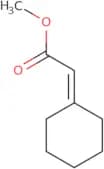
CAS:<p>Methyl 2-cyclopentylideneacetate is a molecule that is used in cosmetics. It has viscosity-increasing properties, which are beneficial in products that require a creamy consistency. Methyl 2-cyclopentylideneacetate also has an average particle diameter of less than 20 microns and is soluble in water. This compound can be found in fatty acids, ethyl groups, and crystalline cellulose. The deodorizing effects of this product come from the particles it produces when mixed with magnesium oxide. Methyl 2-cyclopentylideneacetate also contains acidic ph levels and is an ester compound.</p>Formula:C8H12O2Purity:Min. 95%Molecular weight:140.18 g/molMethyl 2-cyclohexylideneacetate
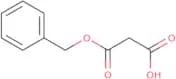
CAS:<p>Methyl 2-cyclohexylideneacetate is a stereospecific, geranyl, and biomimetic chemical compound. It has been shown to be an effective inhibitor of bacterial enzymes that produce ozonides. Methyl 2-cyclohexylideneacetate also inhibits the biosynthesis of phytosteroids in plants and the synthesis of farnesyl diphosphate, which is an intermediate in the production of cholesterol. The compound has been postulated to inhibit bacterial enzyme activity by binding to the active site on the enzyme.</p>Formula:C9H14O2Purity:Min. 95%Molecular weight:154.21 g/molmono-Benzyl malonate
CAS:<p>Mono-benzyl malonate is a synthetic molecule that inhibits the growth of cancer cells. It has an intramolecular hydrogen bond that stabilizes the molecule, and it has been shown to be effective at a low dose in preventing tumor growth. Mono-benzyl malonate also binds to receptors and blocks their activity, which may help to reduce insulin resistance in a similar way as metformin. The biological properties of this compound are still being studied.</p>Formula:C10H10O4Purity:Min. 95%Molecular weight:194.18 g/mol4-(2-Methoxyphenyl)-3-thiosemicarbazide
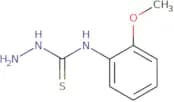
CAS:<p>4-(2-Methoxyphenyl)-3-thiosemicarbazide is a fluorescent compound that has been shown to have an inhibitory effect on bacteria. This compound binds to anions and can be used in the clarification of water. 4-(2-Methoxyphenyl)-3-thiosemicarbazide is also active as an antibacterial agent against gram-negative bacteria, such as Escherichia coli and Klebsiella pneumoniae. The antibacterial activity of 4-(2-Methoxyphenyl)-3-thiosemicarbazide may be due to its ability to inhibit the synthesis of proteins necessary for cell division.<br>4-(2-Methoxyphenyl)-3-thiosemicarbazide is a tautomeric, fluorescent compound that belongs to the class of antibiotic drugs. It has been shown to have chemosensor properties and can be used in the detection</p>Formula:C8H11N3OSPurity:Min. 95%Molecular weight:197.26 g/mol4-(4-Methoxyphenyl)-3-thiosemicarbazide
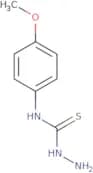
CAS:<p>4-(4-Methoxyphenyl)-3-thiosemicarbazide is a carbonyl compound that has been shown to have anticancer activity. It inhibits the growth of cancer cells by binding to the DNA of tumor cells, causing them to undergo apoptosis. 4-(4-Methoxyphenyl)-3-thiosemicarbazide also inhibits influenza virus and bacteria by inhibiting the enzyme ribonucleotide reductase and preventing the synthesis of viral RNA. This agent has potent inhibitory activity against gram-negative species such as Escherichia coli and Pseudomonas aeruginosa.</p>Formula:C8H11N3OSPurity:Min. 95%Molecular weight:197.26 g/molN-Hydroxy-2-(trifluoromethyl)benzamide
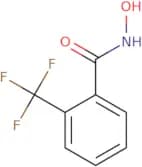
CAS:<p>Versatile small molecule scaffold</p>Formula:C8H6F3NO2Purity:Min. 95%Molecular weight:205.13 g/mol6-(hydroxymethyl)pyridin-3-ol
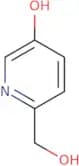
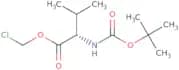
CAS:<p>6-(hydroxymethyl)pyridin-3-ol is a metabolite of the indole alkaloid, bufotenine. It has been shown to have cytotoxic activity against the human lung carcinoma cell line A549 and adipose cells, as well as antioxidant properties. 6-(hydroxymethyl)pyridin-3-ol also has been shown to modulate the production of reactive oxygen species in cells by inhibiting lipid peroxidation. This compound can be found in neutral pH environments, such as water and soil. 6-(hydroxymethyl)pyridin-3-ol can be synthesized from furfural or 5-hydroxymethylfurfural (HMF), which are produced through the degradation of glucose and other carbohydrates. The reaction between HMF with urea produces 6-(hydroxymethyl)pyridin-3-ol, leading to its presence in food chemistry.</p>Formula:C6H7NO2Purity:Min. 95%Molecular weight:125.12 g/mol(S)-Chloromethyl 2-((tert-butoxycarbonyl)amino)-3-methylbutanoate
CAS:<p>Versatile small molecule scaffold</p>Formula:C11H20ClNO4Purity:Min. 95%Molecular weight:265.73 g/mol

![2-{[(3,4-Dichlorophenyl)methyl]amino}ethan-1-ol](/_next/image/?url=https%3A%2Fstatic.cymitquimica.com%2Fproducts%2F3D%2Fthumb-webp%2FQBA17206.webp&w=3840&q=75)

amine](/_next/image/?url=https%3A%2Fstatic.cymitquimica.com%2Fproducts%2F3D%2Fthumb-webp%2FQBA19137.webp&w=3840&q=75)