Building Blocks
This section contains fundamental products for the synthesis of organic and biological compounds. Building blocks are the essential starting materials used to construct complex molecules through various chemical reactions. They play a critical role in drug discovery, material science, and chemical research. At CymitQuimica, we offer a diverse range of high-quality building blocks to support your innovative research and industrial projects, ensuring you have the essential components for successful synthesis.
Subcategories of "Building Blocks"
- Boronic Acids & Boronic Acid Derivatives(5,756 products)
- Chiral Building Blocks(1,242 products)
- Hydrocarbon Building Blocks(6,095 products)
- Organic Building Blocks(61,051 products)
Found 199813 products of "Building Blocks"
Sort by
Purity (%)
0
100
|
0
|
50
|
90
|
95
|
100
6-Methoxy-3H-pyrido[2,3-b][1,4]thiazin-2-amine
CAS:<p>Versatile small molecule scaffold</p>Formula:C8H9N3OSPurity:Min. 95%Molecular weight:195.24 g/molPhenyl(1H-pyrazol-4-yl)methanol
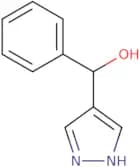
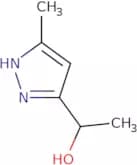
CAS:<p>Versatile small molecule scaffold</p>Formula:C10H10N2OPurity:Min. 95%Molecular weight:174.2 g/mol1-(5-Methyl-1H-pyrazol-3-yl)ethan-1-ol
CAS:Versatile small molecule scaffoldFormula:C6H10N2OPurity:Min. 95%Molecular weight:126.16 g/molSpiro[3.4]octan-1-one
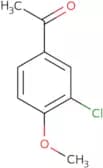
CAS:<p>Spiro[3.4]octan-1-one is an organic compound that is a 2-chloroethyl ketone. It can be prepared by the reaction of dimethyl sulfonium iodide with 2-chloroethanol. This chemical has been used as a reagent in the synthesis of polymers and pharmaceuticals.</p>Formula:C8H12OPurity:Min. 95%Molecular weight:124.18 g/mol3'-Chloro-4'-methoxyacetophenone
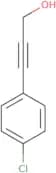
CAS:<p>3'-Chloro-4'-methoxyacetophenone (3'-CMA) is a chalcone that is used as an inhibitor of the enzyme acetylcholinesterase. It has been shown to inhibit the activity of acetylcholinesterase, which is responsible for the hydrolysis of acetylcholine. This inhibition leads to an increase in acetylcholine levels and therefore to an increase in the response time of skeletal muscle. 3'-CMA has been shown to have potentiating effects on other compounds, such as phenoxy, which are also inhibitors of acetylcholinesterase.</p>Formula:C9H9ClO2Purity:Min. 95%Molecular weight:184.62 g/mol3-(4-Chloro-phenyl)-prop-2-yn-1-ol
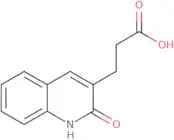
CAS:<p>3-(4-Chloro-phenyl)-prop-2-yn-1-ol is a compound that can be synthesized by the reaction of 3-(4-chlorophenyl)propanal and ammonia. The reaction has been carried out in the presence of ammonium acetate, which acts as a catalyst to promote the formation of this product. This compound may be used for the synthesis of isoquinolines, which are biologically active compounds. The microwave irradiation technique is used for this synthesis to increase yields and decrease time.</p>Formula:C9H7ClOPurity:Min. 95%Molecular weight:166.6 g/mol3-(2-Oxo-1,2-dihydroquinolin-3-yl)propanoic acid
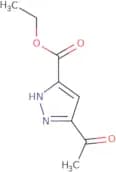
CAS:<p>Versatile small molecule scaffold</p>Formula:C12H11NO3Purity:Min. 95%Molecular weight:217.22 g/mol5-Acetyl-2H-pyrazole-3-carboxylic acid ethyl ester
CAS:<p>5-Acetyl-2H-pyrazole-3-carboxylic acid ethyl ester is a potent and selective inhibitor of the enzyme carboxamide ribonucleotide transformylase (CRT). The pharmacodynamic properties of this compound are still unknown. 5-Acetyl-2H-pyrazole-3-carboxylic acid ethyl ester has been shown to inhibit tumour growth in xenograft models, but not in mice. It was also found to inhibit the proliferation of myeloproliferative cells, but not normal cells, in vitro. Further research is required to elucidate its mechanism of action and potential clinical applications.</p>Formula:C8H10N2O3Purity:Min. 95%Molecular weight:182.18 g/mol2-Ethyl-1-oxa-4,8-diazaspiro[4.5]decan-3-one hydrobromide
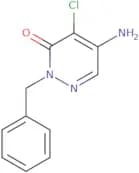
CAS:<p>Versatile small molecule scaffold</p>Formula:C9H17BrN2O2Purity:Min. 95%Molecular weight:265.15 g/mol5-Amino-2-benzyl-4-chloro-2,3-dihydropyridazin-3-one
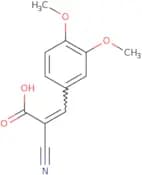
CAS:<p>Versatile small molecule scaffold</p>Formula:C11H10ClN3OPurity:Min. 95%Molecular weight:235.67 g/mol(2E)-2-Cyano-3-(3,4-dimethoxyphenyl)prop-2-enoic acid
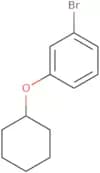
CAS:<p>Versatile small molecule scaffold</p>Formula:C12H11NO4Purity:Min. 95%Molecular weight:233.22 g/mol1-Bromo-3-(cyclohexyloxy)benzene
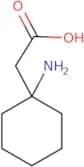
CAS:<p>Versatile small molecule scaffold</p>Formula:C12H15BrOPurity:Min. 95%Molecular weight:255.15 g/mol(1-Aminocyclohexyl)acetic acid
CAS:<p>(1-Aminocyclohexyl)acetic acid is a molecule that has been shown to have high cytotoxicity in the presence of hydrogen peroxide. It has been shown to be an inhibitor of β-aminoacyl-tRNA synthetase and RNA polymerase, which leads to reduced protein synthesis. The conformational properties and flipping of the cyclohexane ring have been studied using NMR spectroscopy.<br>(1-Aminocyclohexyl)acetic acid is also known as 1-aminocyclopentane carboxylic acid or ACPA.</p>Formula:C8H15NO2Purity:Min. 95%Molecular weight:157.21 g/mol3-Amino-3-cyclohexylpropanoic acid hydrochloride
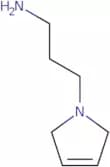
CAS:<p>Versatile small molecule scaffold</p>Purity:Min. 95%Molecular weight:207.7 g/mol3-(2,5-Dihydro-1H-pyrrol-1-yl)propan-1-amine
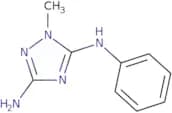
CAS:<p>Versatile small molecule scaffold</p>Formula:C7H14N2Purity:Min. 95%Molecular weight:126.2 g/mol1-Methyl-5-N-phenyl-1H-1,2,4-triazole-3,5-diamine
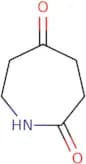
CAS:<p>Versatile small molecule scaffold</p>Formula:C9H11N5Purity:Min. 95%Molecular weight:189.22 g/molAzepane-2,5-dione
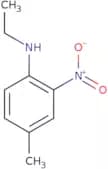
CAS:<p>Azepane-2,5-dione is a dopamine antagonist that blocks the activity of dopamine receptors by binding to them. It has been shown to antagonize the effects of dopamine in the brain and may be used for treatment of schizophrenia.</p>Formula:C6H9NO2Purity:Min. 95%Molecular weight:127.14 g/molN-Ethyl-4-methyl-2-nitroaniline
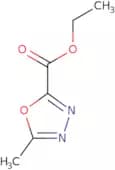
CAS:<p>Versatile small molecule scaffold</p>Formula:C9H12N2O2Purity:Min. 95%Molecular weight:180.2 g/molEthyl 5-methyl-1,3,4-oxadiazole-2-carboxylate
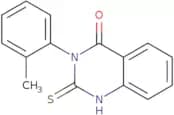
CAS:<p>Versatile small molecule scaffold</p>Formula:C6H8N2O3Purity:Min. 95%Molecular weight:156.14 g/mol3-(2-Methylphenyl)-2-sulfanyl-3,4-dihydroquinazolin-4-one
CAS:<p>Versatile small molecule scaffold</p>Formula:C15H12N2OSPurity:Min. 95%Molecular weight:268.3 g/mol
![6-Methoxy-3H-pyrido[2,3-b][1,4]thiazin-2-amine](/_next/image/?url=https%3A%2Fstatic.cymitquimica.com%2Fproducts%2F3D%2Fthumb-webp%2FMBA59110.webp&w=3840&q=75)

![Spiro[3.4]octan-1-one](/_next/image/?url=https%3A%2Fstatic.cymitquimica.com%2Fproducts%2F3D%2Fthumb-webp%2FMBA60931.webp&w=3840&q=75)
![2-Ethyl-1-oxa-4,8-diazaspiro[4.5]decan-3-one hydrobromide](/_next/image/?url=https%3A%2Fstatic.cymitquimica.com%2Fproducts%2F3D%2Fthumb-webp%2FMBA62320.webp&w=3840&q=75)