Building Blocks
This section contains fundamental products for the synthesis of organic and biological compounds. Building blocks are the essential starting materials used to construct complex molecules through various chemical reactions. They play a critical role in drug discovery, material science, and chemical research. At CymitQuimica, we offer a diverse range of high-quality building blocks to support your innovative research and industrial projects, ensuring you have the essential components for successful synthesis.
Subcategories of "Building Blocks"
- Boronic Acids & Boronic Acid Derivatives(5,778 products)
- Chiral Building Blocks(1,242 products)
- Hydrocarbon Building Blocks(6,098 products)
- Organic Building Blocks(61,034 products)
Found 199601 products of "Building Blocks"
Sort by
Purity (%)
0
100
|
0
|
50
|
90
|
95
|
100
6-Chloro-4-hydroxy-2-methylquinoline
CAS:<p>6-Chloro-4-hydroxy-2-methylquinoline is a vasorelaxant that blocks potassium channels in the cell membrane. 6CHMQ has been shown to inhibit calcium and potassium channels, which are involved in the transmission of nerve impulses. It also inhibits glibenclamide binding to pancreatic beta cells, which is an action that contributes to the anti-diabetic effects of this drug. 6CHMQ has been shown to block voltage gated potassium channels and may have a role in regulating blood pressure by inhibiting the release of norepinephrine.</p>Formula:C10H8ClNOPurity:Min. 95%Molecular weight:193.63 g/mol7-Chloro-4-hydroxy-2-methylquinoline
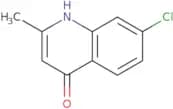
CAS:<p>Versatile small molecule scaffold</p>Formula:C10H8ClNOPurity:Min. 95%Molecular weight:193.63 g/mol8-Methoxy-2-methylquinolin-4(1H)-one
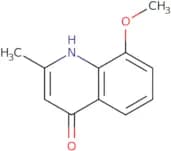
CAS:<p>Versatile small molecule scaffold</p>Formula:C11H11NO2Purity:Min. 95%Molecular weight:189.21 g/mol4-Hydroxy-6-methoxy-2-methylquinoline
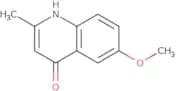
CAS:<p>4-Hydroxy-6-methoxy-2-methylquinoline is a heterocyclic compound that belongs to the quinone class of compounds. It is used as a dye in plastics and textiles, but it has also been shown to have antibacterial properties. The chemical reacts with copper ions in solution to produce hydroxyl radicals, which react with other molecules in the solution to produce reactive oxygen species such as hydrogen peroxide. These reactive oxygen species attack bacterial cells and cause cell death. 4-Hydroxy-6-methoxy-2-methylquinoline can be saponified by alkali to form 4-hydroxyquinoline, which is an analgesic drug that has been shown to have antiinflammatory activities.</p>Formula:C11H11NO2Purity:Min. 95%Molecular weight:189.21 g/mol5-(Benzoylamino)valeric Acid
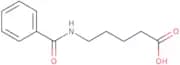
CAS:<p>Versatile small molecule scaffold</p>Formula:C12H15NO3Purity:Min. 95%Molecular weight:221.26 g/mol3-(Dimethylamino)cyclohexan-1-one hydrochloride
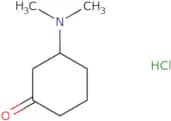
CAS:Versatile small molecule scaffoldFormula:C8H16ClNOPurity:Min. 95%Molecular weight:177.67 g/mol4-(tert-Butyl)-2-methyl-1,3-thiazole
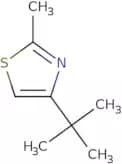
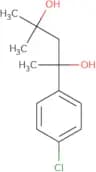
CAS:4-(tert-Butyl)-2-methyl-1,3-thiazole is a catalyst that is used in carbonyl, heteroaryl and heteroaromatic arylation reactions. 4-(tert-Butyl)-2-methyl-1,3-thiazole has been shown to produce high yields of product and to be an effective catalyst for arylation reactions.Formula:C8H13NSPurity:Min. 95%Molecular weight:155.26 g/mol2-(4-Chlorophenyl)-4-methylpentane-2,4-diol
CAS:Controlled Product<p>2-(4-Chlorophenyl)-4-methylpentane-2,4-diol is an analog of 2-(4-chlorophenyl)-4-methylpentane that has been shown to be a CB2 receptor agonist, which may be useful in the treatment of inflammatory bowel disease. The structure of this compound is similar to that of the natural ligand for the CB2 receptor, 2-(6′-hydroxyhexahydrocannabinol). This compound has also been shown to act as an agonist for toll-like receptor 4 (TLR4) and as a sodium citrate synthase inhibitor. This molecule can be synthesized from two molecules of acetone with a chiral catalyst by using asymmetric synthesis.</p>Formula:C12H17ClO2Purity:Min. 95%Molecular weight:228.71 g/mol2-(1-Phenylethyl)oxirane
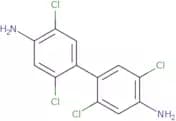
CAS:<p>Versatile small molecule scaffold</p>Formula:C10H12OPurity:Min. 95%Molecular weight:148.2 g/mol2,2',5,5'-Tetrachlorobenzidine
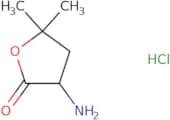
CAS:<p>2,2',5,5'-Tetrachlorobenzidine (TCB) is a diacid that has been shown to have thermal expansion properties. TCB is also hydrophobic and exhibits a fatty acid-like structure. This compound has been used in the synthesis of several other compounds such as alicyclic amides, birefringent dyes, and polarizers. TCB has also been used in the production of polymer films for optical purposes such as hydrochloric acid particle size analysis.</p>Formula:C12H8Cl4N2Purity:Min. 95%Molecular weight:322.01 g/mol3-Amino-5,5-dimethyloxolan-2-one hydrochloride
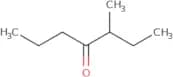
CAS:Versatile small molecule scaffoldFormula:C6H12ClNO2Purity:Min. 95%Molecular weight:165.62 g/mol3-Methyl-4-heptanone
CAS:<p>3-Methyl-4-heptanone is an antibacterial agent that has been shown to have a broad spectrum of activity against bacteria. It is a reactive molecule and can form various products during the reaction with other molecules. 3-Methyl-4-heptanone has been found to be effective against Staphylococcus, Songaricum, and other genera of bacteria. 3-Methyl-4-heptanone is a fatty acid that possesses a primary alcohol group and one or more oxygenated functional groups such as hydroxyl (-OH) or alkoxy (-OCH3). 3-Methyl-4-heptanone also possesses 16 carbon atoms, which are arranged in three rings.</p>Formula:C8H16OPurity:Min. 95%Molecular weight:128.22 g/mol2-Phenylamino-propionic acid
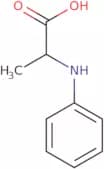
CAS:<p>2-Phenylamino-propionic acid is an analogue of acrylic acid with two methyl groups on the terminal carbon. It is a colorless liquid that can be synthesized by the reaction of acrylic acid with sodium amide in the presence of benzene. 2-Phenylamino-propionic acid has been shown to undergo homogeneous and cyclic reactions, as well as elimination and monoxide reactions. The experimental value obtained for its rate constant, k, was found to be 1.6 × 10^6 L/mol*s using acrylic acid as a substrate. This product may also be used as a catalyst for radical reactions or in catalytic pyrolysis reactions.</p>Formula:C9H11NO2Purity:Min. 95%Molecular weight:165.19 g/molProp-2-en-1-yl 2-methylpropanoate
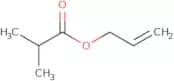
CAS:<p>Prop-2-en-1-yl 2-methylpropanoate is a hydrocarbon with two hydroxyl groups. It is a reactive, functional group that is monosubstituted by fluorine atoms. The carboxylate group of prop-2-en-1-yl 2-methylpropanoate has a divalent hydrocarbon structure and contains one reactive, functional group. Prop-2-en-1-yl 2-methylpropanoate can be found as bound form in endophytic fungi and in the leaves of plants. It can also be found as an unbound form in organic solvents and fatty acids.</p>Formula:C7H12O2Purity:Min. 95%Molecular weight:128.17 g/molAllyl 4-nitrobenzoate
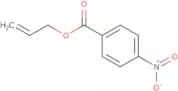
CAS:Versatile small molecule scaffoldFormula:C10H9NO4Purity:Min. 95%Molecular weight:207.18 g/mol3-(4-Nitro-1,3-dioxo-2,3-dihydro-1H-isoindol-2-yl)propanoic acid
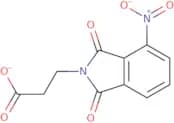
CAS:<p>Versatile small molecule scaffold</p>Formula:C11H7N2O6Purity:Min. 95%Molecular weight:263.18 g/mol1-bromo-4-[(methylsulfanyl)methyl]benzene
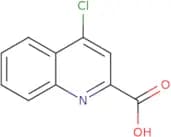
CAS:<p>Versatile small molecule scaffold</p>Formula:C8H9BrSPurity:Min. 95%Molecular weight:217.12 g/mol4-Chloroquinoline-2-carboxylic acid
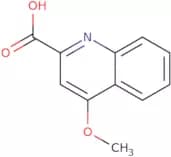
CAS:<p>Versatile small molecule scaffold</p>Formula:C10H6ClNO2Purity:Min. 95%Molecular weight:207.61 g/mol4-Methoxy-2-quinolinecarboxylic acid
CAS:<p>4-Methoxy-2-quinolinecarboxylic acid is a compound that contains a phenyl ring with two substituents, one of which is a methoxy group. It has been shown to regenerate primary alcohols from the corresponding hydroxyaldehyde under mild conditions. 4-Methoxy-2-quinolinecarboxylic acid also reacts with aldehydes to form an oxime and an acetal in the presence of base. The functional theory proposes that the molecular orbitals are formed by the overlap of atomic orbitals and may be used to explain reactions such as these. The neurotoxic effect of 4-methoxy-2-quinolinecarboxylic acid has been observed in rats after intraperitoneal injection. This compound also has been shown to catalyze the formation of bidentate ligands and chelate ligands.</p>Formula:C11H9NO3Purity:Min. 95%Molecular weight:203.19 g/mol6-Methylquinoline-2-Carboxylic Acid
CAS:<p>6-Methylquinoline-2-carboxylic acid is a chromophore that is found in the molecule isoquinoline-3-carboxylic acid. It is an antibacterial agent that has been shown to inhibit bacterial biosynthesis and growth. 6-Methylquinoline-2-Carboxylic Acid may also have potential as a chemotherapeutic agent for cancer treatment due to its ability to bind to DNA and inhibit RNA synthesis. This drug is synthesized by the condensation of quinoline derivatives with carboxylic acids, followed by reduction of the resulting imine with sodium dithionite. The product can be purified using high performance liquid chromatography, incubated with magnetic particles, and desorbed from the beads using protonation.</p>Formula:C11H9NO2Purity:Min. 95%Molecular weight:187.2 g/mol



![1-bromo-4-[(methylsulfanyl)methyl]benzene](/_next/image/?url=https%3A%2Fstatic.cymitquimica.com%2Fproducts%2F3D%2Fthumb-webp%2FQAA73307.webp&w=3840&q=75)