Building Blocks
This section contains fundamental products for the synthesis of organic and biological compounds. Building blocks are the essential starting materials used to construct complex molecules through various chemical reactions. They play a critical role in drug discovery, material science, and chemical research. At CymitQuimica, we offer a diverse range of high-quality building blocks to support your innovative research and industrial projects, ensuring you have the essential components for successful synthesis.
Subcategories of "Building Blocks"
- Boronic Acids & Boronic Acid Derivatives(5,756 products)
- Chiral Building Blocks(1,242 products)
- Hydrocarbon Building Blocks(6,095 products)
- Organic Building Blocks(61,055 products)
Found 199650 products of "Building Blocks"
Sort by
Purity (%)
0
100
|
0
|
50
|
90
|
95
|
100
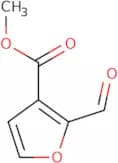
Methyl 2-formylfuran-3-carboxylate
CAS:<p>Versatile small molecule scaffold</p>Formula:C7H6O4Purity:Min. 95%Molecular weight:154.12 g/mol4H,5H,6H,7H-Pyrazolo[1,5-a]pyridine
CAS:<p>This molecule is a synthetic, physicochemical drug that is used to treat women with metastatic breast cancer. It binds to glutamate receptors and blocks the metabotropic glutamate receptor. Pyrazolo[1,5-a]pyridine has been shown to be effective in clinical trials in treating melanotic lesions. The drug has been shown to have a dose-dependent effect on the central nervous system and can lead to death due to cardiac arrest.</p>Formula:C7H10N2Purity:Min. 95%Molecular weight:122.17 g/mol1-Phenylpent-4-yn-1-ol
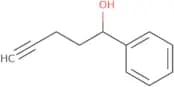
CAS:<p>1-Phenylpent-4-yn-1-ol is a ketone that can be synthesized by the desulfonylation of 1,3-dibromopropane. It is a radical that has been shown to have potential in the synthesis of polymers and pharmaceuticals. This compound undergoes sequential desulfonylative coupling with alcohols such as phenylethyl alcohol to produce phenylethylphenol. The use of 1-phenylpent-4-yn-1-ol in this process makes it an environmentally friendly alternative to other more toxic reagents.</p>Formula:C11H12OPurity:Min. 95%Molecular weight:160.21 g/mol4-Amino-2-chloro-N-(pyridin-3-yl)benzamide
CAS:<p>Versatile small molecule scaffold</p>Formula:C12H10ClN3OPurity:Min. 95%Molecular weight:247.68 g/molChroman-3-one
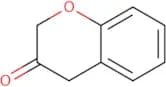
CAS:<p>Chroman-3-one is a trifluoroacetate ester that has been shown to have anticancer activity. It is an amine that is used in the synthesis of various drugs and pharmaceuticals. Chroman-3-one is also an important precursor in the manufacture of the antidiabetic drug metformin. The compound is often used in organic synthesis because it can be prepared from readily available starting materials, and it can be easily converted to other compounds using a variety of reactions. Chroman-3-one has two tautomeric forms: one where the carbonyl group is protonated and one where the carbonyl group is deprotonated. This means that it can exist as an enantiopure or a mixture of enantiomers.</p>Formula:C9H8O2Purity:Min. 95%Molecular weight:148.16 g/mol2-(Methylsulfinyl)benzenecarboxylic acid
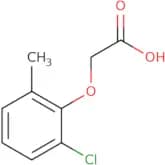
CAS:<p>2-Methylsulfinylbenzenecarboxylic acid (MSB) is an inorganic compound, which is a ligand in photochromism. It can be used to activate the reaction solution and kinetics of the cyclic voltammetry. MSB has been shown to react with acetonitrile to form sulfoxide, which has absorption spectroscopy that is constant and methanol as solvent. This compound is soluble in solvents such as acetonitrile, dichloromethane, and tetrahydrofuran.</p>Formula:C8H8O3SPurity:Min. 95%Molecular weight:184.21 g/mol2-(2-Chloro-6-methylphenoxy)acetic acid
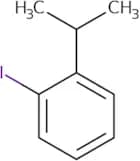
CAS:<p>Versatile small molecule scaffold</p>Formula:C9H9ClO3Purity:Min. 95%Molecular weight:200.62 g/mol2-Iodocumene
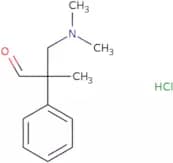
CAS:<p>2-Iodocumene is a chemical that belongs to the group of unsymmetrical carbonyl compounds. It is an intermediate in the synthesis of saccharin and other organic chemicals, as well as in the production of pharmaceuticals. 2-Iodocumene can be used as a ligand in metal-catalyzed cross-coupling reactions between organometallic reagents and various types of electrophiles. This compound has been shown to react with iron at room temperature to form an active catalyst for the regioselective cleavage of C-C bonds. The mechanistic studies have revealed that 2-iodocumene acts as an electron acceptor and a nucleophile, which allows it to act as a bifunctional catalyst during these reactions. The reaction rate depends on steric hindrance, which may be due to the presence of carbonyl groups or cyclic structures. The mechanism is supported by computational studies using density functional</p>Formula:C9H11IPurity:Min. 95%Molecular weight:246.09 g/mol3-(Dimethylamino)-2-methyl-2-phenylpropanal hydrochloride
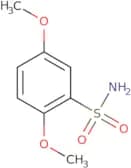
CAS:<p>Versatile small molecule scaffold</p>Formula:C12H18ClNOPurity:Min. 95%Molecular weight:227.73 g/mol2,5-Dimethoxybenzenesulfonamide
CAS:<p>2,5-Dimethoxybenzenesulfonamide is a piperidine derivative that has been shown to be an efficient electrophile. 2,5-Dimethoxybenzenesulfonamide reacts with protonated metal surfaces, forming a monolayer of high surface area and low coverage. The affinity of this compound for the metal surface is due to its nucleophilic nature. This compound displays a strong adsorption to the metal surface and provides protection from corrosion by acting as an oxygen scavenger. Experimental results have shown that 2,5-dimethoxybenzenesulfonamide exhibits higher efficiencies in the presence of other reactive compounds.<br>2,5-Dimethoxybenzenesulfonamide was used in computational simulations to study the effects of different parameters on the adsorption process. The use of these simulations can provide insight into how changes in experimental conditions affect the efficiency of this molecule.</p>Formula:C8H11NO4SPurity:Min. 95%Molecular weight:217.24 g/mol2-Bromo-3-chloronitrobenzene
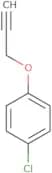
CAS:<p>2-Bromo-3-chloronitrobenzene is an estrogenic compound that binds to the estrogen receptor. It has been shown to have anticancer activity in animal studies, which may be due to its ability to inhibit transcriptional activity and induce apoptosis. 2-Bromo-3-chloronitrobenzene has been used as a starting material for synthesis of other compounds and exhibits moderate affinity for the estrogen receptor. This compound can be synthesized by a palladium-catalyzed cross-coupling reaction of 2-bromobenzyl bromide and chloroacetone, followed by treatment with salicylaldoxime in the presence of base.</p>Formula:C6H3BrClNO2Purity:Min. 95%Molecular weight:236.45 g/mol1-chloro-4-(prop-2-yn-1-yloxy)benzene
CAS:<p>1-Chloro-4-(prop-2-yn-1-yloxy)benzene is a copper chelating agent that is used in the production of organic chemicals. It is also an antimicrobial agent that has been shown to be active against filamentous fungi, including Aspergillus and Rhizopus species. This compound has been shown to inhibit the growth of Trichosporon species and itraconazole resistant strains of Candida albicans. The antimicrobial activity of 1-chloro-4-(prop-2-yn-1-yloxy)benzene is catalytic and additive, when combined with other agents such as benzalkonium chloride or thymol.</p>Formula:C9H7ClOPurity:Min. 95%Molecular weight:166.6 g/mol1-(Morpholin-4-yl)-1-phenylpropan-2-one
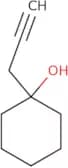
CAS:Controlled Product<p>Versatile small molecule scaffold</p>Formula:C13H17NO2Purity:Min. 95%Molecular weight:219.28 g/mol1-(Prop-2-yn-1-yl)cyclohexan-1-ol
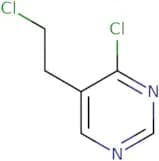
CAS:<p>1-(Prop-2-yn-1-yl)cyclohexan-1-ol is a colorless liquid with a sweet odor. It is soluble in most organic solvents, including ethanol and ether. It has been used as an intermediate for the synthesis of other organic compounds.</p>Formula:C9H14OPurity:Min. 95%Molecular weight:138.21 g/mol4-Chloro-5-(2-chloroethyl)pyrimidine
CAS:<p>Versatile small molecule scaffold</p>Formula:C6H6Cl2N2Purity:Min. 95%Molecular weight:177.03 g/molPyrimido[4,5-d]pyrimidine-2,4,7-triamine
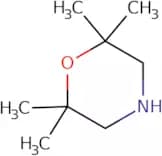
CAS:<p>Versatile small molecule scaffold</p>Formula:C6H7N7Purity:Min. 95%Molecular weight:177.17 g/mol2,2,6,6-Tetramethylmorpholine
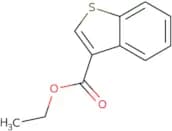
CAS:<p>2,2,6,6-Tetramethylmorpholine (TEM) is a chemical compound that is used in the synthesis of other chemicals. It is an electrolyte with a high dielectric constant and has been used as a solvent. The TEM molecule has two hydrogen isotopes: deuterium and protium. Deuterium has higher mass than protium, so it has different kinetic properties. In voltammetry experiments on TEM, the voltammogram obtained from deuterium-substituted TEM is shifted to a more positive potential than for protium-substituted TEM. This can be seen by examining the difference in the kinetic curves for each of the isotopes.</p>Formula:C8H17NOPurity:Min. 95%Molecular weight:143.23 g/molEthyl 1-benzothiophene-3-carboxylate
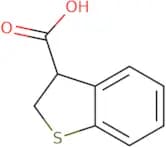
CAS:<p>Ethyl 1-benzothiophene-3-carboxylate is a heterocyclic compound that has been shown to be an efficient condensation reagent. This compound has two methylene groups and is used in the synthesis of heterocycles. It can be used as a precursor for the synthesis of amines and pyridopyridazine derivatives, which are often used as reagents in organic chemistry. Ethyl 1-benzothiophene-3-carboxylate can also be used for irradiation experiments. It has been shown that this compound is active at lower temperatures than other benzothiophenes, making it ideal for use in x-ray crystallography experiments.</p>Formula:C11H10O2SPurity:Min. 95%Molecular weight:206.26 g/mol2,3-Dihydro-1-benzothiophene-3-carboxylic acid
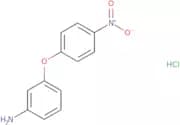
CAS:<p>Versatile small molecule scaffold</p>Formula:C9H8O2SPurity:Min. 95%Molecular weight:180.23 g/mol3-(4-Nitrophenoxy)aniline hydrochloride
CAS:<p>Versatile small molecule scaffold</p>Formula:C12H11ClN2O3Purity:Min. 95%Molecular weight:266.68 g/mol

![4H,5H,6H,7H-Pyrazolo[1,5-a]pyridine](/_next/image/?url=https%3A%2Fstatic.cymitquimica.com%2Fproducts%2F3D%2Fthumb-webp%2FUAA07857.webp&w=3840&q=75)



![Pyrimido[4,5-d]pyrimidine-2,4,7-triamine](/_next/image/?url=https%3A%2Fstatic.cymitquimica.com%2Fproducts%2F3D%2Fthumb-webp%2FUAA14844.webp&w=3840&q=75)