Building Blocks
This section contains fundamental products for the synthesis of organic and biological compounds. Building blocks are the essential starting materials used to construct complex molecules through various chemical reactions. They play a critical role in drug discovery, material science, and chemical research. At CymitQuimica, we offer a diverse range of high-quality building blocks to support your innovative research and industrial projects, ensuring you have the essential components for successful synthesis.
Subcategories of "Building Blocks"
- Boronic Acids & Boronic Acid Derivatives(5,756 products)
- Chiral Building Blocks(1,242 products)
- Hydrocarbon Building Blocks(6,095 products)
- Organic Building Blocks(61,055 products)
Found 199650 products of "Building Blocks"
Sort by
Purity (%)
0
100
|
0
|
50
|
90
|
95
|
100
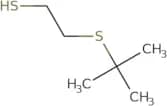
2-(tert-Butylsulfanyl)ethane-1-thiol
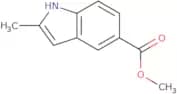
CAS:<p>Versatile small molecule scaffold</p>Formula:C6H14S2Purity:Min. 95%Molecular weight:150.3 g/molMethyl 2-methyl-1H-indole-5-carboxylate
CAS:<p>Methyl 2-methyl-1H-indole-5-carboxylate is a heterocyclic compound that is used as a starting material to synthesize other compounds. It can be prepared by reacting dimedone with methanol and boron trifluoride in polyphosphoric acid. This reaction produces methyl 2-methyl-1H-indole-5-carboxylate and water, which are separated by distillation. Methyl 2-methyl-1H-indole-5-carboxylate is also used to make heterocycles, heterocyclic compounds, and enamines.</p>Formula:C11H11NO2Purity:Min. 95%Molecular weight:189.21 g/mol2-(1-Methyl-1H-indol-2-yl)ethan-1-ol
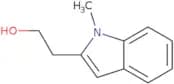
CAS:<p>Versatile small molecule scaffold</p>Formula:C11H13NOPurity:Min. 95%Molecular weight:175.23 g/mol3-[3-(Benzyloxy)phenyl]propan-1-ol
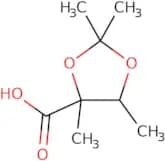
CAS:<p>Versatile small molecule scaffold</p>Formula:C16H18O2Purity:Min. 95%Molecular weight:242.31 g/mol2,2,4,5-Tetramethyl-1,3-dioxolane-4-carboxylic acid
CAS:<p>Versatile small molecule scaffold</p>Formula:C8H14O4Purity:Min. 95%Molecular weight:174.19 g/molOctahydropyrrolo[1,2-a]pyrimidine
CAS:<p>Octahydropyrrolo[1,2-a]pyrimidine is a cyclic diamine that is catalysed by the enzyme oxidase. In this process, octahydropyrrolo[1,2-a]pyrimidine is oxidized to form the metabolite hexahydropyrimidine. The reaction requires hydrogen peroxide as a co-substrate. Octahydropyrrolo[1,2-a]pyrimidine can also be used as a precursor for spermine and spermidine production. This compound has an aminoaldehyde group at one end of the molecule and a cyclopentane ring at the other end. It can be synthesized from diamines and cyclopentane derivatives in two steps involving dehydrogenation followed by oxidation.</p>Formula:C7H14N2Purity:Min. 95%Molecular weight:126.2 g/mol2-Chloro-3-(propan-2-yl)pyrazine
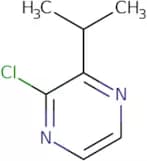
CAS:<p>Versatile small molecule scaffold</p>Formula:C7H9ClN2Purity:Min. 95%Molecular weight:156.61 g/mol2-(2-Methylphenyl)acetohydrazide
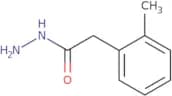
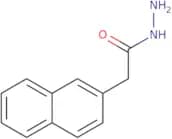
CAS:<p>Versatile small molecule scaffold</p>Formula:C9H12N2OPurity:Min. 95%Molecular weight:164.2 g/mol2-(Naphthalen-2-yl)acetohydrazide
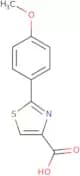
CAS:<p>Versatile small molecule scaffold</p>Formula:C12H12N2OPurity:Min. 95%Molecular weight:200.24 g/mol2-(4-Methoxyphenyl)thiazole-4-carboxylic acid
CAS:<p>Versatile small molecule scaffold</p>Formula:C11H9NO3SPurity:Min. 95%Molecular weight:235.26 g/mol2-Chloro-N-{[4-(dimethylamino)phenyl]methyl}acetamide
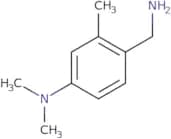
CAS:<p>Versatile small molecule scaffold</p>Formula:C11H15ClN2OPurity:Min. 95%Molecular weight:226.7 g/mol4-(Aminomethyl)-N,N,3-trimethylaniline
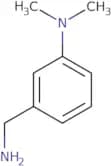
CAS:<p>Versatile small molecule scaffold</p>Formula:C10H16N2Purity:Min. 95%Molecular weight:164.25 g/mol3-(Aminomethyl)-N,N-dimethylaniline
CAS:Versatile small molecule scaffoldFormula:C9H14N2Purity:Min. 95%Molecular weight:150.23 g/mol1-Methyl-1H-[1,2,3]triazolo[4,5-c]pyridine
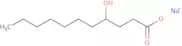
CAS:<p>Versatile small molecule scaffold</p>Formula:C6H6N4Purity:Min. 95%Molecular weight:134.14 g/molSodium 4-hydroxyundecanoate
CAS:<p>Versatile small molecule scaffold</p>Formula:C11H21NaO3Purity:Min. 95%Molecular weight:224.27 g/mol3-Bromo-2-methoxythiophene
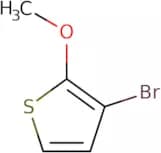
CAS:<p>3-Bromo-2-methoxythiophene is a boron-containing compound that is used as a precursor in organic synthesis. It has been shown to be an effective reagent for the synthesis of esters, boronic acids, and other compounds with various functional groups. 3-Bromo-2-methoxythiophene can be obtained by reacting acetonitrile with dimethyl sulfate in the presence of a base such as potassium carbonate. The reaction yields a mixture of 3-bromo-2-methoxythiophene and methyl 2,3-dibromothiophene. This compound is also available commercially.</p>Formula:C5H5BrOSPurity:Min. 95%Molecular weight:193.06 g/mol1-(3,4-Dibromo-2-thienyl)-1-ethanone
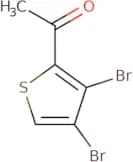
CAS:<p>Versatile small molecule scaffold</p>Formula:C6H4Br2OSPurity:Min. 95%Molecular weight:283.97 g/mol1-(3,4-Dichlorothiophen-2-yl)ethan-1-one
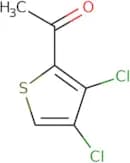
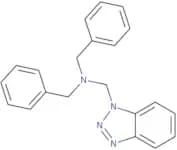
CAS:<p>Versatile small molecule scaffold</p>Formula:C6H4Cl2OSPurity:Min. 95%Molecular weight:195.07 g/mol(1H-1,2,3-Benzotriazol-1-ylmethyl)dibenzylamine
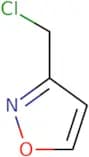
CAS:<p>Versatile small molecule scaffold</p>Formula:C21H20N4Purity:Min. 95%Molecular weight:328.42 g/mol3-(Chloromethyl)isoxazole
CAS:<p>Versatile small molecule scaffold</p>Formula:C4H4ClNOPurity:Min. 95%Molecular weight:117.53 g/mol

![3-[3-(Benzyloxy)phenyl]propan-1-ol](/_next/image/?url=https%3A%2Fstatic.cymitquimica.com%2Fproducts%2F3D%2Fthumb-webp%2FHCA66835.webp&w=3840&q=75)
![Octahydropyrrolo[1,2-a]pyrimidine](/_next/image/?url=https%3A%2Fstatic.cymitquimica.com%2Fproducts%2F3D%2Fthumb-webp%2FHCA67223.webp&w=3840&q=75)
![2-Chloro-N-{[4-(dimethylamino)phenyl]methyl}acetamide](/_next/image/?url=https%3A%2Fstatic.cymitquimica.com%2Fproducts%2F3D%2Fthumb-webp%2FHCA67838.webp&w=3840&q=75)
![1-Methyl-1H-[1,2,3]triazolo[4,5-c]pyridine](/_next/image/?url=https%3A%2Fstatic.cymitquimica.com%2Fproducts%2F3D%2Fthumb-webp%2FHCA68052.webp&w=3840&q=75)