


Building Blocks
This section contains fundamental products for the synthesis of organic and biological compounds. Building blocks are the essential starting materials used to construct complex molecules through various chemical reactions. They play a critical role in drug discovery, material science, and chemical research. At CymitQuimica, we offer a diverse range of high-quality building blocks to support your innovative research and industrial projects, ensuring you have the essential components for successful synthesis.
Subcategories of "Building Blocks"
- Boronic Acids & Boronic Acid Derivatives(5,756 products)
- Chiral Building Blocks(1,242 products)
- Hydrocarbon Building Blocks(6,095 products)
- Organic Building Blocks(61,055 products)
Found 199650 products of "Building Blocks"
Sort by
Purity (%)
0
100
|
0
|
50
|
90
|
95
|
100
2-(2-Amino-1-hydroxyethyl)furan
CAS:<p>Versatile small molecule scaffold</p>Formula:C6H9NO2Purity:Min. 95%Molecular weight:127.14 g/molIsopropoxybenzene
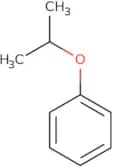
CAS:<p>Isopropoxybenzene is an organic compound that belongs to the group of alkynylbenzenes. It is synthesized from ethyl diazoacetate and a terminal alkoxybenzene in the presence of a Friedel-Crafts catalyst. Isopropoxybenzene has been found to have potent anti-inflammatory effects and can be used for the treatment of bowel disease, such as ulcerative colitis. The biological properties of isopropoxybenzene are related to its ability to act as a potent antagonist of chloride channels. Isopropoxybenzene also has the potential to inhibit production of inflammatory factors by reducing oxidative stress in cells.</p>Formula:C9H12OPurity:Min. 95%Molecular weight:136.19 g/mol1-Benzyl-3,3-dimethylthiourea
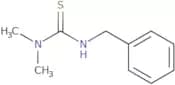
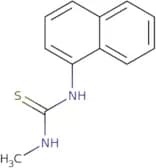
CAS:Versatile small molecule scaffoldFormula:C10H14N2SPurity:Min. 95%Molecular weight:194.3 g/mol3-Methyl-1-(naphthalen-1-yl)thiourea
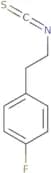
CAS:<p>Versatile small molecule scaffold</p>Formula:C12H12N2SPurity:Min. 95%Molecular weight:216.3 g/mol1-Fluoro-4-(2-isothiocyanatoethyl)benzene
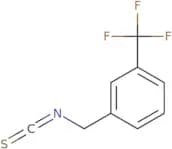
CAS:<p>Versatile small molecule scaffold</p>Formula:C9H8FNSPurity:Min. 95%Molecular weight:181.23 g/mol1-(Isothiocyanatomethyl)-3-(trifluoromethyl)benzene
CAS:<p>Versatile small molecule scaffold</p>Formula:C9H6F3NSPurity:Min. 95%Molecular weight:217.21 g/mol2-Chlorophenyl Isothiocyanate
CAS:<p>2-Chlorophenyl Isothiocyanate is a molecule that has been shown to have cytotoxic activity against cancer cells. It is believed to work by inducing apoptosis and modulating the expression of certain genes. 2-Chlorophenyl Isothiocyanate has also been shown to induce cell death in fibroblast cells, which may be due to its ability to polarize these cells and cause them to become more susceptible to oxidative stress. It also has the ability to react with DNA via a dihedral mechanism. The thermodynamic data for this compound are high, as it can form strong hydrogen bonds and hydrophilic interactions with water molecules. This molecule also contains functional groups such as carbonyl and thiocarbonyl, which are reactive in biological systems. 2-Chlorophenyl Isothiocyanate's reaction mechanism is believed to involve electron transfer from an electron rich site on the molecule (such as a carbonyl)</p>Formula:C7H4ClNSPurity:Min. 95%Molecular weight:169.63 g/molOctaahydro-indolizin-3-one
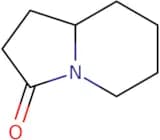
CAS:<p>Octahydro-indolizin-3-one is a peptidomimetic with a hypervalent structure. It has been shown to bind to the pancreatic enzyme cck-a with high affinity, and it can inhibit the production of proinflammatory cytokines. Octahydro-indolizin-3-one has also been shown to be selective for the receptor subtype that binds amido groups, which is important for its activity. This compound also shows stereoselectivity in binding to ornithine, which may be responsible for its biological activities.</p>Formula:C8H13NOPurity:Min. 95%Molecular weight:139.19 g/mol1,2,3,4-Tetrahydroquinoline-1-carbaldehyde
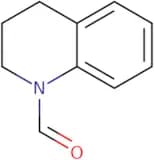
CAS:<p>Tetrahydroquinoline-1-carbaldehyde is extracted from the seeds of the plant Cyperus rotundus. It has been shown to have trackable results in laboratory mice.</p>Formula:C10H11NOPurity:Min. 95%Molecular weight:161.2 g/molEthyl(3-methylbutan-2-yl)amine hydrochloride
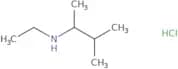
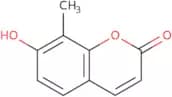
CAS:<p>Versatile small molecule scaffold</p>Formula:C7H18ClNPurity:Min. 95%Molecular weight:151.68 g/mol7-Hydroxy-8-methyl-2H-1-benzopyran-2-one
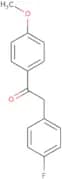
CAS:<p>The 7-hydroxy-8-methyl-2H-1-benzopyran-2-one is a fluorescent probe that is used in the imaging of DNA and RNA. It has been shown to bind to nucleic acids with high affinity, and can be used to identify the location of specific sequences on DNA or RNA. The fluorescence of this probe can be detected using a microscope, which makes it useful for identifying specific regions of DNA or RNA.</p>Formula:C10H8O3Purity:Min. 95%Molecular weight:176.17 g/mol2-(4-Fluorophenyl)-1-(4-methoxyphenyl)ethan-1-one
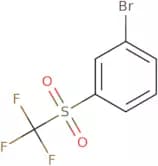
CAS:<p>Versatile small molecule scaffold</p>Formula:C15H13FO2Purity:Min. 95%Molecular weight:244.26 g/mol1-Bromo-3-((trifluoromethyl)sulfonyl)benzene
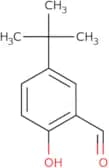
CAS:<p>Versatile small molecule scaffold</p>Formula:C7H4BrF3O2SPurity:Min. 95%Molecular weight:289.07 g/mol5-tert-Butyl-2-hydroxybenzaldehyde
CAS:<p>5-tert-Butyl-2-hydroxybenzaldehyde is a synthetic compound that has been used in wastewater treatment. It is a hydrogen donor, which helps to remove organic matter and other contaminants from wastewater. The hydrogen bonding properties of 5-tert-Butyl-2-hydroxybenzaldehyde have been studied systematically using hydrogen chloride and hydrogen ions. This compound reacts with the acidic ph, removing hydrogen ions and forming chloride. The fluorescence lifetimes of this compound have been shown to vary with structural changes. Oxidation products of 5-tert-Butyl-2-hydroxybenzaldehyde have also been synthesized, studied crystallographically, and structurally characterized.</p>Formula:C11H14O2Purity:Min. 95%Molecular weight:178.23 g/mol1-Methyl-3-phenyl thiourea
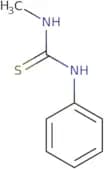
CAS:<p>1-Methyl-3-phenyl thiourea is a homologous compound that has been shown to produce an increase in cerebral blood flow and a decrease in hematocrit. 1-Methyl-3-phenyl thiourea also has an empirically derived rat dose, which is 100 mg/kg. This drug has been shown to produce dihedral angles of approximately 180 degrees and unsymmetrical conformation. 1-Methyl-3-phenyl thiourea is a good example of a molecule with centrosymmetrical conformation.</p>Formula:C8H10N2SPurity:Min. 95%Molecular weight:166.24 g/mol3-Methyl-1,2-dihydroquinolin-2-one
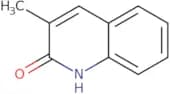
CAS:<p>3-Methyl-1,2-dihydroquinolin-2-one is a synthetic molecule with a molecular weight of 198.3. This compound has not yet been researched to the extent that it has been patented and assigned a chemical name. It is a diazine derivative, containing two benzyl groups and two chlorine atoms, which are connected by an intramolecular bond. The compound is soluble in dimethylsulphoxide and insoluble in water. 3-Methyl-1,2-dihydroquinolin-2-one is used in the synthesis of benzodiazines and other compounds.</p>Formula:C10H9NOPurity:Min. 95%Molecular weight:159.18 g/mol2-Chloro-1-(chloromethyl)-4-methylbenzene
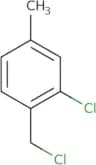
CAS:2-Chloro-1-(chloromethyl)-4-methylbenzene is an industrial chemical that belongs to the class of quaternary ammonium compounds. It is a monomer that can be used in the production of alkali-resistant polymers and synthetic fibers. 2-Chloro-1-(chloromethyl)-4-methylbenzene reacts with alkalis to form a quaternary ammonium salt, which catalyzes the elimination of water from other molecules. This reaction can be used to synthesize many organic compounds that are not readily available commercially.Formula:C8H8Cl2Purity:Min. 95%Molecular weight:175.05 g/mol{Imidazo[1,2-a]pyridin-3-ylmethyl}trimethylazanium iodide
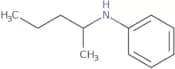
CAS:<p>Versatile small molecule scaffold</p>Formula:C11H16IN3Purity:Min. 95%Molecular weight:317.17 g/molN-(Pentan-2-yl)aniline
CAS:<p>Versatile small molecule scaffold</p>Formula:C11H17NPurity:Min. 95%Molecular weight:163.26 g/molBicyclo[2.2.2]octan-2-one
CAS:<p>Bicyclo[2.2.2]octan-2-one is an enolate that can be synthesized by the acetylation of ketones or by the reaction of nitrite ion with aldehydes. This compound has been shown to undergo stereoselective reactions, including borohydride reduction and carbonyl group activation. The bicyclic skeleton of this molecule is asymmetric, which allows for the synthesis of two different enolates. Bicyclo[2.2.2]octan-2-one predominately exists in its keto form, but does exist as a diketone under certain conditions. When exposed to light, bicyclo[2.2.2]octan-2-one will undergo photoelectron transfer from the carbonyl groups to produce an intramolecular hydrogen bond between the carbonyl oxygen and the hydroxyl oxygen of neighboring molecules, making it predominately a dik</p>Formula:C8H12OPurity:Min. 95%Molecular weight:124.18 g/mol



![{Imidazo[1,2-a]pyridin-3-ylmethyl}trimethylazanium iodide](/_next/image/?url=https%3A%2Fstatic.cymitquimica.com%2Fproducts%2F3D%2Fthumb-webp%2FCAA71791.webp&w=3840&q=75)
![Bicyclo[2.2.2]octan-2-one](/_next/image/?url=https%3A%2Fstatic.cymitquimica.com%2Fproducts%2F3D%2Fthumb-webp%2FCAA71623.webp&w=3840&q=75)