Building Blocks
This section contains fundamental products for the synthesis of organic and biological compounds. Building blocks are the essential starting materials used to construct complex molecules through various chemical reactions. They play a critical role in drug discovery, material science, and chemical research. At CymitQuimica, we offer a diverse range of high-quality building blocks to support your innovative research and industrial projects, ensuring you have the essential components for successful synthesis.
Subcategories of "Building Blocks"
- Boronic Acids & Boronic Acid Derivatives(5,756 products)
- Chiral Building Blocks(1,242 products)
- Hydrocarbon Building Blocks(6,095 products)
- Organic Building Blocks(61,051 products)
Found 199813 products of "Building Blocks"
Sort by
Purity (%)
0
100
|
0
|
50
|
90
|
95
|
100
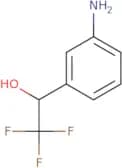
1-(3-Aminophenyl)-2,2,2-trifluoroethan-1-ol
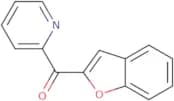
CAS:<p>Versatile small molecule scaffold</p>Formula:C8H8F3NOPurity:Min. 95%Molecular weight:191.15 g/mol2-(1-Benzofuran-2-carbonyl)pyridine
CAS:<p>Versatile small molecule scaffold</p>Formula:C14H9NO2Purity:Min. 95%Molecular weight:223.23 g/mol2-[(E)-2-(4-Methoxyphenyl)ethenyl]-1H-pyrrole
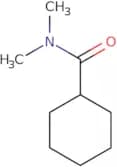
CAS:<p>Versatile small molecule scaffold</p>Formula:C13H13NOPurity:Min. 95%Molecular weight:199.2 g/molN,N-Dimethylcyclohexanecarboxamide
CAS:<p>N,N-Dimethylcyclohexanecarboxamide is an acid salt of besylate that is used as a drug for the treatment of hyperglycemia. It has been shown to have a rapid onset and short duration of action. The chemical name for N,N-Dimethylcyclohexanecarboxamide is 1-[2-(2-methoxyethoxy)ethyl]-4-methyl-1,4-dihydropyridine 2,4-dicarboxylic acid methyl ester. This compound inhibits insulin release from the pancreas and stimulates glucagon release from the alpha cells in the pancreas. These effects lead to an increase in blood glucose levels.</p>Formula:C9H17NOPurity:Min. 95%Molecular weight:155.24 g/mol3-(3-Methoxyphenyl)prop-2-enoic acid
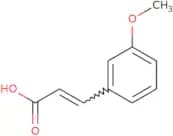
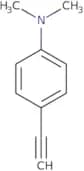
CAS:<p>3-(3-Methoxyphenyl)prop-2-enoic acid is a phenolic compound that has been shown to have anti-inflammatory effects in bowel disease. It also has antioxidant properties and can inhibit the production of acetate, a toxic byproduct of lipid peroxidation. This compound is found in many natural products, such as coffee beans and green tea leaves. 3-(3-methoxyphenyl)prop-2-enoic acid exhibits strong free radical scavenging activity and may be used for the prevention of metabolic disorders due to its ability to inhibit mitochondrial membrane potential. 3-(3-methoxyphenyl)prop-2-enoic acid also inhibits the growth of carcinoma cells, which may be due to its inhibition of tumor cell proliferation or induction of apoptosis.</p>Formula:C10H10O3Purity:Min. 95%Molecular weight:178.18 g/mol4-Ethynyl-N,N-dimethylaniline
CAS:<p>4-Ethynyl-N,N-dimethylaniline (EDMA) is a potential drug candidate for the treatment of cancer. EDMA has been shown to have anti-cancer activity in vitro and in vivo. It inhibits the growth of cancer cells by binding to amines and other functional groups, which prevents their use by enzymes. This binding also prevents the production of reactive oxygen species, leading to cell death. The structure of EDMA has been determined using X-ray crystallography, which showed that it binds to chloride ions in a catalytic mechanism. The chloride ion was found to be an important component for the drug’s activity. EDMA also has anti-inflammatory properties due to its ability to inhibit hydroxamic acid synthesis in neutrophils and macrophages.</p>Formula:C10H11NPurity:Min. 95%Molecular weight:145.2 g/mol2-[(Hydroxyimino)methyl]-6-nitrophenol
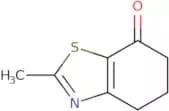
CAS:<p>Versatile small molecule scaffold</p>Formula:C7H6N2O4Purity:Min. 95%Molecular weight:182.13 g/mol2-Methyl-4,5,6,7-tetrahydro-1,3-benzothiazol-7-one
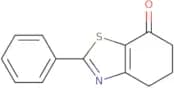
CAS:<p>Versatile small molecule scaffold</p>Formula:C8H9NOSPurity:Min. 95%Molecular weight:167.23 g/mol2-Phenyl-4,5,6,7-tetrahydro-1,3-benzothiazol-7-one
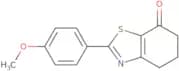
CAS:<p>Versatile small molecule scaffold</p>Formula:C13H11NOSPurity:Min. 95%Molecular weight:229.3 g/mol2-(4-Methoxyphenyl)-4,5,6,7-tetrahydro-1,3-benzothiazol-7-one
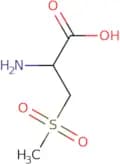
CAS:<p>Versatile small molecule scaffold</p>Formula:C14H13NO2SPurity:Min. 95%Molecular weight:259.33 g/mol(2R)-2-Amino-3-methanesulfonylpropanoic acid
CAS:<p>Versatile small molecule scaffold</p>Formula:C4H9NO4SPurity:Min. 95%Molecular weight:167.19 g/mol2-[(Dimethylamino)methyl]cyclohexan-1-ol
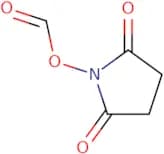
CAS:<p>Versatile small molecule scaffold</p>Formula:C9H19NOPurity:Min. 95%Molecular weight:157.25 g/mol2,5-Dioxopyrrolidin-1-yl formate
CAS:<p>2,5-Dioxopyrrolidin-1-yl formate is a solubilized ATP analog that has been clinically developed for the treatment of cancer. This drug binds to cell membranes and causes alkylation of the acidic phospholipids in the membrane, leading to increased permeability of the membrane and release of intracellular components. 2,5-Dioxopyrrolidin-1-yl formate also interacts with lysosomes and increases their acidity, which may lead to an increase in lysosomal enzyme activity. This drug has been shown to inhibit tumor growth in a mouse model by binding to erythrocytes while it was being simultaneously administered intravenously. The chemical structures of this drug are closely related to those of phaseolus, which is known for its anticancer effects.</p>Formula:C5H5NO4Purity:Min. 95%Molecular weight:143.1 g/mol2,4-Dichloro-5-methylaniline
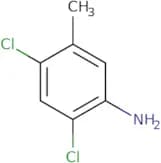
CAS:<p>Versatile small molecule scaffold</p>Formula:C7H7Cl2NPurity:Min. 95%Molecular weight:176.04 g/mol1-Azabicyclo[3.2.1]octan-4-one
CAS:<p>Versatile small molecule scaffold</p>Formula:C7H11NOPurity:Min. 95%Molecular weight:125.17 g/mol4-Oxo-cycloheptanecarboxylic acid methyl ester
CAS:<p>4-Oxo-cycloheptanecarboxylic acid methyl ester is a transfer, mediated, electron, expansion electron transfer agent that can be used for the production of acrylic acid. It is typically used as an intermediate in the production of nylon 6 and nylon 66.</p>Formula:C9H14O3Purity:Min. 95%Molecular weight:170.21 g/molDicyclopentylmethanone
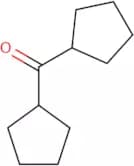
CAS:<p>Dicyclopentylmethanone is an anabolic agent that is used as a progestational, antibiotic, or antiviral agent. It binds to the hydroxy group of the enzyme's active site and inhibits it from binding to its substrate. Dicyclopentylmethanone also has antiviral activity against some viruses by binding to their ribonucleic acid (RNA) and preventing viral replication. This drug may be used in vaccines to stimulate antibody production, but it has not been approved for this use.</p>Formula:C11H18OPurity:Min. 95%Molecular weight:166.26 g/mol3-Methyl-1-(thiophen-2-yl)butan-1-one
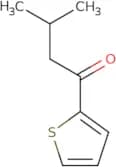
CAS:<p>Versatile small molecule scaffold</p>Formula:C9H12OSPurity:Min. 95%Molecular weight:168.26 g/mol3-Pyridinemethanethiol
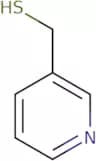
CAS:<p>3-Pyridinemethanethiol is a ketone with the formula CHCH(SH). It is a ligand that reacts with metals in a variety of coordination complexes. 3-Pyridinemethanethiol reacts with alkyl groups to form cyclic thioketones, which are intermediates in many organic syntheses. The reaction of 3-pyridinemethanethiol with diethyl ether can be followed by voltammetry and has been used to measure the rate of the reaction. 3-Pyridinemethanethiol can also be used as a cocatalyst for reactions involving acid catalysts, such as inorganic acids. This compound has been shown to react with transition metal salts to form coordination complexes and undergo reactions involving oxidation or reduction.</p>Formula:C6H7NSPurity:Min. 95%Molecular weight:125.19 g/molDisodium 4-sulfinatobenzoate
CAS:<p>Versatile small molecule scaffold</p>Formula:C7H4Na2O4SPurity:Min. 95%Molecular weight:230.1 g/mol

![2-[(E)-2-(4-Methoxyphenyl)ethenyl]-1H-pyrrole](/_next/image/?url=https%3A%2Fstatic.cymitquimica.com%2Fproducts%2F3D%2Fthumb-webp%2FSAA55959.webp&w=3840&q=75)
![2-[(Hydroxyimino)methyl]-6-nitrophenol](/_next/image/?url=https%3A%2Fstatic.cymitquimica.com%2Fproducts%2F3D%2Fthumb-webp%2FSAA58064.webp&w=3840&q=75)
![2-[(Dimethylamino)methyl]cyclohexan-1-ol](/_next/image/?url=https%3A%2Fstatic.cymitquimica.com%2Fproducts%2F3D%2Fthumb-webp%2FSAA58970.webp&w=3840&q=75)
![1-Azabicyclo[3.2.1]octan-4-one](/_next/image/?url=https%3A%2Fstatic.cymitquimica.com%2Fproducts%2F3D%2Fthumb-webp%2FSAA60477.webp&w=3840&q=75)