Building Blocks
This section contains fundamental products for the synthesis of organic and biological compounds. Building blocks are the essential starting materials used to construct complex molecules through various chemical reactions. They play a critical role in drug discovery, material science, and chemical research. At CymitQuimica, we offer a diverse range of high-quality building blocks to support your innovative research and industrial projects, ensuring you have the essential components for successful synthesis.
Subcategories of "Building Blocks"
- Boronic Acids & Boronic Acid Derivatives(5,756 products)
- Chiral Building Blocks(1,242 products)
- Hydrocarbon Building Blocks(6,095 products)
- Organic Building Blocks(61,055 products)
Found 199650 products of "Building Blocks"
Sort by
Purity (%)
0
100
|
0
|
50
|
90
|
95
|
100
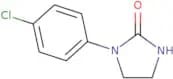
1-(4-chlorophenyl)imidazolidin-2-one
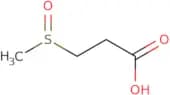
CAS:<p>Versatile small molecule scaffold</p>Formula:C9H9N2OClPurity:Min. 95%Molecular weight:196.63 g/mol3-Methanesulfinylpropanoic acid
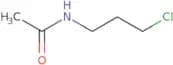
CAS:<p>Versatile small molecule scaffold</p>Formula:C4H8O3SPurity:Min. 95%Molecular weight:136.17 g/molN-(3-Chloropropyl)acetamide
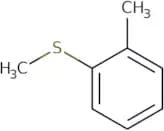
CAS:<p>Versatile small molecule scaffold</p>Formula:C5H10ClNOPurity:Min. 95%Molecular weight:135.59 g/mol2-Methylbenzyl mercaptan
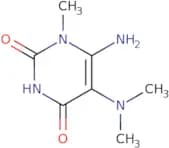
CAS:<p>2-Methylbenzyl mercaptan is a heterocyclic compound that is found in the sulfoxides and azides classes. It can be synthesized by treating 2-methylbenzaldehyde with trifluoromethanesulfonic acid or trifluoroacetic acid. The chloride yields are high and the reaction is catalysed by aluminum chloride, triethylamine, or zinc chloride. This compound can be converted to a bioconjugate through ring-opening reactions with carboxyamide groups, which are present on proteins in mammalian cells. The bioconjugate can then be used as a fluorescent probe to detect the presence of specific proteins in living cells.</p>Formula:C8H10SPurity:Min. 95%Molecular weight:138.23 g/mol6-Amino-5-(dimethylamino)-1-methyl-1,2,3,4-tetrahydropyrimidine-2,4-dione
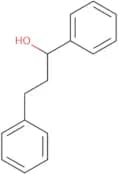
CAS:<p>Versatile small molecule scaffold</p>Formula:C7H12N4O2Purity:Min. 95%Molecular weight:184.2 g/mol1,3-Diphenylpropan-1-ol
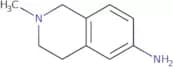
CAS:1,3-Diphenylpropan-1-ol is a benzyl alcohol derivative. It is a white solid that can be used as a dehydrogenation agent for the synthesis of chalcone derivatives. It has been used as an intermediate in the synthesis of other organic compounds and has been detected in the reaction solution by thin layer chromatography. 1,3-Diphenylpropan-1-ol is also involved in the catalytic transfer of acetylacetonate to benzaldehyde or benzoic acid. The resulting anion can be neutralized with hydrochloric acid to produce benzyl alcohol or reacted with sodium hydroxide to produce dihydrochalcone.Formula:C15H16OPurity:Min. 95%Molecular weight:212.29 g/mol2-Methyl-1,2,3,4-tetrahydroisoquinolin-6-amine
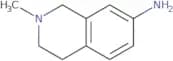
CAS:<p>Versatile small molecule scaffold</p>Formula:C10H14N2Purity:Min. 95%Molecular weight:162.23 g/mol2-Methyl-1,2,3,4-tetrahydroisoquinolin-7-amine
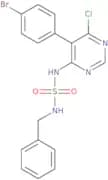
CAS:<p>Versatile small molecule scaffold</p>Formula:C10H14N2Purity:Min. 95%Molecular weight:162.23 g/molN-benzylsulfamide
CAS:<p>N-benzylsulfamide is a synthetic cannabinoid derivative that is activated by hydrochloric acid in the stomach. It is an agonist of the cannabinoid receptor, which is found in the brain and nervous system. N-benzylsulfamide has been shown to produce muscle relaxation by increasing potassium efflux from muscle cells and decreasing calcium influx, leading to decreased contractions. N-benzylsulfamide has also been shown to have anti-inflammatory effects. It inhibits prostaglandin synthesis by inhibiting cyclooxygenase activity, thus reducing inflammation. The molecule also binds to benzodiazepine receptors and can be used as a treatment for seizures or convulsions.</p>Formula:C7H10N2O2SPurity:Min. 95%Molecular weight:186.23 g/molN-Benzyl-N-ethylaminosulfonamide
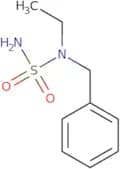
CAS:<p>Versatile small molecule scaffold</p>Formula:C9H14N2O2SPurity:Min. 95%Molecular weight:214.29 g/mol3-Amino-3,4-dihydro-2H-1-benzopyran-4-one hydrochloride
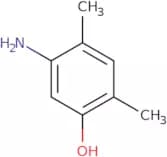
CAS:<p>Versatile small molecule scaffold</p>Formula:C9H10ClNO2Purity:Min. 95%Molecular weight:199.63 g/mol5-Amino-2,4-dimethylphenol
CAS:<p>Versatile small molecule scaffold</p>Formula:C8H11NOPurity:Min. 95%Molecular weight:137.18 g/mol2-Sulfanylidene-1,3-diazaspiro[4.4]nonan-4-one
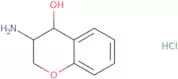
CAS:<p>Versatile small molecule scaffold</p>Formula:C7H10N2OSPurity:Min. 95%Molecular weight:170.23 g/mol3-Amino-3,4-dihydro-2H-1-benzopyran-4-ol hydrochloride
CAS:<p>Versatile small molecule scaffold</p>Formula:C9H12ClNO2Purity:Min. 95%Molecular weight:201.65 g/mol3,5-Dichloro-4-[2-(dimethylamino)ethoxy]aniline
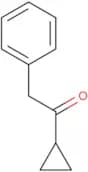
CAS:Controlled Product<p>Versatile small molecule scaffold</p>Formula:C10H14Cl2N2OPurity:Min. 95%Molecular weight:249.13 g/mol1-Cyclopropyl-2-phenylethan-1-one
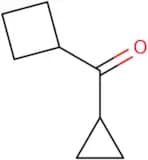
CAS:<p>1-Cyclopropyl-2-phenylethan-1-one is a synthetic compound that can be obtained by the ring opening of an epoxide. It has two carbonyl groups, two aldehyde groups, and one fluorine atom. This molecule can be synthesized in high yields and has been shown to react with nucleophiles due to its electrophilic nature. 1-Cyclopropyl-2-phenylethan-1-one reacts with chlorine atoms or chlorine ions to form 1-(chloromethyl)cyclopropane or 1-(chloromethyl)cyclobutane respectively. The regiospecificity of this reaction is determined by the stereochemistry of the cyclopropane ring.</p>Formula:C11H12OPurity:Min. 95%Molecular weight:160.21 g/molCyclobutyl(cyclopropyl)methanone
CAS:<p>Versatile small molecule scaffold</p>Formula:C8H12OPurity:Min. 95%Molecular weight:124.18 g/mol2,3,3,3-Tetrafluoropropan-1-amine hydrochloride
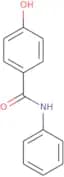
CAS:<p>Versatile small molecule scaffold</p>Formula:C3H6ClF4NPurity:Min. 95%Molecular weight:167.5 g/mol4-Hydroxy-N-phenylbenzamide
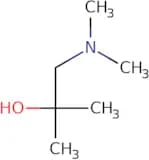
CAS:<p>4-Hydroxy-N-phenylbenzamide is an organic solvent that is used as a potentiator in hexane. This compound has been shown to have potentiating effects on the solubility and volatility of hexane, which are important for industrial applications. 4-Hydroxy-N-phenylbenzamide also has carcinogenic properties, which may be due to its ability to induce DNA transfer reactions with nitro groups or due to its ability to react with chloride ions in the presence of human colon carcinoma cells. The carcinogenic effects of this compound are not limited to humans; it also induces cancerous transformation in mice. Impurities found in this compound include 5-hydroxytryptamine (serotonin) and carboxyamide (NH2CONH2).</p>Formula:C13H11NO2Purity:Min. 95%Molecular weight:213.23 g/mol1-(Dimethylamino)-2-methylpropan-2-ol
CAS:<p>Versatile small molecule scaffold</p>Formula:C6H15NOPurity:Min. 95%Molecular weight:117.19 g/mol

![2-Sulfanylidene-1,3-diazaspiro[4.4]nonan-4-one](/_next/image/?url=https%3A%2Fstatic.cymitquimica.com%2Fproducts%2F3D%2Fthumb-webp%2FPAA10998.webp&w=3840&q=75)
![3,5-Dichloro-4-[2-(dimethylamino)ethoxy]aniline](/_next/image/?url=https%3A%2Fstatic.cymitquimica.com%2Fproducts%2F3D%2Fthumb-webp%2FPAA11115.webp&w=3840&q=75)