Building Blocks
This section contains fundamental products for the synthesis of organic and biological compounds. Building blocks are the essential starting materials used to construct complex molecules through various chemical reactions. They play a critical role in drug discovery, material science, and chemical research. At CymitQuimica, we offer a diverse range of high-quality building blocks to support your innovative research and industrial projects, ensuring you have the essential components for successful synthesis.
Subcategories of "Building Blocks"
- Boronic Acids & Boronic Acid Derivatives(5,756 products)
- Chiral Building Blocks(1,242 products)
- Hydrocarbon Building Blocks(6,095 products)
- Organic Building Blocks(61,051 products)
Found 199813 products of "Building Blocks"
Sort by
Purity (%)
0
100
|
0
|
50
|
90
|
95
|
100
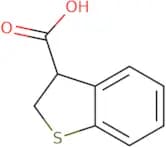
2,3-Dihydro-1-benzothiophene-3-carboxylic acid
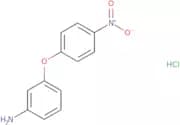
CAS:<p>Versatile small molecule scaffold</p>Formula:C9H8O2SPurity:Min. 95%Molecular weight:180.23 g/mol3-(4-Nitrophenoxy)aniline hydrochloride
CAS:<p>Versatile small molecule scaffold</p>Formula:C12H11ClN2O3Purity:Min. 95%Molecular weight:266.68 g/mol3,4-Dihydro-1H-2-benzothiopyran-1-ylmethanamine
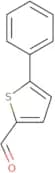
CAS:<p>Versatile small molecule scaffold</p>Formula:C10H13NSPurity:Min. 95%Molecular weight:179.28 g/mol5-Phenylthiophene-2-carboxaldehyde
CAS:<p>5-Phenylthiophene-2-carboxaldehyde is a molecule that inhibits the activity of tyrosinase, an enzyme involved in melanin biosynthesis. It reacts with the formyl group of tyrosinase to produce a reactive intermediate that undergoes a series of reactions with methyl ketones to inhibit the reaction mechanism. The inhibition of tyrosinase by 5-phenylthiophene-2-carboxaldehyde has been shown to be reversible and competitive. This molecule has also shown antibacterial activities against Gram positive and Gram negative bacteria. 5-Phenylthiophene-2-carboxaldehyde may also have potential for use as a ferroelectric material due to its ability to crystallize in the orthorhombic system. This molecule also exhibits optical properties such as fluorescence, phosphorescence and photoluminescence.</p>Formula:C11H8OSPurity:Min. 95%Molecular weight:188.24 g/mol2,1,3-Benzoxadiazole, 5-methyl-, 1-oxide
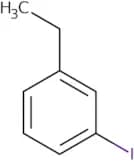
CAS:<p>2,1,3-Benzoxadiazole, 5-methyl-, 1-oxide is a nitro compound that has tautomeric equilibrium. It is a gaseous chemical with a refluxing property. This compound can be mediated and is magnetic. It has the formula C6H5NO2NOSCl. The chlorine atom in this molecule functions as an inorganic functional group. 2,1,3-Benzoxadiazole, 5-methyl-, 1-oxide has three phenazine groups per molecule and a constant of -0.084 kcal/mol.</p>Formula:C7H6N2O2Purity:Min. 95%Molecular weight:150.13 g/mol1-Ethyl-3-iodobenzene
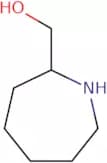
CAS:<p>Versatile small molecule scaffold</p>Formula:C8H9IPurity:Min. 95%Molecular weight:232.06 g/mol(Azepan-2-yl)methanol
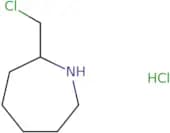
CAS:<p>Versatile small molecule scaffold</p>Formula:C7H15NOPurity:Min. 95%Molecular weight:129.2 g/mol2-(Chloromethyl)azepane hydrochloride
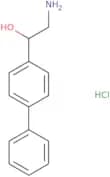
CAS:<p>Versatile small molecule scaffold</p>Formula:C7H15Cl2NPurity:Min. 95%Molecular weight:184.1 g/mol2-Amino-1-(4-phenylphenyl)ethan-1-ol hydrochloride
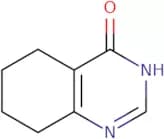
CAS:<p>Versatile small molecule scaffold</p>Formula:C14H16ClNOPurity:Min. 95%Molecular weight:249.73 g/mol5,6,7,8-Tetrahydro-3H-quinazolin-4-one
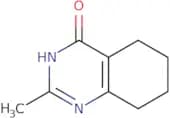
CAS:<p>5,6,7,8-Tetrahydro-3H-quinazolin-4-one is a pharmacological agent that is structurally related to the benzyl and piperidino groups. It has a low toxicity and can be used in peptic ulcer disease, as well as other conditions where this type of drug is indicated. 5,6,7,8-Tetrahydro-3H-quinazolin-4-one has shown some efficacy in treating duodenal ulcers. The drug binds to the H+/K+ ATPase enzyme in the stomach and inhibits gastric acid secretion by binding to the proton pump at the cellular level. This prevents it from functioning normally.</p>Formula:C8H10N2OPurity:Min. 95%Molecular weight:150.18 g/mol2-Methyl-5,6,7,8-tetrahydroquinazolin-4-ol
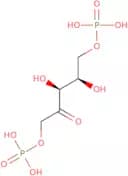
CAS:<p>Versatile small molecule scaffold</p>Formula:C9H12N2OPurity:Min. 95%Molecular weight:164.2 g/molD-Xylulose 1,5-diphosphate
CAS:<p>Versatile small molecule scaffold</p>Formula:C5H12O11P2Purity:Min. 95%Molecular weight:310.09 g/mol4-Oxo-3,4-dihydroquinazoline-6-sulfonamide
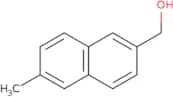
CAS:Versatile small molecule scaffoldFormula:C8H7N3O3SPurity:Min. 95%Molecular weight:225.23 g/mol(6-Methylnaphthalen-2-yl)methanol
CAS:<p>Vanillyl alcohol is a chemical compound that has been identified as a gene product in the bacterium Bacillus subtilis. It is an aminopentol and may be synthesized from the amino acid sequence L-valine, L-alanine, and glyceraldehyde-3-phosphate. Vanillyl alcohol has been shown to inhibit bacterial growth by binding to alcohol dehydrogenases, which are involved in the breakdown of alcohols in bacteria. Vanillyl alcohol also inhibits xylene degradation through its reaction with naphthalene to form vanillylmandelic acid, which can inhibit the activity of aldehyde dehydrogenase in bacteria.</p>Formula:C12H12OPurity:Min. 95%Molecular weight:172.22 g/mol3-formylpyridine-2-carboxylic acid
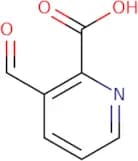
CAS:<p>3-formylpyridine-2-carboxylic acid is a phenylhydrazine derivative, which is a white crystalline solid. It is soluble in solvents such as chloroform and methanol, but insoluble in water. 3-Formylpyridine-2-carboxylic acid can be prepared by the chlorination of pyridine or by alkaline hydrolysis of its esters with sodium hydroxide. It can also be synthesized from the reaction of phenylhydrazine with formaldehyde in organic solvents. 3-Formylpyridine-2-carboxylic acid has been shown to react with carbonyl compounds to form a conjugated system through an addition reaction and to form esters that are soluble in organic solvents. The yield of this reaction depends on the solvent used and the temperature at which it is carried out.</p>Formula:C7H5NO3Purity:Min. 95%Molecular weight:151.1 g/mol4-Nitro-2-(prop-2-en-1-yl)phenol
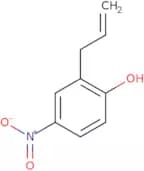
CAS:<p>4-Nitro-2-(prop-2-en-1-yl)phenol is a reactive chemical that can be synthesized from eugenol. It has been used as a monomer in the synthesis of polymers. The rate at which 4-Nitro-2-(prop-2-en-1-yl)phenol reacts increases when it is in the presence of a reoxidant, such as oxygen or hydrogen peroxide. The rate also increases when it is in the presence of an antioxidant, such as αtocopherol. This product has been shown to have antioxidant properties and can be used to scavenge free radicals.</p>Formula:C9H9NO3Purity:Min. 95%Molecular weight:179.17 g/mol2-(Bromomethyl)-2-(hydroxymethyl)-1,3-propanediol
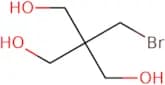
CAS:<p>2-(Bromomethyl)-2-(hydroxymethyl)-1,3-propanediol is a synthetic compound that is used as a stabilizer in polymers. It has magnetic properties and crystallizes in an orthorhombic system. This substance also has an aryl group and a chlorine substituent. 2-(Bromomethyl)-2-(hydroxymethyl)-1,3-propanediol reacts with the phosphite trialkyl to form polyvalent phosphorus compounds, which are residues of the trialkyl. The insecticidal properties of this compound may be due to its ability to inhibit the growth of insects by affecting the metabolism of arthropods. The hydrocarbon residue may be due to its synthesis from bromoethane and methanol.</p>Formula:C5H11BrO3Purity:Min. 95%Molecular weight:199.04 g/mol3-Hydroxyphenyl N-methylcarbamate
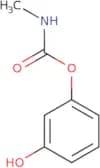
CAS:<p>Versatile small molecule scaffold</p>Formula:C8H9NO3Purity:Min. 95%Molecular weight:167.16 g/mol4-Methyl-1H-benzo[d]imidazol-2(3H)-one
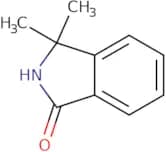
CAS:<p>4-Methyl-1H-benzo[d]imidazol-2(3H)-one is a chemical that belongs to the group of agrochemicals. It is used as a yield enhancer for crops and is biologically active. 4-Methyl-1H-benzo[d]imidazol-2(3H)-one has been shown to be an active molecule in science, but also a cyanate. There are no known human health effects from exposure to this chemical.</p>Formula:C8H8N2OPurity:Min. 95%Molecular weight:148.17 g/mol2,3-Dihydro-3,3-dimethyl-1H-isoindol-1-one
CAS:<p>Versatile small molecule scaffold</p>Formula:C10H11NOPurity:Min. 95%Molecular weight:161.2 g/mol




![4-Methyl-1H-benzo[d]imidazol-2(3H)-one](/_next/image/?url=https%3A%2Fstatic.cymitquimica.com%2Fproducts%2F3D%2Fthumb-webp%2FUAA19068.webp&w=3840&q=75)