Building Blocks
This section contains fundamental products for the synthesis of organic and biological compounds. Building blocks are the essential starting materials used to construct complex molecules through various chemical reactions. They play a critical role in drug discovery, material science, and chemical research. At CymitQuimica, we offer a diverse range of high-quality building blocks to support your innovative research and industrial projects, ensuring you have the essential components for successful synthesis.
Subcategories of "Building Blocks"
- Boronic Acids & Boronic Acid Derivatives(5,756 products)
- Chiral Building Blocks(1,242 products)
- Hydrocarbon Building Blocks(6,095 products)
- Organic Building Blocks(61,055 products)
Found 199650 products of "Building Blocks"
Sort by
Purity (%)
0
100
|
0
|
50
|
90
|
95
|
100
N-Cyclohexylpyridin-2-amine
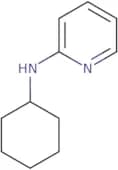
CAS:<p>N-Cyclohexylpyridin-2-amine is a cyclic amine that has two cyclohexane rings with a nitrogen atom in the center. This compound is a dimer, which means it has two identical molecules bonded together. The hydrogen bond between the molecules causes them to have different geometries than expected. The catalytic activity of this compound is dependent on the nature and steric interactions of the macrocycles. Spectroscopies can be used to determine the molecular structure and confirm its dimeric form. X-ray crystal structures show that N-Cyclohexylpyridin-2-amine forms a macrocycle with one molecule bound to another in a head-to-tail orientation. Ligands are compounds that bind to metal ions, such as magnesium, zinc, or iron.</p>Formula:C11H16N2Purity:Min. 95%Molecular weight:176.26 g/molN-(Propan-2-yl)pyridin-2-amine
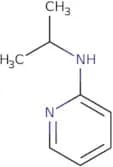
CAS:<p>N-(Propan-2-yl)pyridin-2-amine is a ligand that binds to metal ions via the chloride, n-oxide and bidentate ligands. It is used in coordination chemistry as a precursor for the preparation of complexes with metals. In electron spin resonance spectroscopy it has been used as an anion for the determination of chloride and nitrate content in water. The damaged and halogenated forms of this compound are useful in the synthesis of other compounds, such as nerve agents.</p>Formula:C8H12N2Purity:Min. 95%Molecular weight:136.19 g/mol2,2'-(Octylazanediyl)diethanol
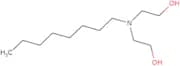
CAS:<p>2,2'-(Octylazanediyl)diethanol is a boron-containing chemical that is used to extract uranium from its ores. It is an effective complexing agent for the extraction of uranium from its ores. This chemical has been shown to be able to extract uranium from ores with a concentration of up to 0.15%. The extraction process takes place in acidic containers and is optimized by varying the reaction time and diethanolamine concentration. 2,2'-(Octylazanediyl)diethanol also inhibits ATPase activity in bacteria, which may be due to its ability to inhibit the transport function in these organisms.</p>Formula:C12H27NO2Purity:Min. 95%Molecular weight:217.35 g/mol2-(Aminomethyl)-3,3-dimethylbutan-1-ol
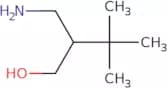
CAS:<p>Versatile small molecule scaffold</p>Formula:C7H17NOPurity:Min. 95%Molecular weight:131.22 g/mol1,3-Dichloro-5H,6H,7H-cyclopenta[C]pyridine-4-carbonitrile
CAS:<p>Versatile small molecule scaffold</p>Formula:C9H6Cl2N2Purity:Min. 95%Molecular weight:213.06 g/mol5H,6H,7H-Cyclopenta[C]pyridine-4-carbonitrile
CAS:<p>Versatile small molecule scaffold</p>Formula:C9H8N2Purity:Min. 95%Molecular weight:144.17 g/mol3-tert-Butyl-7-oxabicyclo[4.1.0]heptane
CAS:<p>Versatile small molecule scaffold</p>Formula:C10H18OPurity:Min. 95%Molecular weight:154.25 g/mol2-Cyclohexyl-2-methoxyacetic acid
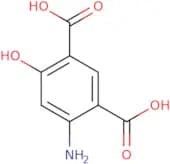
CAS:<p>2-Cyclohexyl-2-methoxyacetic acid (CHMA) is a spectroscopic reagent. The 13C NMR spectrum of CHMA shows the presence of two carbonyl groups, one methylene and one methoxymethylene group. The compound can be derivatized to produce an aldehyde or ester.</p>Formula:C9H16O3Purity:Min. 95%Molecular weight:172.22 g/mol4-Amino-6-hydroxybenzene-1,3-dicarboxylic acid
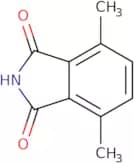
CAS:<p>Versatile small molecule scaffold</p>Formula:C8H7NO5Purity:Min. 95%Molecular weight:197.14 g/mol4,7-Dimethyl-2,3-dihydro-1H-isoindole-1,3-dione
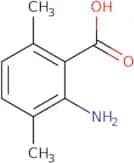
CAS:<p>Versatile small molecule scaffold</p>Formula:C10H9NO2Purity:Min. 95%Molecular weight:175.18 g/mol2-Amino-3,6-dimethylbenzoic acid
CAS:<p>2-Amino-3,6-dimethylbenzoic acid is an equilibrating agent that has been used to study the interaction and kinetics of hydrogen bonds. It is a white crystalline solid with a molecular weight of 164.2 g/mol and a melting point of 127 °C. The kinetic method has been used to study the equilibration between its two forms: 3,4-dihydroxybenzoic acid (DHB) and 2-hydroxybenzoic acid (HBA). This equilibrium can be described by the equation DHB + HBA ⇌ DHB + HBA, where the equilibrium constant is K = [DHB][HBA]/[DHB][HBA]. The kinetic method was also applied to study the reaction between 2-amino-3,6-dimethylbenzoic acid and methyl derivatives of olefins. In this case, the kinetic method was used to determine</p>Formula:C9H11NO2Purity:Min. 95%Molecular weight:165.19 g/molbicyclo[2.2.1]heptane-1,4-dicarboxylic acid
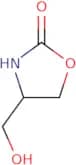
CAS:<p>Versatile small molecule scaffold</p>Formula:C9H12O4Purity:Min. 95%Molecular weight:184.19 g/mol4-(Hydroxymethyl)oxazolidin-2-one
CAS:<p>4-(Hydroxymethyl)oxazolidin-2-one is an activated form of oxazolidinones that can react with potassium ions to form a stable, water soluble salt. This reaction is catalyzed by lanthanum ion and the reaction mechanism involves the formation of fatty acid esters. It has been found to be effective in the synthesis of methyl palmitate, which is a fatty acid that can be used as a raw material for biodiesel production. The reaction intermediates are dehydrating and constant, and the metal ion is lanthanum. 4-(Hydroxymethyl)oxazolidin-2-one has impurities such as adiponitrile, acidic impurities, and stereoselective impurities.</p>Formula:C4H7NO3Purity:Min. 95%Molecular weight:117.1 g/mol4-[(Ethoxycarbonyl)oxy]benzoic acid
CAS:<p>Versatile small molecule scaffold</p>Formula:C10H10O5Purity:Min. 95%Molecular weight:210.18 g/mol2-(2,6-Dimethoxyphenyl)acetic acid
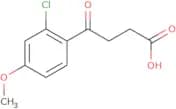
CAS:<p>2-(2,6-Dimethoxyphenyl)acetic acid is a phenolic compound that can be found in the urine of people suffering from alcaptonuria. This disease is caused by the accumulation of homogentisic acid in the body and results in abnormalities such as neural tube defects. 2-(2,6-Dimethoxyphenyl)acetic acid is formed during the conversion of resorcinol to dihydroxybenzene by demethylation. It also has low yields when synthesized from methyl ester and benzene, which makes it difficult to produce synthetically.</p>Formula:C10H12O4Purity:Min. 95%Molecular weight:196.2 g/mol4-(2-Chloro-4-methoxyphenyl)-4-oxobutanoic acid
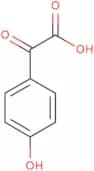
CAS:<p>Versatile small molecule scaffold</p>Formula:C11H11ClO4Purity:Min. 95%Molecular weight:242.65 g/mol2-(4-Hydroxyphenyl)-2-oxoacetic acid
CAS:<p>2-Hydroxyphenyl-2-oxoacetic acid (HPPAA) is a pharmaceutical preparation used to treat insulin resistance and type 2 diabetes. It has been shown to increase the activity of mitochondrial enzymes, inhibit oxidative phosphorylation, and increase the oxidation of fatty acids. HPPAA has also been shown to reduce carnitine levels in muscle tissue, which may contribute to its anti-obesity effects. HPPAA is an analytical method for detecting insulin resistance in Sprague-Dawley rats. This method is based on UV absorption at 280 nm and can be used with other analytical methods such as gas chromatography or liquid chromatography.</p>Formula:C8H6O4Purity:Min. 95%Molecular weight:166.13 g/mol{7-Oxabicyclo[2.2.1]heptan-1-yl}methanol
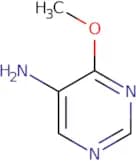
CAS:<p>Versatile small molecule scaffold</p>Formula:C7H12O2Purity:Min. 95%Molecular weight:128.2 g/mol4-methoxypyrimidin-5-amine
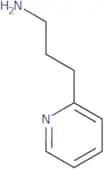
CAS:<p>Versatile small molecule scaffold</p>Formula:C5H7N3OPurity:Min. 95%Molecular weight:125.12 g/mol3-(Pyridin-2-yl)propan-1-amine
CAS:<p>Versatile small molecule scaffold</p>Formula:C8H12N2Purity:Min. 95%Molecular weight:136.2 g/mol

![1,3-Dichloro-5H,6H,7H-cyclopenta[C]pyridine-4-carbonitrile](/_next/image/?url=https%3A%2Fstatic.cymitquimica.com%2Fproducts%2F3D%2Fthumb-webp%2FQAA52446.webp&w=3840&q=75)
![5H,6H,7H-Cyclopenta[C]pyridine-4-carbonitrile](/_next/image/?url=https%3A%2Fstatic.cymitquimica.com%2Fproducts%2F3D%2Fthumb-webp%2FQAA52447.webp&w=3840&q=75)
![3-tert-Butyl-7-oxabicyclo[4.1.0]heptane](/_next/image/?url=https%3A%2Fstatic.cymitquimica.com%2Fproducts%2F3D%2Fthumb-webp%2FQAA53671.webp&w=3840&q=75)

![bicyclo[2.2.1]heptane-1,4-dicarboxylic acid](/_next/image/?url=https%3A%2Fstatic.cymitquimica.com%2Fproducts%2F3D%2Fthumb-webp%2FQAA54451.webp&w=3840&q=75)
![4-[(Ethoxycarbonyl)oxy]benzoic acid](/_next/image/?url=https%3A%2Fstatic.cymitquimica.com%2Fproducts%2F3D%2Fthumb-webp%2FQAA55232.webp&w=3840&q=75)

![{7-Oxabicyclo[2.2.1]heptan-1-yl}methanol](/_next/image/?url=https%3A%2Fstatic.cymitquimica.com%2Fproducts%2F3D%2Fthumb-webp%2FQAA57403.webp&w=3840&q=75)