Building Blocks
This section contains fundamental products for the synthesis of organic and biological compounds. Building blocks are the essential starting materials used to construct complex molecules through various chemical reactions. They play a critical role in drug discovery, material science, and chemical research. At CymitQuimica, we offer a diverse range of high-quality building blocks to support your innovative research and industrial projects, ensuring you have the essential components for successful synthesis.
Subcategories of "Building Blocks"
- Boronic Acids & Boronic Acid Derivatives(5,756 products)
- Chiral Building Blocks(1,242 products)
- Hydrocarbon Building Blocks(6,095 products)
- Organic Building Blocks(61,055 products)
Found 199650 products of "Building Blocks"
Sort by
Purity (%)
0
100
|
0
|
50
|
90
|
95
|
100
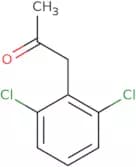
2,6-Dichlorophenylacetone
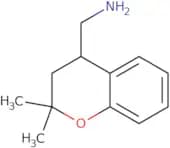
CAS:Versatile small molecule scaffoldFormula:C9H8Cl2OPurity:Min. 95%Molecular weight:203.06 g/mol(2,2-Dimethyl-3,4-dihydro-2H-1-benzopyran-4-yl)methanamine
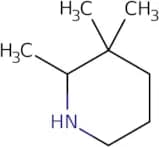
CAS:<p>Versatile small molecule scaffold</p>Formula:C12H17NOPurity:Min. 95%Molecular weight:191.3 g/mol2,3,3-Trimethylpiperidine
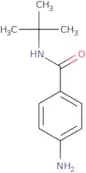
CAS:<p>Versatile small molecule scaffold</p>Formula:C8H17NPurity:Min. 95%Molecular weight:127.23 g/mol4-Amino-N-(tert-butyl)benzamide
CAS:<p>4-Amino-N-(tert-butyl)benzamide is a chemical intermediate that can be used in the preparation of certain pharmaceuticals. This compound is synthesized through the reaction of 4-aminobenzoyl chloride and tert-butanol, which forms an amide bond. The condensation reaction can be catalyzed by either heat or acid. The product of this reaction is hydrogenated to form 4-amino-N-(tert-butyl)-N'-(chloromethyl)benzamide. This compound can also be prepared by refluxing a mixture of 4-aminobenzaldehyde and hydrazine with chloroform and hydrochloric acid.</p>Formula:C11H16N2OPurity:Min. 95%Molecular weight:192.26 g/mol1-Chloro-2-(2-isocyanatoethyl)benzene
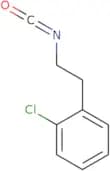
CAS:<p>Versatile small molecule scaffold</p>Formula:C9H8ClNOPurity:Min. 95%Molecular weight:181.62 g/mol(4-Ethoxy-3-methoxybenzyl)amine
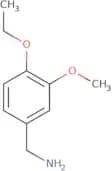
CAS:<p>Research has shown that (4-Ethoxy-3-methoxybenzyl)amine (EMBA) is a potent inhibitor of bacterial growth. The alkylation of EMBA with methylamine and benzene leads to the formation of aureus, which is an antibiotic that can be used to treat staphylococcus infections. In addition, EMBA can also be methylated with hydroxylamine to form benzylamine, a compound that inhibits the synthesis of the cell wall in bacteria. These properties make EMBA an effective antimicrobial agent.</p>Formula:C10H15NO2Purity:Min. 95%Molecular weight:181.23 g/mol2-(Isocyanatomethyl)-1,4-dimethoxybenzene
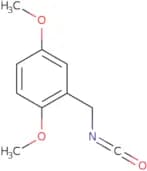
CAS:<p>Versatile small molecule scaffold</p>Formula:C10H11NO3Purity:Min. 95%Molecular weight:193.2 g/mol6-Chloro-1,2-dihydro-1,7-naphthyridin-2-one
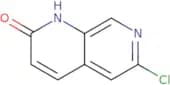
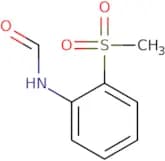
CAS:<p>Versatile small molecule scaffold</p>Formula:C8H5ClN2OPurity:Min. 95%Molecular weight:180.59 g/molN-(2-(Methylsulfonyl)phenyl)formamide
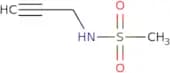
CAS:<p>Versatile small molecule scaffold</p>Formula:C8H9NO3SPurity:Min. 95%Molecular weight:199.23 g/molN-(Prop-2-yn-1-yl)methanesulfonamide
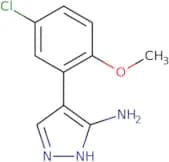
CAS:<p>N-(Prop-2-yn-1-yl)methanesulfonamide is a convergent synthesis of the intermediate N-(prop-2-yn-1-yl)benzenesulfonamide. The synthesis of the intermediate was achieved by reacting propargyl bromide with methanesulfonyl chloride to give N-(prop-2-yn-1-yl)benzenesulfonamide. This compound reacts with 2,4,6-trinitrobenzenesulfonic acid to afford the desired product. The functionalized alkaloid can be used as a synlett for other syntheses.</p>Formula:C4H7NO2SPurity:Min. 95%Molecular weight:133.17 g/mol4-(5-Chloro-2-methoxyphenyl)-1H-pyrazol-5-amine
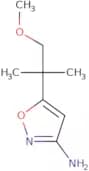
CAS:<p>Versatile small molecule scaffold</p>Formula:C10H10ClN3OPurity:Min. 95%Molecular weight:223.66 g/mol5-(2-Methoxy-1,1-dimethyl-ethyl)-isoxazol-3-ylamine
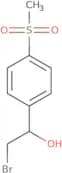
CAS:<p>Versatile small molecule scaffold</p>Formula:C8H14N2O2Purity:Min. 95%Molecular weight:170.21 g/mol2-Bromo-1-(4-methanesulfonylphenyl)ethan-1-ol
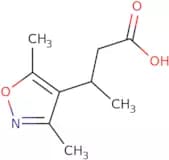
CAS:<p>Versatile small molecule scaffold</p>Formula:C9H11BrO3SPurity:Min. 95%Molecular weight:279.15 g/mol3-(Dimethyl-1,2-oxazol-4-yl)butanoic acid
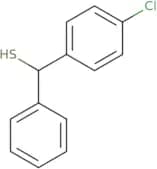
CAS:Versatile small molecule scaffoldFormula:C9H13NO3Purity:Min. 95%Molecular weight:183.2 g/mol(4-Chlorophenyl)(phenyl)methanethiol
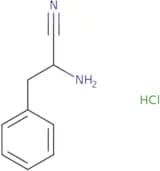
CAS:<p>Versatile small molecule scaffold</p>Formula:C13H11ClSPurity:Min. 95%Molecular weight:234.74 g/mol2-Amino-3-phenylpropanenitrile HCl
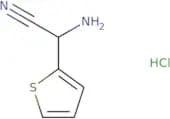
CAS:<p>Versatile small molecule scaffold</p>Formula:C9H10N2·HClPurity:Min. 95%Molecular weight:182.65 g/mol2-Amino-2-(thiophen-2-yl)acetonitrile hydrochloride
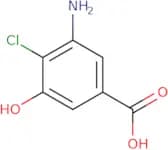
CAS:<p>Versatile small molecule scaffold</p>Formula:C6H7ClN2SPurity:Min. 95%Molecular weight:174.65 g/mol3-Amino-4-chloro-5-hydroxybenzoic acid
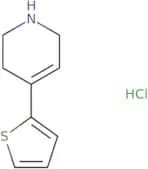
CAS:<p>Versatile small molecule scaffold</p>Formula:C7H6ClNO3Purity:Min. 95%Molecular weight:187.58 g/mol4-(Thiophen-2-yl)-1,2,3,6-tetrahydropyridine hydrochloride
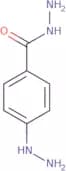
CAS:<p>Versatile small molecule scaffold</p>Formula:C9H12ClNSPurity:Min. 95%Molecular weight:201.72 g/mol4-Hydrazinylbenzohydrazide
CAS:<p>Versatile small molecule scaffold</p>Formula:C7H10N4OPurity:Min. 95%Molecular weight:166.18 g/mol