Building Blocks
This section contains fundamental products for the synthesis of organic and biological compounds. Building blocks are the essential starting materials used to construct complex molecules through various chemical reactions. They play a critical role in drug discovery, material science, and chemical research. At CymitQuimica, we offer a diverse range of high-quality building blocks to support your innovative research and industrial projects, ensuring you have the essential components for successful synthesis.
Subcategories of "Building Blocks"
- Boronic Acids & Boronic Acid Derivatives(5,778 products)
- Chiral Building Blocks(1,242 products)
- Hydrocarbon Building Blocks(6,098 products)
- Organic Building Blocks(61,034 products)
Found 199601 products of "Building Blocks"
Sort by
Purity (%)
0
100
|
0
|
50
|
90
|
95
|
100
4-Phenyl-1,3-oxazole-2-thiol
CAS:<p>Versatile small molecule scaffold</p>Formula:C9H7NOSPurity:Min. 95%Molecular weight:177.22 g/molcinnolin-3-amine
CAS:<p>Cinnolin-3-amine is a pyrimidine compound that inhibits the proliferation of cells and has been shown to be effective in treating hyperproliferative diseases. It binds to chloride ions, protonation, or aromatic hydrocarbons, which are typically found in inflammatory diseases. Cinnolin-3-amine can also react with hydrochloric acid and aliphatic hydrocarbons and form zirconium oxide. Cinnolines are nitrogen atoms that have a receptor subtype, coordination chemistry, and hydroxyl group. These features play a role in cancer treatment by inhibiting the growth of tumor cells.</p>Formula:C8H7N3Purity:Min. 95%Molecular weight:145.16 g/mol1,5-Dimethylimidazolidine-2,4-dione
CAS:<p>Versatile small molecule scaffold</p>Formula:C5H8N2O2Purity:Min. 95%Molecular weight:128.13 g/mol(4-Bromobutyl)dimethylamine hydrobromide
CAS:<p>Versatile small molecule scaffold</p>Formula:C6H15Br2NPurity:Min. 95%Molecular weight:261 g/mol2-Methyl-1-benzothiophene-3-carboxylic acid
CAS:<p>2-Methyl-1-benzothiophene-3-carboxylic acid is a sulfur containing compound that can be found in many natural products. It is the product of the oxidation of sulfites by hydrogen peroxide and can be found in soil, water, and plants. This compound is synthesized by pseudomonas strains and has shown to have microbial activity against Pseudomonas aeruginosa isolates. 2-Methyl-1-benzothiophene-3-carboxylic acid also exhibits antibacterial activity against other bacteria such as Escherichia coli, Salmonella enterica, and Proteus mirabilis. This compound is an isomer of a number of other thiophenes such as benzothiophene and thiobenzamide.</p>Formula:C10H8O2SPurity:Min. 95%Molecular weight:192.24 g/mol2-(Benzylsulfanyl)acetonitrile
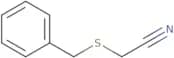
CAS:<p>2-(Benzylsulfanyl)acetonitrile is an intermediate in the synthesis of a number of biologically active compounds, including ornithine and paraformaldehyde. It is also an intermediate in the synthesis of 2-methyl-2-nitrosopropane, which is used as a reagent to prepare nitrosobenzene. 2-(Benzylsulfanyl)acetonitrile can be reacted with various organic compounds to produce a variety of products. For example, when it reacts with paraformaldehyde, it yields 2-benzylthioacetonitrile and 2-hydroxyethyl methacrylate. When reacted with acetone, it yields methyl 3-(2-acetonylbenzylthio)-3-cyanopropionate. This product has been used as a synthase inhibitor in inflammation research and as an adrenergic receptor blocker for the treatment of asthma.</p>Formula:C9H9NSPurity:Min. 95%Molecular weight:163.24 g/molN-Benzyl-4-methoxyaniline
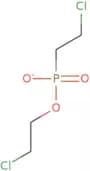
CAS:<p>N-Benzyl-4-methoxyaniline is an organic compound that is used in the manufacture of dyes and pharmaceuticals. This chemical has been shown to be a substrate for glutamate dehydrogenase, which is an enzyme that converts it into 2,3-dihydroxyphenylalanine (DOPA). N-Benzyl-4-methoxyaniline also reacts with trifluoroacetic acid, generating benzaldehyde. The reaction mechanism of this molecule is nucleophilic attack by the hydroxyl group on the benzene ring.<br>The detection sensitivity of this compound was improved through x-ray crystal structures and FTIR spectroscopy studies. It has been shown to have a m2 phenotype, which is associated with cancer.</p>Formula:C14H15NOPurity:Min. 95%Molecular weight:213.28 g/mol(2-Chloroethoxy)(2-chloroethyl)phosphinic acid
CAS:<p>Versatile small molecule scaffold</p>Formula:C4H8Cl2O3PPurity:Min. 95%Molecular weight:205.98 g/mol2-[2-(2-Hydroxyethyl)phenyl]ethan-1-ol
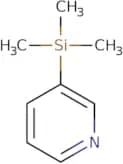
CAS:<p>Versatile small molecule scaffold</p>Formula:C10H14O2Purity:Min. 95%Molecular weight:166.22 g/mol3-(Trimethylsilyl)pyridine
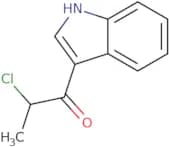
CAS:<p>3-(Trimethylsilyl)pyridine is a compound that belongs to the group of methosulfates and sulfates. The preparation of this compound starts with the reaction of picolinonitrile with methosulfate and pyridine-based reagents in refluxing ethanol. 3-(Trimethylsilyl)pyridine is used as a precursor for the synthesis of picolinamide, which is an important intermediate for organic syntheses. 3-(Trimethylsilyl)pyridine has been shown to react with cyanide ion to form 3-cyano-2-methyl-N,N-dimethylaniline. This reaction can be catalyzed by potassium hydroxide (KOH).</p>Formula:C8H13NSiPurity:Min. 95%Molecular weight:151.28 g/mol2-Chloro-1-(1H-indol-3-yl)propan-1-one
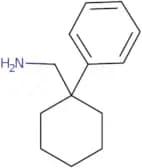
CAS:Controlled Product<p>Versatile small molecule scaffold</p>Formula:C11H10ClNOPurity:Min. 95%Molecular weight:207.65 g/molC-(1-Phenyl-cyclohexyl)-methylamine
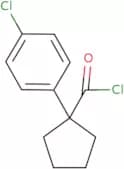
CAS:Controlled Product<p>C-(1-Phenyl-cyclohexyl)-methylamine is an ether that is used as a research chemical. It is also known as PCA, 1-phenylcyclohexanol, or C1PCA. This compound has the potential to induce anesthesia and has been used in the past as an analeptic drug. The synthesis of this compound involves refluxing a mixture of phenylacetaldehyde and cyclohexanone with methylamine.</p>Formula:C13H19NPurity:Min. 95%Molecular weight:189.3 g/mol1-Phenylcyclopentanecarbonyl chloride
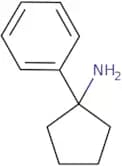
CAS:<p>1-Phenylcyclopentanecarbonyl chloride is an aliphatic compound with a chlorine atom. It is soluble in water and has a solubility of 4.6 g/L at room temperature. 1-Phenylcyclopentanecarbonyl chloride is used as a precursor to produce bioplastics, such as poly(1-phenylcyclopentane)chloride and poly(1,2-diphenylethylene)chloride. This compound can also be used to disrupt cell membranes by reacting with the chloride ion on the outside of the membrane, which lowers its permeability. 1-Phenylcyclopentanecarbonyl chloride reacts with moieties in organic compounds, such as aliphatic and cycloaliphatic moieties, to form covalently bonded chlorides that are less reactive than their corresponding hydrochlorides or other halides. The lower reactivity of these chlorides allows them to</p>Formula:C12H13ClOPurity:Min. 95%Molecular weight:208.68 g/mol1-Phenyl-cyclopentylamine
CAS:Controlled Product<p>1-Phenyl-cyclopentylamine (1-PCPA) is an amine that is typically used in the analysis of complex reactions. It has a nanomolar range and can be detected with various analytical methods, such as in vitro studies. 1-PCPA is used to measure enzymatic activity within the micromolar range. It has a bioisosteric relationship with pentapeptide, which means it can be substituted for pentapeptide in vivo without disrupting protein function or structure. 1-PCPA also has oral toxicity and behavioral effects, making it useful for analyzing the effect of amines on sensitivity and hydrochloric acid.</p>Formula:C11H15NPurity:Min. 95%Molecular weight:161.25 g/mol1-Phenylcyclobutylamine
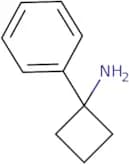
CAS:<p>1-Phenylcyclobutylamine is a reactive molecule that can undergo radical reactions. The radical mechanism is one of the main classes of chemical reactions. 1-Phenylcyclobutylamine reacts with oxygen to form hydroperoxide and hydrogen peroxide. It also reacts with other molecules such as flavin and cytochrome P450, which are important for the metabolism of drugs in the body. 1-Phenylcyclobutylamine has been shown to inhibit the activity of cyclopropylamine, which is an inhibitor of cytochrome P450 enzymes. Inhibition by 1-phenylcyclobutylamine may be due to its ability to form free radicals or directly react with other substances in the body.</p>Formula:C10H13NPurity:Min. 95%Molecular weight:147.22 g/mol1-(4-Fluorophenyl)cyclohexan-1-amine
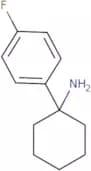
CAS:Controlled Product<p>Versatile small molecule scaffold</p>Formula:C12H16FNPurity:Min. 95%Molecular weight:193.26 g/mol2-(1-Benzothiophen-5-yl)acetic acid
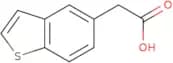
CAS:<p>Versatile small molecule scaffold</p>Formula:C10H8O2SPurity:Min. 95%Molecular weight:192.24 g/mol1-Amino-3-phenylcyclobutane-1-carboxylic acid
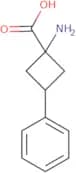
CAS:<p>Versatile small molecule scaffold</p>Formula:C11H13NO2Purity:Min. 95%Molecular weight:191.23 g/mol2-[(4-Methylphenyl)amino]-4,5-dihydro-1,3-thiazol-4-one
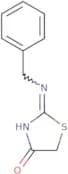
CAS:<p>Versatile small molecule scaffold</p>Formula:C10H10N2OSPurity:Min. 95%Molecular weight:206.27 g/mol2-(Benzylamino)-4,5-dihydro-1,3-thiazol-4-one
CAS:<p>Versatile small molecule scaffold</p>Formula:C10H10N2OSPurity:Min. 95%Molecular weight:206.27 g/mol



![2-[2-(2-Hydroxyethyl)phenyl]ethan-1-ol](/_next/image/?url=https%3A%2Fstatic.cymitquimica.com%2Fproducts%2F3D%2Fthumb-webp%2FSAA37899.webp&w=3840&q=75)
![2-[(4-Methylphenyl)amino]-4,5-dihydro-1,3-thiazol-4-one](/_next/image/?url=https%3A%2Fstatic.cymitquimica.com%2Fproducts%2F3D%2Fthumb-webp%2FSAA38568.webp&w=3840&q=75)