Building Blocks
This section contains fundamental products for the synthesis of organic and biological compounds. Building blocks are the essential starting materials used to construct complex molecules through various chemical reactions. They play a critical role in drug discovery, material science, and chemical research. At CymitQuimica, we offer a diverse range of high-quality building blocks to support your innovative research and industrial projects, ensuring you have the essential components for successful synthesis.
Subcategories of "Building Blocks"
- Boronic Acids & Boronic Acid Derivatives(5,756 products)
- Chiral Building Blocks(1,242 products)
- Hydrocarbon Building Blocks(6,095 products)
- Organic Building Blocks(61,038 products)
Found 196817 products of "Building Blocks"
Sort by
Purity (%)
0
100
|
0
|
50
|
90
|
95
|
100
3-Azabicyclo[3.2.1]octane-2,4-dione
CAS:<p>Versatile small molecule scaffold</p>Formula:C7H9NO2Purity:Min. 95%Molecular weight:139.15 g/molRef: 3D-FAA76345
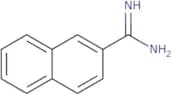
Discontinued productNaphthalene-2-carboximidamide
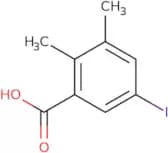
CAS:<p>Naphthalene-2-carboximidamide is a benzamidine derivative that interacts with the active site of serine proteases. It was shown to have potent inhibitory potency against a number of proteinases, including urokinase-type plasminogen activator (uPA), matrix metalloproteinase-9 (MMP-9), and cathepsin G. The interaction of naphthalene-2-carboximidamide with uPA was specific and led to inhibition of its catalytic activity. Naphthalene-2-carboximidamide has been tested in clinical trials for the treatment of influenza.</p>Formula:C11H10N2Purity:Min. 95%Molecular weight:170.21 g/mol5-Iodo-2,3-dimethylbenzoic acid
CAS:<p>Versatile small molecule scaffold</p>Formula:C9H9IO2Purity:Min. 95%Molecular weight:276.07 g/molRef: 3D-FAA61333
Discontinued product4,7-Dibromo-2,3-dihydro-1H-inden-1-one
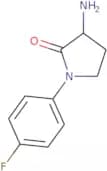
CAS:<p>Versatile small molecule scaffold</p>Formula:C9H6Br2OPurity:Min. 95%Molecular weight:289.95 g/mol3-Amino-1-(4-fluorophenyl)pyrrolidin-2-one
CAS:<p>Versatile small molecule scaffold</p>Formula:C10H11FN2OPurity:Min. 95%Molecular weight:194.21 g/molRef: 3D-FAA30136
Discontinued product2-[2-(Trimethylsilyl)ethynyl]benzenamine
CAS:<p>2-[2-(Trimethylsilyl)ethynyl]benzenamine is an aromatic compound that is used as a starting material for the synthesis of other chemicals. It is prepared by reaction of 2-bromobenzene with ethynylmagnesium bromide and p-toluenesulfonic acid in the presence of aluminum chloride. The yield of the reaction product depends on the time and temperature. Elemental analysis reveals that the compound contains an alkyne group, which facilitates its conversion to quinoline derivatives. The chemical has been shown to react with x-rays to produce diffraction patterns, which can be analyzed to determine the structure of the molecule. X-ray diffraction analysis also revealed that this compound contains a quinoline ring system, which may contribute to its anti-inflammatory effects.</p>Formula:C11H15NSiPurity:Min. 95%Molecular weight:189.33 g/molN-(4-Aminophenyl)-2-methoxyacetamide
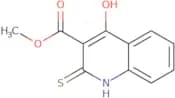
CAS:<p>Versatile small molecule scaffold</p>Formula:C9H12N2O2Purity:Min. 95%Molecular weight:180.2 g/molMethyl 4-hydroxy-2-sulfanylquinoline-3-carboxylate
CAS:<p>Methyl 4-hydroxy-2-sulfanylquinoline-3-carboxylate (MSQ) is a synthetic molecule that has shown to have antiviral activity against the hepatitis B virus. This compound is a competitive inhibitor of the virus and prevents it from infecting cells. MSQ has also been shown to inhibit other viruses, such as herpes simplex virus, influenza A and C, rotavirus, and human immunodeficiency virus type 1 (HIV-1). The high inhibition of MSQ can be attributed to its ability to form hydrogen bonds with the amino acid residues in viral proteins. Additionally, MSQ interacts with anions in the active site of the enzymes that are necessary for viral replication through alkylation reactions.<br>MSQ has been found to be selective for influenza A and C by binding at different sites on the enzyme compared to other compounds like zanamivir and oseltamivir. The single-crystal x</p>Formula:C11H9NO3SPurity:Min. 95%Molecular weight:235.26 g/molRef: 3D-SKB29434
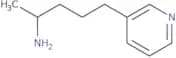
Discontinued product5-(Pyridin-3-yl)pentan-2-amine
CAS:<p>Versatile small molecule scaffold</p>Formula:C10H16N2Purity:Min. 95%Molecular weight:164.25 g/molRef: 3D-LEA84881
Discontinued product[(2-Bromo-5-chlorophenyl)methyl](2-methylpropyl)amine
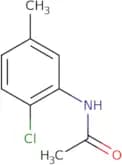
CAS:<p>Versatile small molecule scaffold</p>Formula:C11H15BrClNPurity:Min. 95%Molecular weight:276.6 g/molN-(2-Chloro-5-methylphenyl)acetamide
CAS:<p>Versatile small molecule scaffold</p>Formula:C9H10ClNOPurity:Min. 95%Molecular weight:183.63 g/molRef: 3D-TAA93183
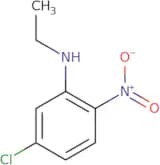
Discontinued product5-Chloro-N-ethyl-2-nitroaniline
CAS:<p>Versatile small molecule scaffold</p>Formula:C8H9ClN2O2Purity:Min. 95%Molecular weight:200.62 g/mol3-[4-(2-Methylpropyl)-5-sulfanyl-4H-1,2,4-triazol-3-yl]propanamide
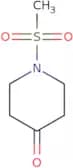
CAS:<p>Versatile small molecule scaffold</p>Formula:C9H16N4OSPurity:Min. 95%Molecular weight:228.32 g/mol1-N-(methylsulfonyl)-4-piperidinone
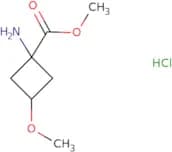
CAS:<p>1-N-(methylsulfonyl)-4-piperidinone is a compound that belongs to the group of secondary organic amines. It can be used as an intermediate in the synthesis of p-hydroxybenzoic acid and hydroxyl group compounds. 1-N-(methylsulfonyl)-4-piperidinone has been shown to inhibit protein synthesis in cultured cells by blocking the formation of aminoacyl-tRNA and preventing translocation of peptide chain from ribosomes to the site of peptide bond formation. This process is essential for the production of proteins, which are necessary for normal cell function. The inhibitory effect on protein synthesis was also observed when 1-N-(methylsulfonyl)-4-piperidinone was incubated with human erythrocytes, an enzyme isolated from calf thymus, and a monoclonal antibody (mAb). This mechanism is believed to be due</p>Formula:C6H11NO3SPurity:Min. 95%Molecular weight:177.22 g/molMethyl 1-amino-3-methoxycyclobutane-1-carboxylate hydrochloride
CAS:<p>Versatile small molecule scaffold</p>Formula:C7H14ClNO3Purity:Min. 95%Molecular weight:195.6 g/molRef: 3D-TMD05888
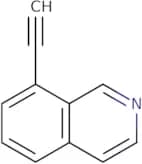
Discontinued product8-ethynylisoquinoline
CAS:<p>Versatile small molecule scaffold</p>Formula:C11H7NPurity:Min. 95%Molecular weight:153.18 g/molC-[1-(2-Chloro-phenyl)-cyclopropyl]-methylamine
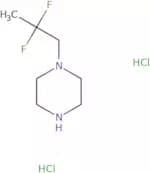
CAS:<p>Versatile small molecule scaffold</p>Formula:C10H12ClNPurity:Min. 95%Molecular weight:181.66 g/mol1-(2,2-Difluoropropyl)piperazine dihydrochloride
CAS:<p>Versatile small molecule scaffold</p>Formula:C7H16Cl2F2N2Purity:Min. 95%Molecular weight:237.12 g/molRef: 3D-MKD60013
Discontinued product8-tert-Butyl 4-methyl 2,8-diazaspiro[4.5]decane-4,8-dicarboxylate
CAS:<p>Versatile small molecule scaffold</p>Formula:C15H26N2O4Purity:Min. 95%Molecular weight:298.38 g/molRef: 3D-MKD58134
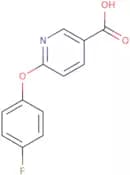
Discontinued product6-(4-Fluorophenoxy)pyridine-3-carboxylic acid
CAS:<p>Versatile small molecule scaffold</p>Formula:C12H8FNO3Purity:Min. 95%Molecular weight:233.19 g/molRef: 3D-MJB08871
Discontinued product
![3-Azabicyclo[3.2.1]octane-2,4-dione](/_next/image/?url=https%3A%2Fstatic.cymitquimica.com%2Fproducts%2F3D%2Fthumb-webp%2FFAA76345.webp&w=3840&q=75)


![2-[2-(Trimethylsilyl)ethynyl]benzenamine](/_next/image/?url=https%3A%2Fstatic.cymitquimica.com%2Fproducts%2F3D%2Fthumb-webp%2FDEA52916.webp&w=3840&q=75)

amine](/_next/image/?url=https%3A%2Fstatic.cymitquimica.com%2Fproducts%2F3D%2Fthumb-webp%2FSJC31753.webp&w=3840&q=75)
![3-[4-(2-Methylpropyl)-5-sulfanyl-4H-1,2,4-triazol-3-yl]propanamide](/_next/image/?url=https%3A%2Fstatic.cymitquimica.com%2Fproducts%2F3D%2Fthumb-webp%2FDJB72392.webp&w=3840&q=75)
![C-[1-(2-Chloro-phenyl)-cyclopropyl]-methylamine](/_next/image/?url=https%3A%2Fstatic.cymitquimica.com%2Fproducts%2F3D%2Fthumb-webp%2FLKB36568.webp&w=3840&q=75)
![8-tert-Butyl 4-methyl 2,8-diazaspiro[4.5]decane-4,8-dicarboxylate](/_next/image/?url=https%3A%2Fstatic.cymitquimica.com%2Fproducts%2F3D%2Fthumb-webp%2FMKD58134.webp&w=3840&q=75)